
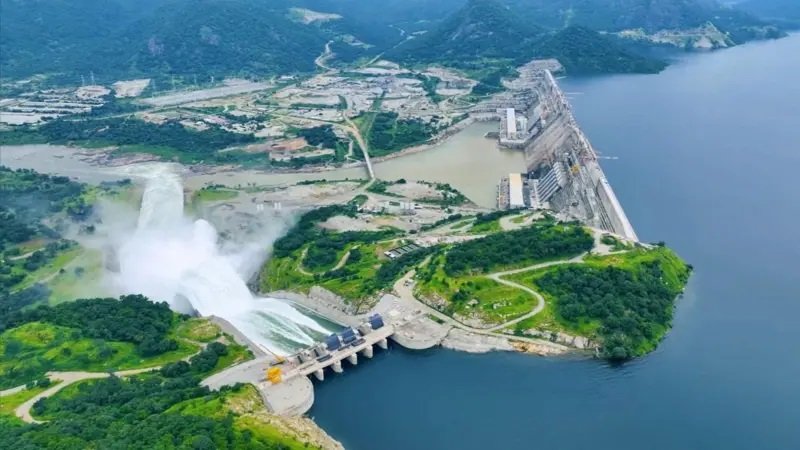

Ethiopia is preparing to inaugurate the Grand Ethiopian Renaissance Dam (GERD) in September, marking the completion of Africa’s largest hydroelectric project after 14 years of construction. The milestone has reignited tensions with Egypt, which continues to reject the project in the absence of a binding agreement on its operation.
According to BBC Amharic, Egyptian Foreign Minister Badr Abdelatty has held phone discussions with his counterparts in Sudan, South Sudan, Uganda, and Kenya, as well as with officials from Djibouti and Somalia. His message was clear: Egypt rejects unilateral measures in the Nile Basin that it says violate international law.
While Abdelatty emphasized principles of shared use of transboundary resources under international law, Ethiopia has long argued that the dam does not contravene those principles. Addis Ababa maintains that GERD was built to ensure equitable water use without reducing downstream flows to Egypt and Sudan.
The dispute dates back to the project’s inception, with Egypt opposing GERD from the outset. Cairo has based its position on “historical rights” derived from a 1929 and later a 1959 agreement brokered during the colonial era, which allocated 55.5 billion cubic meters of Nile water to Egypt and 18.5 billion to Sudan, leaving Ethiopia excluded despite contributing more than 80% of the river’s flow through the Blue Nile.
Despite years of tripartite negotiations, Ethiopia pressed ahead with construction and has already completed filling the dam’s reservoir. Officials in Addis Ababa insist the project was executed without diminishing Egypt’s or Sudan’s water allocations.
Nevertheless, Egypt has continued to campaign regionally and internationally against GERD. Analysts note that Cairo has leveraged shifting alliances, including a military pact signed with Somalia in 2024 and security cooperation agreements with Eritrea, to strengthen its strategic hand.
Ethiopia, meanwhile, faces domestic political and security challenges, including protracted conflicts in Amhara, that critics say have complicated Prime Minister Abiy Ahmed’s diplomatic strategy.
With invitations already sent to regional leaders for the inauguration ceremony, questions remain as to whether Egypt’s renewed diplomatic push seeks to challenge Ethiopia’s sovereignty over the dam’s operation or to press for a new framework of control.


