
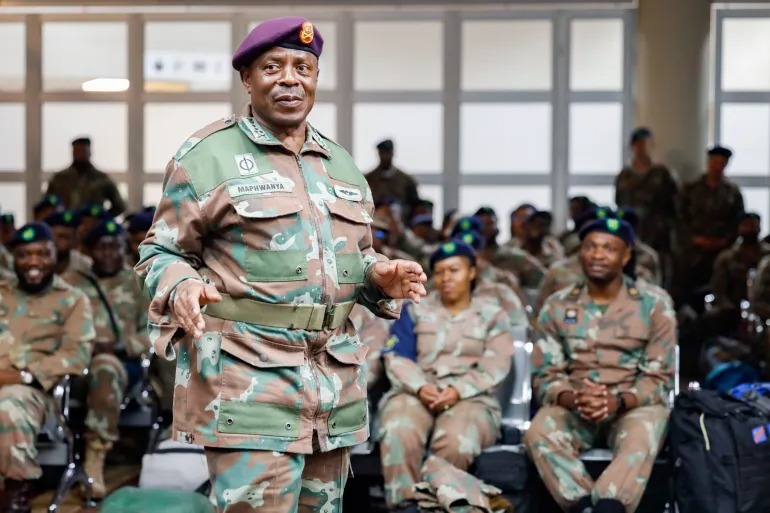

South Africa’s Chief of Defence Forces, General Rudzani Maphwanya, is under mounting pressure to resign following remarks he made during an official trip to Tehran, where he praised ties with Iran and suggested “shared objectives” between the two countries.
The visit, which Pretoria later said had not been cleared by President Cyril Ramaphosa, comes at a politically delicate moment. South Africa is locked in tense trade negotiations with Washington, as U.S. President Donald Trump has imposed a 30% tariff on South African exports — a move that threatens tens of thousands of jobs across the automotive, mining, and agricultural sectors.
Remarks in Tehran Spark Backlash
During talks with his Iranian counterpart Major General Abdolrahim Mousavi, Maphwanya reportedly highlighted Iran’s historic support for South Africa’s anti-apartheid struggle and vowed continued solidarity with “oppressed peoples worldwide.” He also condemned Israeli military actions in Gaza and the West Bank, calling his visit “a timely political message” of support for Iran.
Iranian media outlets framed the comments as aligning Pretoria’s military with Tehran’s geopolitical stance, prompting swift criticism back home. Opposition leaders from the Democratic Alliance demanded a court martial, accusing the general of “gross misconduct” and “political overreach” that undermines civilian oversight of the armed forces.
Government Moves to Contain Fallout
The Presidency sought to distance itself from the general, with spokesperson Vincent Magwenya calling the timing of the trip “unfortunate.” The Departments of Defence and International Relations also disavowed the remarks, confirming Defence Minister Thandi Modise will demand an explanation from Maphwanya.
“We are in a sensitive phase of resetting relations with Washington,” Magwenya said. “Statements of this nature complicate the effort to balance trade and diplomacy.”
A Fragile U.S.–South Africa Relationship
Relations between Pretoria and Washington have sharply deteriorated since South Africa launched a genocide case against Israel at the International Court of Justice and deepened ties with Moscow and Tehran. Trump’s decision to grant refugee status to Afrikaner minorities, coupled with claims of white persecution in South Africa, has further strained the bilateral relationship.
In May, Ramaphosa travelled to the White House in a bid to repair ties, offering multi-billion-dollar investments and expanded U.S. gas imports in exchange for tariff relief. Despite the overtures, tariffs came into force last week, putting 30,000 jobs at risk.
What Comes Next?
Analysts warn that Maphwanya’s statements could jeopardise Pretoria’s attempts to stabilise its U.S. partnership. Jackie Cilliers, a security analyst, told state broadcaster SABC that the remarks were a “serious political misstep” that may cost the general his position.
While Maphwanya has yet to issue a public statement, the Presidency confirmed Ramaphosa will meet him in the coming weeks for a formal briefing. Whether the embattled general survives the scandal may hinge on the administration’s ability to reassure Washington that Pretoria’s foreign and trade policies remain firmly under civilian control.


