
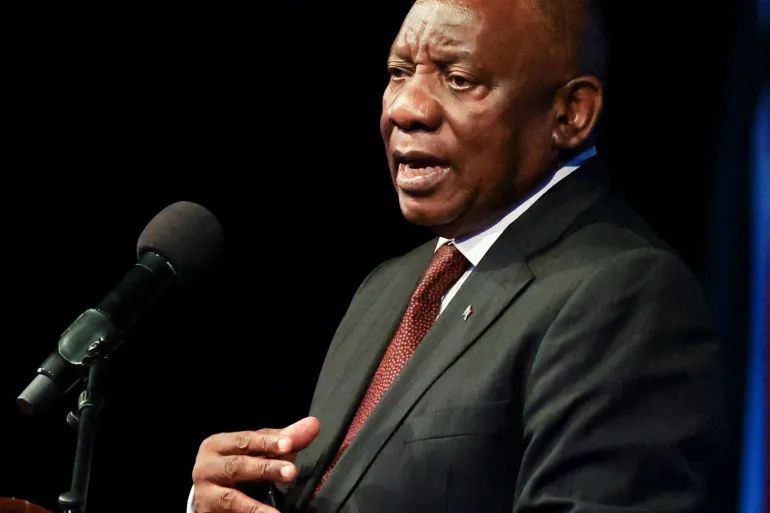

South African President Cyril Ramaphosa has intensified his diplomatic engagement on the Russia-Ukraine conflict, holding consecutive phone calls with Russian President Vladimir Putin and Ukrainian President Volodymyr Zelensky on Friday in a renewed push for a ceasefire.
The talks came as global pressure mounts for an end to the war, with US President Donald Trump warning Moscow to halt its military operations or face tougher sanctions. The outreach also precedes a planned meeting between Trump and Putin next week, raising hopes for possible diplomatic openings.
In a statement after his discussion with Zelensky, Ramaphosa said the call focused on peace initiatives that could “bring an end to the war, with its attendant loss of life and destruction of infrastructure.” He said South Africa remains committed to supporting dialogue that can lead to a negotiated settlement.
Zelensky, for his part, said he updated Ramaphosa on his recent engagements with European leaders and Trump, emphasising that “a ceasefire must be the starting point for peace.” He accused Putin of deliberately prolonging hostilities to gain leverage in any negotiations.
Earlier in the week, Ramaphosa also spoke with Trump on a separate issue — Washington’s planned 30% tariffs on South African imports — in a conversation that touched on both trade and global security.
Africa’s stake in the war
Diplomatic analysts say Ramaphosa’s mediation is part of a broader contest for influence on the African continent between Moscow and Kyiv.
Oscar van Heerden, senior research fellow in African diplomacy at the University of Johannesburg, said both Russia and Ukraine are actively courting African governments. “This war has shown that when you’re dealing with the US, which uses sanctions and trade restrictions as tools, you need other allies. Africa holds strategic importance, especially for its mineral resources,” he noted.
Despite heavy Western sanctions, Russia has continued to trade with key partners, including Iran, China, and India — a reality that makes Africa’s role in global realignments more significant.


