
By using this site, you agree to the Privacy Policy and Terms of Use.
Accept
DNE Africa
  • Home
  • Politics
    ca4ee24e 53a2 4143 bcc1 f1ad27024df4
    Culture

    Eswatini Marks 58 Years of Independence from Britain

    By Ahmed Emam 1 Min Read
    IMG ٢٠٢٦٠٥١٧ ٢١٢٨٥٨
    Business

    Egypt’s Cargas Eyes Nigeria Expansion to Transfer CNG Vehicle Conversion Expertise

    By Ahmed Emam September 6, 2026
    42eb8612c3354cdf
    Business

    Uber Exits Nigeria, Uganda as Africa Footprint Shrinks

    By Ahmed Emam September 5, 2026
  • Business
    news 20250408 1
    Business

    Ghana Prepares $10bn Economic Transformation Programme

    Ghana’s Finance Minister Cassiel Ato Forson has begun consultations with key government…

    By Ahmed Emam 2 Min Read
    images 14
    Business
    Chad Expands Girls’ Education Through AfDB-Backed School Modernisation Project
    nwagboso chibuzo
    BusinessInsider
    INTERVIEW: IFPRI’s Nwagboso on Empowering Young Women in Africa’s Agrifood Sector
    images 12
    Business
    IMF Reaches Staff-Level Agreement on $2.2bn Loan Programme for Senegal
    41 2026 639238906292353897 235 1
    BusinessPolitics
    Xi Jinping in Egypt: Why Cairo Matters to China’s Africa and Global South Strategy
  • Culture
  • Opinion
  • Technology
  • World
  • My Bookmarks
Reading: Angola Protests Turn Deadly as Fuel Price Hike Sparks Unrest
Sign In
  • Join US
DNE AfricaDNE Africa
Font ResizerAa
  • Home
  • Politics
  • Business
  • Culture
  • Opinion
  • Technology
  • World
  • My Bookmarks
Search
  • Home
  • Politics
  • Business
  • Culture
  • Opinion
  • Technology
  • World
  • My Bookmarks
Have an existing account? Sign In
Follow US
© Foxiz News Network. Ruby Design Company. All Rights Reserved.
Angola Protests Turn Deadly as Fuel Price Hike Sparks Unrest

Angola Protests Turn Deadly as Fuel Price Hike Sparks Unrest

Taha Sakr
Last updated: July 31, 2025 10:00 am
By Taha Sakr 4 Min Read
Share
SHARE

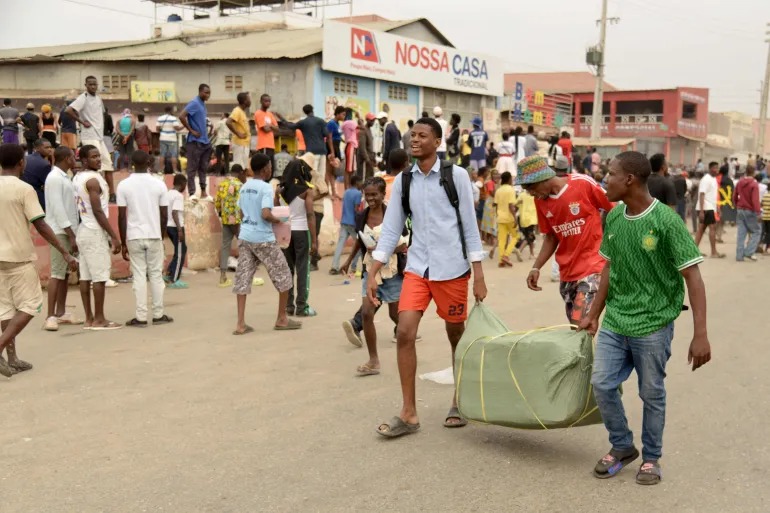
At least 22 people have been killed and 197 injured in violent protests that erupted across Angola this week following a controversial government decision to hike diesel fuel prices by one-third. The unrest, which began in the capital Luanda, quickly spread to at least six other provinces, prompting a military deployment to restore order.

The demonstrations were triggered by a three-day strike launched on Monday by taxi driver unions opposing the subsidy cut, which is part of the government’s broader economic reform agenda aimed at reducing public spending and aligning with IMF-backed fiscal policies.

What began as peaceful resistance soon escalated into scenes of chaos. Eyewitnesses and local media reported widespread looting, vandalism, and clashes with security forces. Gunfire was heard across Luanda and other cities throughout Monday and Tuesday, with shops ransacked and vehicles destroyed. The situation forced many residents to remain indoors as streets emptied under heavy police and military patrol.

In a statement released Wednesday, the Angolan presidency confirmed the death toll and stated that over 1,200 individuals had been detained. The unrest led to the destruction of 66 stores, 25 vehicles, and multiple warehouses. The government acknowledged the deployment of the army, describing the unrest as having created a “widespread climate of insecurity.”

Interior Minister Manuel Homem confirmed that one of the fatalities was a police officer. On Wednesday, President João Lourenço chaired an emergency cabinet meeting to assess the deteriorating security conditions and oversee the government’s response.

Despite a relative calm returning to the capital by midweek, Luanda remained tense. Public transportation resumed partially after a two-day halt, but many shops stayed shuttered. Long lines were seen outside a few open fuel stations and grocery stores, while security forces maintained a heavy presence in high-risk areas.

International watchdog Human Rights Watch condemned the government’s response, accusing security forces of using excessive force against demonstrators. According to the group, the protests were largely peaceful, yet met with tear gas, rubber bullets, and unprovoked physical assaults. This week’s crackdown mirrors similar events in 2023, when fuel price increases also sparked deadly protests.

Angola, a major oil producer on Africa’s Atlantic coast, has gradually removed fuel subsidies over the past two years as part of economic reforms. The government says the fuel subsidy amounted to 4% of GDP in 2024, straining public finances.

However, critics argue that the government’s reforms are divorced from the realities of daily life in a country plagued by inequality and soaring living costs. Opposition parties, including UNITA and the Democratic Bloc, issued a joint statement on Wednesday blaming the crisis on “out-of-touch policies” and calling the situation “a severe social and economic emergency.”

The ruling MPLA party, which has maintained power since independence in 1975, continues to face accusations of authoritarianism and suppressing dissent. Observers fear the recent wave of protests could signal deeper discontent brewing beneath Angola’s fragile economic recovery.

As pressure mounts domestically and internationally, all eyes are now on the Lourenço administration’s next steps — and whether it can balance fiscal reform with growing public frustration.


You Might Also Like

UN Backs Map Showing Africa’s True Size

Foreign Fighters, Weapons Networks Fuelling Sudan War, UN Probe Says

Sudan and Eritrea leaders hold vital security talks in Asmara to counter escalating regional tensions

Painted for War: Inside the Ethiopian Army Base Arming Sudan’s RSF

WFP Condemns Air Strike on Aid Convoy in Sudan’s South Kordofan

TAGGED:AfricaAngolaFuel
Share This Article
Facebook Twitter Pinterest Whatsapp Whatsapp LinkedIn Reddit Telegram Email Copy Link

You Might Also Like

Egypt and China assert Red Sea security belongs to littoral states during Xi's Cairo visit
Politics

Egypt and China assert Red Sea security belongs to littoral states during Xi’s Cairo visit

By Mohamed Samir 3 Min Read
Egypt secures Chinese backing on Nile water security during historic Xi visit to Cairo
Politics

China backs Egypt against unilateral Nile control as Xi and Sisi sign strategic agreements

By Mohamed Samir 5 Min Read
41 2026 639238906292353897 235 1
BusinessPolitics

Xi Jinping in Egypt: Why Cairo Matters to China’s Africa and Global South Strategy

By Ahmed Emam 4 Min Read

More Popular from DNE AFRICA

ca4ee24e 53a2 4143 bcc1 f1ad27024df4
Culture

Eswatini Marks 58 Years of Independence from Britain

By Ahmed Emam 1 Min Read
Ad imageAd image
Technology

South Africa’s Rand Water Says Cyberattack Has Minimal Impact on Operations

Rand Water, which supplies potable bulk water and sanitation services to South Africa's Gauteng and neighbouring…

By Ahmed Emam
Business

Nigeria Resumes Onion Exports to Ghana after Market Access Dispute

Nigeria has resumed onion exports to Ghana after officials from both countries intervened to address a…

By Ahmed Emam
Business

Chad Expands Girls’ Education Through AfDB-Backed School Modernisation Project

Chad is stepping up efforts to improve girls’ access to quality education through a major school…

By Ahmed Emam
BusinessInsider

INTERVIEW: IFPRI’s Nwagboso on Empowering Young Women in Africa’s Agrifood Sector

Chibuzo Nwagboso: Finance Alone Cannot Unlock Young Women’s Potential in Africa’s Agrifood Systems Financial access alone…

By Ahmed Emam
DNE Africa

News by Africans, For Africans

Categories

  • The Escapist
  • Entertainment
  • Business

Quick Links

  • Advertise with us
  • Newsletters
  • Complaint
  • Deal

DNE Africa.All Rights Reserved.

Welcome Back!

Sign in to your account

Username or Email Address
Password

Lost your password?