
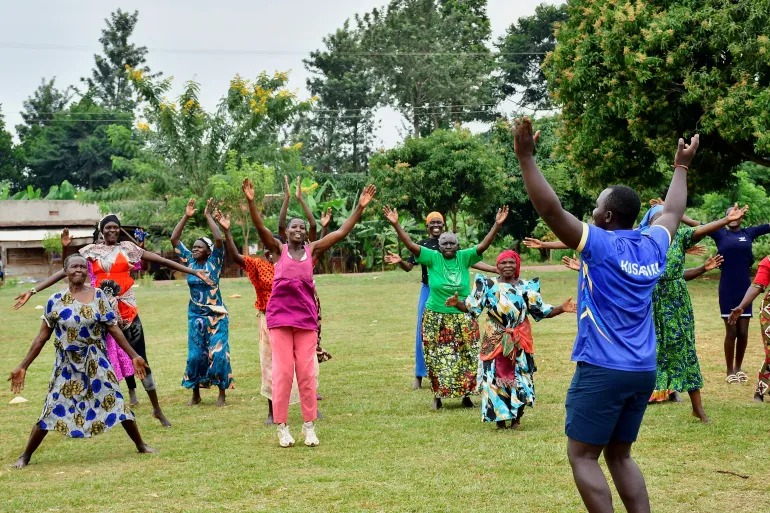

A growing public health crisis in Uganda is prompting targeted community interventions as obesity rates among elderly women continue to surge, becoming one of the country’s leading causes of mortality, according to recent national and global data.
Once a relatively rare condition in Uganda, obesity has steadily climbed over the past two decades. In 1995, just 4% of Ugandan women were classified as obese. By 2019, that figure had soared to 10.4%, based on the Global Nutrition Report. The contrast with male counterparts is stark: the latest figures show that only 2.3% of Ugandan men are obese.
Amid the rising toll of non-communicable diseases linked to obesity—such as type 2 diabetes, hypertension, and heart disease—a local initiative in eastern Uganda is offering a lifeline. In the rural village of Kifubuka, more than 1,000 elderly women have joined a fitness project over the past five years aimed at reversing obesity and improving overall health.
Each week, the women gather on a dirt playing field for group workouts designed to reduce body weight and mitigate the health complications associated with obesity. Many participants are also battling other chronic conditions like diabetes and high blood pressure. For them, the program has become both a physical and social outlet.
Jane Anonyalaba, a 70-year-old grandmother, is among the program’s success stories. “I used to get breathless just walking up small hills,” she recalls. “Now I can jog. My energy is back.” Like many others in the program, Anonyalaba credits regular physical activity with transforming her quality of life.
Health experts say the trend in Uganda mirrors a wider crisis unfolding across the African continent. According to the World Health Organization (WHO), Africa is witnessing a sharp rise in obesity, fueled by increasingly urban lifestyles and the widespread consumption of cheap, highly processed foods. The shift in diet, combined with reduced physical activity, is pushing obesity rates higher—particularly among women.
The WHO’s data reveals that across Africa, obesity affects 17% of adult women, compared to just 6.8% of men. In Uganda, the pattern is even more pronounced among elderly women, many of whom lack access to consistent healthcare or nutrition education.
Low-cost, community-based fitness programs like the one in Kifubuka are emerging as a practical solution. Organizers say the simplicity of the model—outdoor gatherings, basic exercises, and local volunteer trainers—makes it highly scalable and sustainable across rural settings.
However, the health challenges remain daunting. In Uganda, non-communicable diseases now account for two-thirds of all deaths, a drastic increase from the year 2000. Public health officials warn that without stronger national strategies on prevention, the country’s healthcare system could face mounting pressure in the years ahead.
Ugandan health authorities are working with NGOs and international partners to scale similar initiatives across other rural communities, focusing on early intervention, fitness education, and accessible treatment for related conditions.
As the country continues to navigate the complexities of development and modernization, the battle against obesity—especially among its aging population—is shaping up to be one of the defining public health struggles of the coming decades.


