
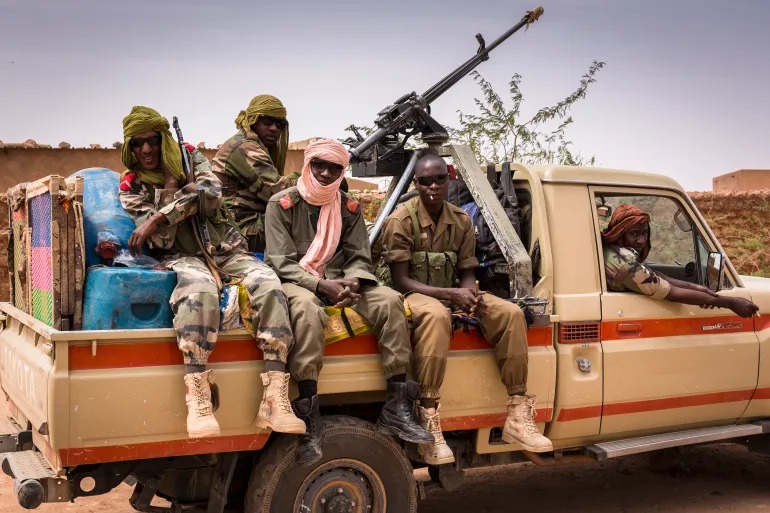

An Indian national was killed and two others abducted in Niger following an armed ambush near the country’s border with Nigeria, the Indian Embassy in Niamey confirmed on Friday.
The attack occurred in the Dosso region, approximately 100 kilometers from the capital Niamey, and targeted a military convoy providing security for workers at a power station construction site, according to reports by Agence France-Presse (AFP).
One Nigerien soldier assigned to escort the group was also killed in the assault, which took place in an area classified by security agencies as high-risk due to frequent militant activity. Armed groups operating in western Niger have repeatedly targeted foreign workers and government infrastructure in recent years.
The identities of the two missing Indian nationals have not been disclosed, and no group has claimed responsibility for the attack.
Ongoing Security Threats to Foreign Workers
This incident is not the first targeting Indian nationals in Niger. In April this year, five Indian technicians were abducted in a similar ambush near the volatile Tillabéri region, during which 12 Nigerien soldiers lost their lives.
The Indian Embassy stated that it is working closely with the employer and the families of the victims to facilitate the repatriation of the deceased and secure the release of the abducted individuals. “Efforts are underway to recover the body and ensure the safe return of the missing workers,” the embassy said in a statement.
Nigerien authorities have not issued an official statement regarding the latest incident, and the military has yet to provide clarification on the circumstances surrounding the attack.
Rising Trend of Abductions
The Dosso incident adds to a growing number of kidnappings and attacks on foreigners in Niger this year. Earlier in 2025, a 73-year-old Austrian woman was abducted from the Agadez region. The government confirmed it is pursuing those responsible but has not announced any breakthroughs.
Niger, a country grappling with insurgencies on multiple fronts, continues to face persistent security threats from extremist groups linked to al-Qaeda and the Islamic State. Despite efforts to strengthen military operations and coordinate regional counterterrorism strategies, large swathes of the western and southern regions remain vulnerable to violent attacks.
International aid workers, foreign contractors, and expatriate communities have been increasingly advised to exercise extreme caution when operating in high-risk zones, particularly near border regions where militant influence remains strong.


