
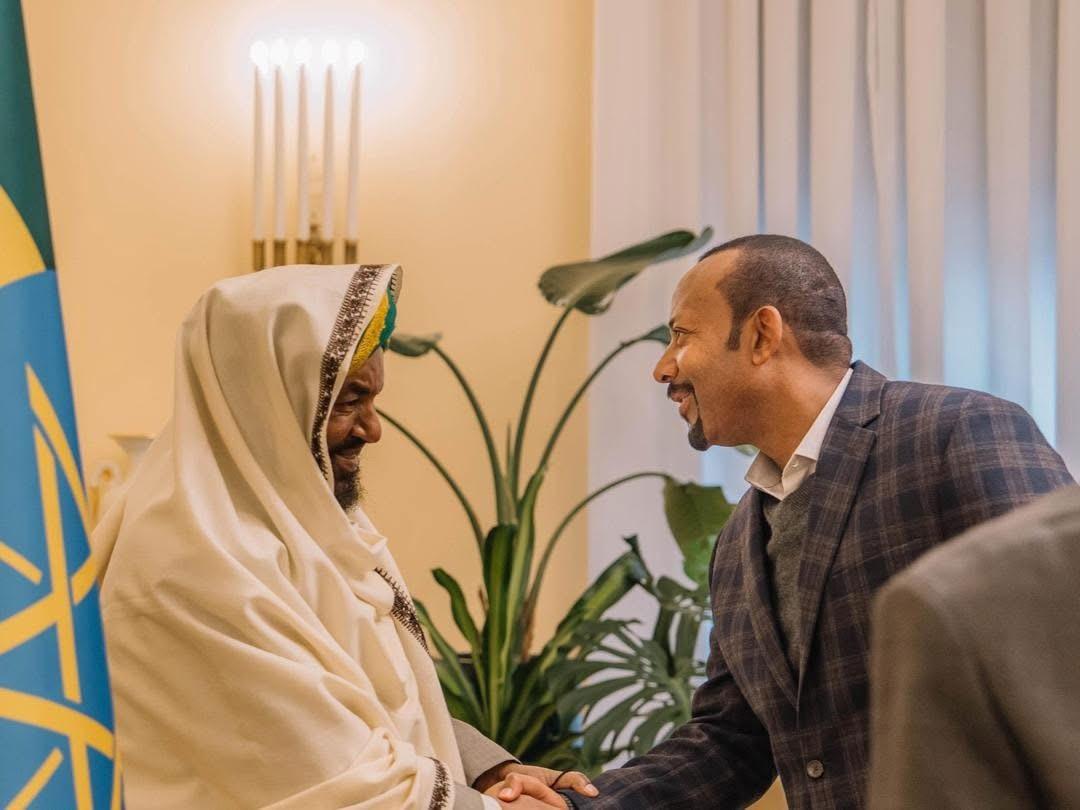

Ethiopian Prime Minister Abiy Ahmed has announced that he held high-level talks with religious leaders and elders from the Tigray region to address ongoing political and humanitarian challenges, in what may be a significant step toward national reconciliation and Tigray’s reintegration into Ethiopia’s federal system.
The meeting comes just two days after a 21-member delegation of religious leaders from Mekelle—representing seven religious institutions—met with Tigray Interim Administration President Lt. Gen. Tadesse Worede and regional officials to discuss the implementation of the Pretoria Peace Agreement.
Abiy described the latest talks as “in-depth discussions” that focused on Tigray’s post-conflict recovery, the return of displaced persons, economic reconstruction, and the fragile peace process. He emphasized that both sides reached a “common understanding” on key issues and reaffirmed their “commitment to dialogue” as the only sustainable path forward.
Crucially, the talks addressed the contentious issue of Tigray’s federal representation—a matter unresolved since the outbreak of the two-year civil war. The region has remained without seats in both the House of Peoples’ Representatives and the House of Federation since the conflict began.
According to Abiy’s office, both parties agreed on the need for Tigrayan intellectuals and citizens to actively participate in Ethiopia’s political and economic life. While no formal decisions were announced, observers see the move as a possible precursor to restoring Tigray’s voice in the federal system.
In a previous statement to Parliament on July 3, Abiy praised the Pretoria Agreement for halting hostilities and “fostering unity by engaging former combatants.” He reiterated that “peace is the only option” for Tigray and warned against relying on foreign pressure, which he called “misguided.”
The Prime Minister also urged all Ethiopians to support the national dialogue process and called on religious figures, elders, and diplomats to help prevent a return to violence.
While the federal government has not yet announced concrete steps toward political reintegration, Friday’s meeting suggests a gradual thaw in relations—offering a potential opening to resolve one of Ethiopia’s most divisive post-war challenges.


