
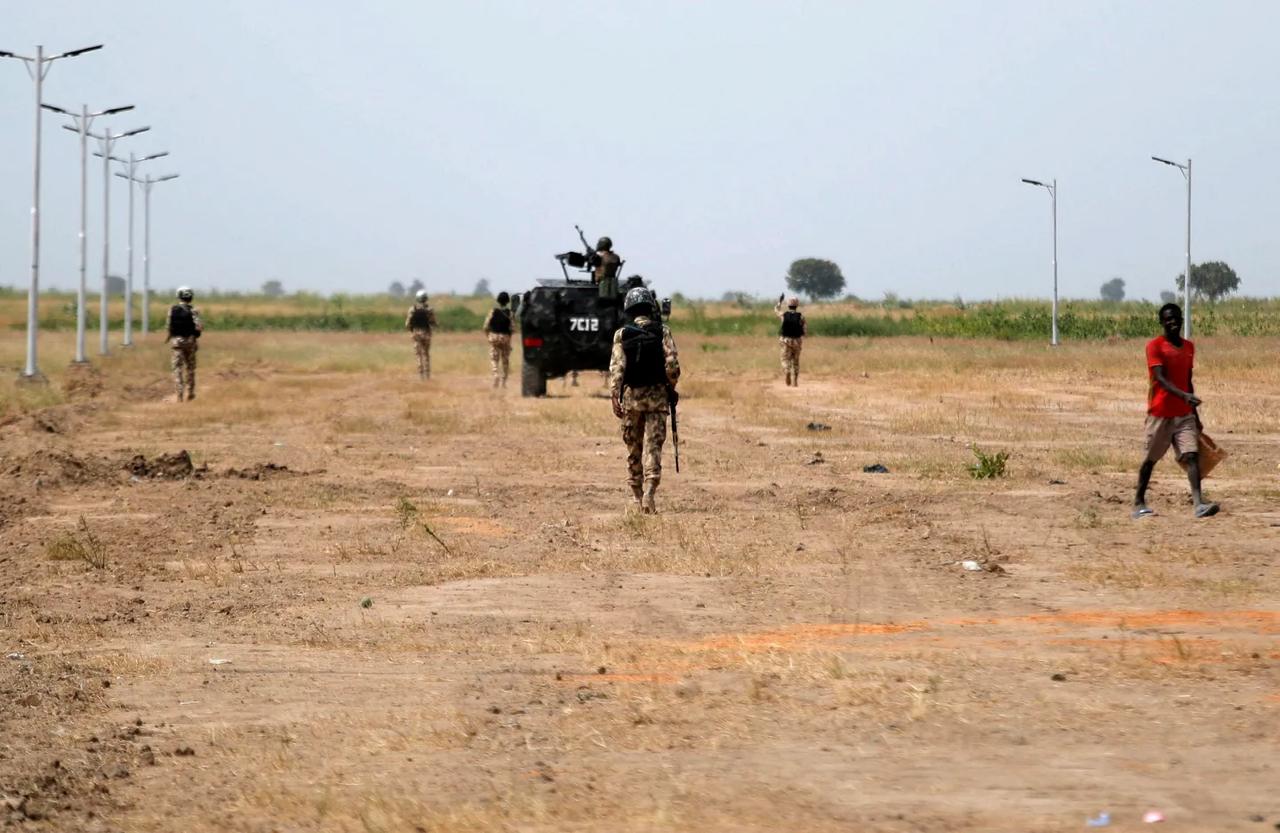

In a significant move against terrorism financing, Nigerian authorities have sentenced 44 members of the extremist group Boko Haram to prison terms of up to 30 years. The convictions, announced on Saturday, are part of a broader national effort to dismantle the financial networks sustaining armed insurgencies across the country.
The spokesperson for Nigeria’s Counter-Terrorism Centre, Abu Michael, confirmed in an official statement that the convicted individuals were among 54 suspects tried by four civilian courts specially constituted to sit inside a military base in Kainji, Niger State, in central Nigeria. These courts were established to expedite the prosecution of terrorism-related cases in a secure environment.
The trials mark a continuation of Nigeria’s strategy to combine military operations with legal and financial counterterrorism tools. The suspects were found guilty of providing various forms of material and financial support to Boko Haram, a group that has been responsible for over a decade of violence in northeastern Nigeria and beyond. The convicted individuals were charged under Nigeria’s Terrorism (Prevention) Act, which criminalizes the funding of terrorist activities.
“This is an important step in the ongoing fight against terrorism in Nigeria,” Michael said. “By disrupting the financial enablers of these violent groups, we are sending a clear message: those who support terror, directly or indirectly, will face the full force of the law.”
The Boko Haram insurgency, which began in 2009, has led to the deaths of more than 35,000 people and displaced over 2 million across Nigeria and the Lake Chad region. Despite military gains and leadership decapitations in recent years, the group and its offshoot, the Islamic State West Africa Province (ISWAP), continue to pose serious threats through attacks on civilians, abductions, and ambushes on military targets.
Experts note that the resilience of such groups often depends on illicit funding sources, including ransom payments, smuggling, extortion, and contributions from local and foreign sympathizers. By focusing on terrorism financing, Nigerian authorities aim to weaken the logistical backbone that allows such insurgencies to persist.
Human rights groups and international partners have welcomed the convictions but have called for transparency in the legal process and continued adherence to due process. Previous mass trials of terror suspects in Nigeria were criticized for lack of legal representation, limited access to evidence, and prolonged pre-trial detention.
Meanwhile, Nigeria’s security forces continue to conduct counterinsurgency operations in the northeast and are working with regional partners through the Multinational Joint Task Force (MNJTF) to combat cross-border militant activity.
The Nigerian government has vowed to maintain a dual approach—combining kinetic operations with robust judicial and financial measures—to curb terrorism and restore peace to affected regions. The recent convictions in Kainji are seen as a milestone in that campaign.


