
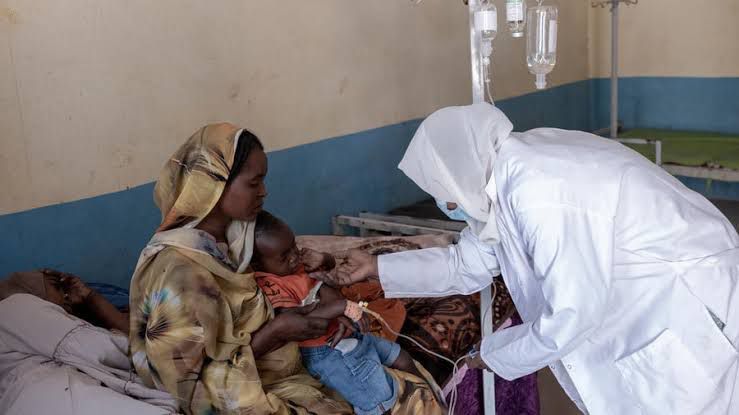

A United Nations committee has expressed deep concern over the humanitarian crisis unfolding in Chad, revealing that the country currently hosts 1.8 million internally displaced or stateless individuals amid ongoing political and security instability.
The figure was highlighted in the latest findings by the Committee on the Elimination of Discrimination Against Women (CEDAW), which also reported that Chad received an additional 1.2 million refugees during 2024 alone — one of the highest refugee influxes in the region.
The committee commended Chad’s recent adoption of a progressive asylum law that grants refugees equal rights to education, healthcare, and social protection on par with Chadian nationals. However, it warned that in practice, many displaced populations face “limited access to essential services” and “intersecting forms of discrimination.”
In its recommendations, CEDAW urged the Chadian government to take urgent steps to improve living conditions for refugees and displaced persons and to address structural inequalities that disproportionately affect women and vulnerable groups.
The report forms part of a broader review of state compliance with the Convention on the Elimination of All Forms of Discrimination Against Women. Alongside Chad, the committee’s latest session examined conditions in Afghanistan, Botswana, Fiji, Ireland, Mexico, San Marino, the Solomon Islands, Thailand, and Tuvalu.
Chad remains under pressure from both internal displacement — largely due to armed conflict, political tensions, and climate shocks — and cross-border refugee movements, especially from neighboring Sudan and the Central African Republic.
Humanitarian agencies have long warned of the strain on Chad’s infrastructure and limited resources, calling for greater international support to address the mounting challenges facing both host communities and displaced populations.


