

South Africa and Russia have both rejected accusations of hostility toward the United States, following threats by U.S. President Donald Trump to impose a 10% tariff on countries aligning with BRICS policies. The two countries emphasized that BRICS is not intended to undermine any other global power.
In a response to Trump’s remarks, South Africa’s Department of Trade said the country is not anti-American and remains open to negotiations for a bilateral trade agreement. A spokesperson confirmed that talks, initiated during President Cyril Ramaphosa’s visit to the White House in May, remain ongoing.
“We are still waiting for formal communication from the U.S. side regarding our trade agreement, but discussions have been constructive,” said Department of Trade representative Kamel Ali, adding, “As we have consistently stated, South Africa is not opposed to the United States.”
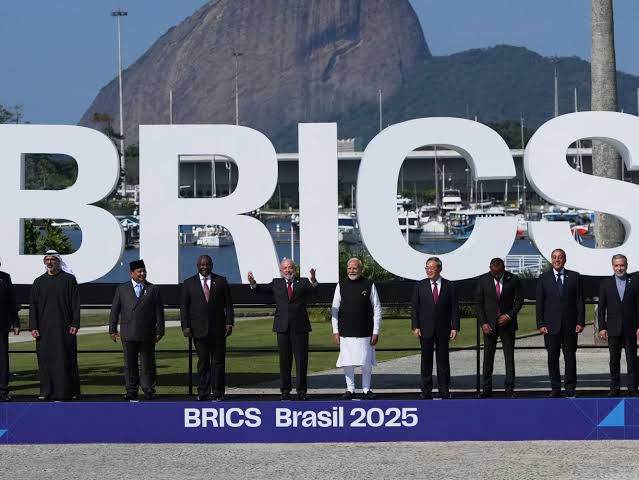
Meanwhile, the Kremlin also weighed in. Responding to questions on Trump’s threats during a BRICS summit in Brazil, Kremlin spokesperson Dmitry Peskov said that the BRICS bloc is focused on mutual cooperation and is not targeting any third party.
“We’ve seen President Trump’s remarks, but BRICS is built on shared interests among its members. This collaboration has never been intended as antagonistic,” Peskov said.
Earlier in the day, China also voiced concern over the use of tariffs as a coercive tool. Foreign Ministry spokeswoman Mao Ning said during a routine press briefing that leveraging tariffs for political gain benefits no one.
On Sunday, Trump posted on Truth Social warning that any country siding with BRICS’ so-called “anti-American” policies would face additional 10% tariffs without exception. His remarks came as BRICS leaders convened in Rio de Janeiro for their annual summit.
During the summit, BRICS leaders criticized Washington’s unilateral trade tariffs, calling for a more equitable global economic order. BRICS, which originally included Brazil, Russia, India, China, and South Africa, expanded in 2024 to include Egypt, Ethiopia, Iran, Indonesia, and the UAE.
The widening influence of BRICS has prompted concern in Washington, particularly as several new members move to deepen political and economic ties with China and Russia. However, bloc members insist that BRICS is a platform for constructive multilateralism—not confrontation.


