
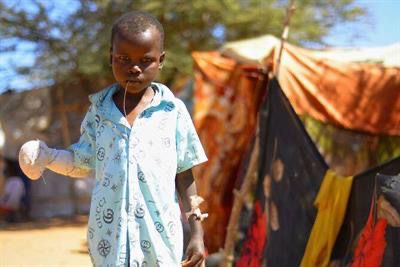

The World Food Programme (WFP) has issued a stark warning about the rapidly deteriorating humanitarian situation in Sudan, revealing that nearly 4.6 million people across the country are now facing the threat of famine, amid escalating conflict, economic collapse, and growing displacement.
Speaking in a televised interview with Cairo News, Mohamed Gamal El-Din, WFP’s national spokesperson in Sudan, described the food crisis as one of the worst the country has witnessed in decades. He singled out Darfur and El Fasher in particular as areas experiencing what he called “catastrophic levels of hunger,” where families are struggling to access even basic food supplies.
“What we are witnessing in many areas of Sudan is a humanitarian emergency of immense proportions. Millions are trapped between violence, displacement, and food scarcity,” said Gamal El-Din.
Rainy Season Exacerbates the Emergency
The WFP spokesperson warned that the situation is expected to worsen significantly in the coming weeks as Sudan enters the rainy season. Seasonal flooding regularly cuts off access to many regions, making it nearly impossible for aid convoys to deliver life-saving supplies to isolated communities.
“The rains don’t just bring water—they bring isolation,” he said. “Many of the areas most affected by food insecurity will soon be inaccessible, which could leave entire populations without aid for weeks or months.”
Crisis Extends Beyond Darfur
While much attention remains focused on the long-suffering Darfur region, Gamal El-Din emphasized that the hunger crisis now extends far beyond. Parts of Kordofan, the Blue Nile, and even urban areas like Khartoum are experiencing a sharp rise in food insecurity due to continued instability, market disruptions, and the collapse of public services.
The conflict between the Sudanese Armed Forces (SAF) and the Rapid Support Forces (RSF) has displaced millions and left the economy in tatters. Prices of basic food items have soared, and food systems have collapsed in many parts of the country.
WFP Assistance Reaches Millions — But More Is Needed
Despite the complex security landscape, WFP has managed to reach over 1 million people in Khartoum and another 1.7 million in other regions, thanks to cooperation with local authorities and humanitarian access arrangements. However, the scale of need continues to outpace available resources.
Gamal El-Din said WFP is scaling up operations to include newly affected areas, especially as waves of internally displaced persons (IDPs) flee from conflict zones like Khartoum, Gezira, and Central Sudan to safer states such as Kassala, Gedaref, and River Nile State.
“We are racing against time. Every week brings new displacement, new suffering, and more people in need of urgent food assistance,” he added.
Funding Gap Threatens Aid Delivery
One of the gravest challenges now, according to the WFP, is a widening funding gap that could bring operations to a halt in the coming months. Gamal El-Din warned that unless additional funding is secured, the WFP will be forced to scale back or suspend critical food distributions — a move that could result in devastating consequences for already vulnerable populations.
“Without new financial support, not only will we lose lives inside Sudan — we also risk triggering a wider regional emergency that affects Sudanese refugees in Chad, Libya, Ethiopia, and the Central African Republic,” he warned.
In March, WFP launched an emergency appeal for $800 million to sustain its operations in Sudan through the rest of the year. So far, less than half that amount has been secured.
Global Advocacy Underway
To address the crisis, WFP has launched a global advocacy campaign to mobilize donors, governments, and international partners. The agency is urging immediate and sustained financial commitments to allow it to expand its reach and continue operations in conflict zones, displacement camps, and hard-to-reach rural areas.
Gamal El-Din emphasized that saving lives now depends on political will and international solidarity. “We are doing everything we can, but without funding, we are left with impossible choices — who to feed and who to leave behind.”
A Regional Humanitarian Flashpoint
The Sudan conflict, now well into its second year, has become one of the largest displacement and hunger crises in Africa, with broader implications for regional stability. Over 2 million people have fled the country, while over 10 million are displaced internally, according to UN figures.
With access shrinking, markets collapsing, and fighting spreading, aid agencies warn that the international community cannot afford to look away.
“This is no longer just a Sudanese crisis,” said Gamal El-Din. “It’s a regional humanitarian emergency, and if we don’t act decisively now, the consequences will be felt far beyond Sudan’s borders.”


