
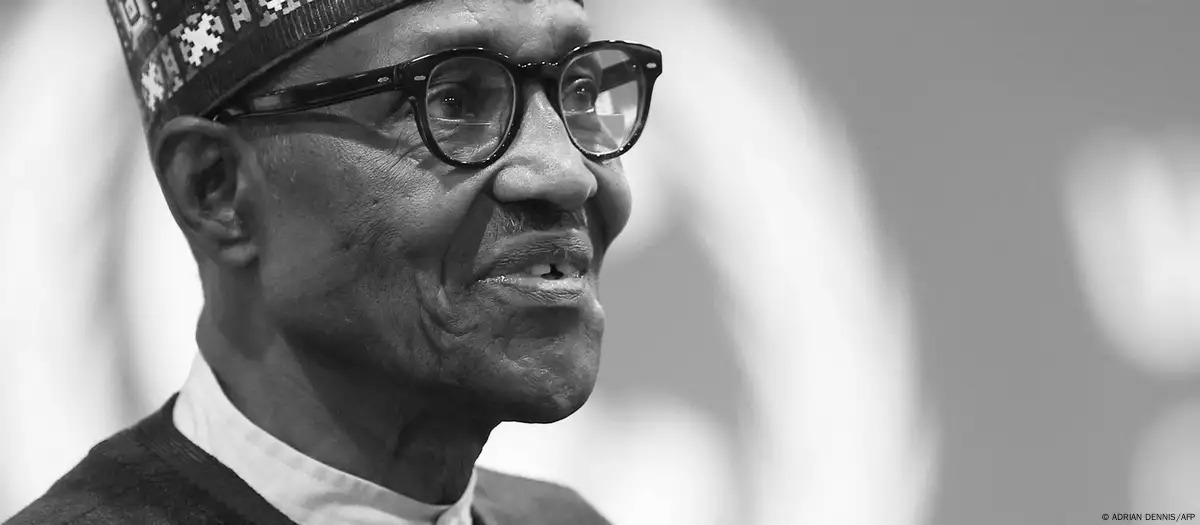

Nigeria’s former president, Muhammadu Buhari, has passed away in London at the age of 82 after battling a prolonged illness, according to a statement from the office of President Bola Tinubu.
The announcement, made via social media on Sunday evening, did not disclose the nature of the illness. Buhari had been receiving medical care in the United Kingdom for the past three months.
President Tinubu ordered national flags to be flown at half-mast in tribute to Buhari, who served as both a military and civilian leader of Africa’s most populous nation.
Military ruler turned civilian president
Buhari first came to power in 1983 following a military coup, ruling Nigeria for 18 months before being deposed in another coup led by General Ibrahim Babangida.
Three decades later, Buhari re-emerged on the political scene as a civilian candidate, branding himself a “converted democrat.” In 2015, he made history by becoming the first opposition figure in Nigeria to defeat an incumbent president, unseating Goodluck Jonathan in what was widely considered the country’s most credible election to date.
He was re-elected in 2019 and served two terms until 2023.
Mixed legacy: health secrecy, economic strain, and worsening insecurity
Throughout his presidency, Buhari faced persistent concerns about his health, particularly during extended absences from office. While details remained closely guarded, he once admitted that he had undergone multiple blood transfusions and said he had “never been so ill.”
His first term was marked by economic turbulence, including Nigeria’s first recession in a generation and a sharp drop in global oil prices, which exposed the country’s dependency on crude exports.
Critics dubbed him “Baba Go Slow” after he delayed appointing a cabinet for six months following his 2015 victory.
Buhari’s tenure was also overshadowed by worsening insecurity. Despite early hopes that the retired general would curb extremist violence, Nigeria witnessed continued attacks by Boko Haram and its offshoot, the Islamic State West Africa Province (ISWAP). The insurgency, which began in 2009, expanded beyond the northeast and has resulted in over 36,000 deaths and displaced at least two million people, according to the United Nations.
In response to militant threats, Buhari’s administration launched several counter-insurgency operations, but large areas of the country remained beyond the reach of state security forces.
National mourning underway
Buhari’s death marks the end of a long and complex public life that spanned military rule, opposition politics, and two presidential terms. Tributes from regional leaders and international partners are expected in the coming days as Nigeria enters an official mourning period.


