

Mauritania’s Council of Ministers on Wednesday ratified the Murphy Oil contracts for the offshore C-10 and Tiof blocks and approved a 49% state stake in an Italian-backed farm venture in Brakna.
The decisions move the US company’s entry into Mauritanian waters from signature to approval, at a time when the government is trying to revive offshore exploration after its first gas exports, and add a large irrigated wheat project to its push to cut food imports.
What did Mauritania’s cabinet approve for Murphy Oil?
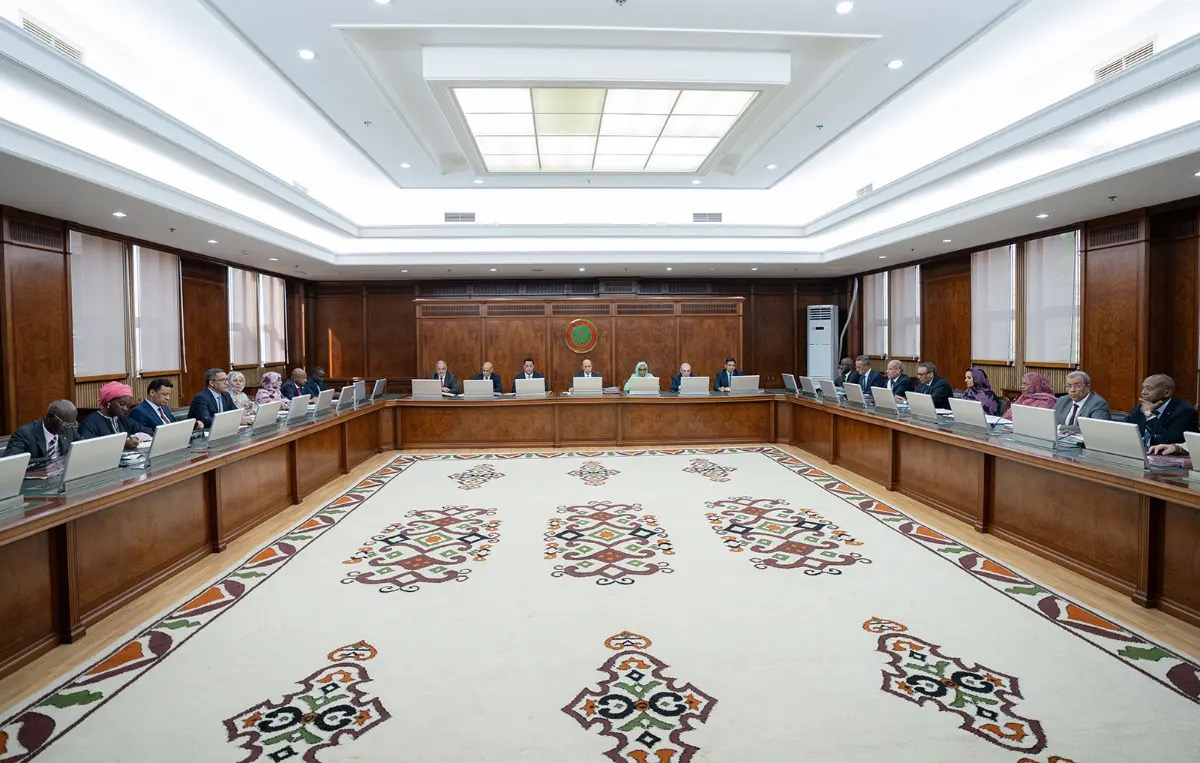
The council, chaired by President Mohamed Ould Cheikh El Ghazouani, adopted two draft decrees ratifying exploration and production contracts for blocks C-10 and Tiof in the Coastal Basin, signed with Murphy Oil Corporation on 3 November, according to the government’s communique, published in Arabic by the state news agency AMI on 25 November.
The government said the Murphy Oil contracts showed “renewed interest” from oil and gas companies in investing in the country and would give “strong momentum” to the resumption of offshore exploration (translated from Arabic). It said the deal reflected the competitiveness of its legal framework and its political stability; those are the government’s own assessments.
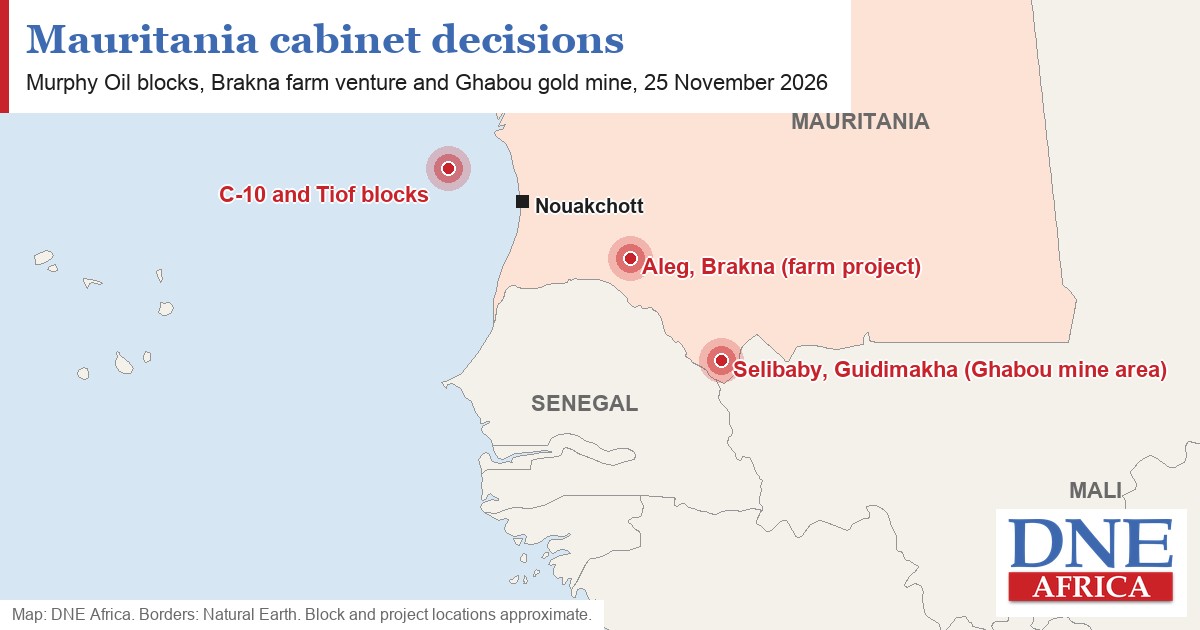
Under the Murphy Oil contracts, the company, through its subsidiaries, holds a 90% working interest and will operate both blocks, which cover about 3.1mn acres, the company said on 4 November. The state’s Société Mauritanienne des Hydrocarbures (SMH) holds the remaining 10% as a carried interest. Neither side has published the financial terms of the Murphy Oil contracts or work commitments, and the blocks have no announced discovery under the new contracts.
What is the Italian farm venture in Brakna?
At the same meeting that approved the Murphy Oil contracts, the council authorised the state, represented by the finance minister, to buy 49% of MAURITAL AGRI, a company set up with the Italian firm Best Fields Best Food International. The venture will develop and farm 15,000 hectares in the Jari area of Brakna region, irrigated from the new Lweid canal, the communique said. It plans wheat in the cool season, maize in the following season and a line of certified rice seed.
The communique did not give the investment amount, the Italian partner’s contribution or a start date.
What else did the Council of Ministers decide?
Ministers approved two financing laws. One ratifies additional financing of EUR34.2mn (about MRU1.54bn) from the World Bank’s International Development Association (IDA) for a regional electricity access and battery storage project, in two concessional loans of EUR17.1mn each. The other ratifies a EUR21mn loan from the French Development Agency (AFD) for civil protection, alongside a EUR4.5mn EU grant.
The grid financing matters in a country where 52.2% of people had electricity in 2024, up from 49% in 2022, according to World Bank data.
The energy minister also asked for approval to extend the exploration period of the Banda block, held by Kemet Banda (GO GAS HOLDING FZE), to 15 December 2027, so the partners can finish talks on sales contracts and raise finance. The government describes Banda as central to its gas-to-power plans.
The council cancelled two mineral exploration licences, one in the public interest and one for failing legal obligations, after 14 earlier cancellations. It also marked the start of production at the Ghabou gold mine in Guidimakha region, run by SD Mining Ghabou SA with the state. The government put the investment at about $230mn, reserves at about 1.3mn ounces and jobs at 1,000-1,200; those figures could not be independently verified.
The fisheries minister presented the main points of the new EU fisheries agreement, which the government said would cut EU vessels’ catch quotas by more than half and raise their fees by 10%. DNE Africa reported on the Mauritania fishing protocol agreed with the EU on 24 November.
Why do the Murphy Oil contracts matter for Mauritania?
Mauritania became a gas exporter in April 2025, when bp loaded the first cargo from the Greater Tortue Ahmeyim project it shares with Senegal. In the same communique, the government cited a global slowdown in exploration and called the Murphy deal the result of its investment promotion policy.
The economy is also under an IMF programme: the Fund’s board approved new 42-month arrangements worth $95.8mn in June, the IMF said. The Murphy Oil contracts now pass to the exploration phase, in which the partners will assess the blocks’ potential.
FAQ
What are the Murphy Oil contracts in Mauritania?
They are exploration and production contracts for offshore blocks C-10 and Tiof, signed on 3 November and ratified by the Council of Ministers on 25 November. Murphy holds 90% and SMH 10%.
Has oil been found in the Murphy Oil contracts area?
No new discovery has been announced under the contracts. Murphy and SMH said they would evaluate the blocks’ exploration potential.
What is MAURITAL AGRI?
It is a Mauritanian-Italian farm company in which the state will hold 49%, partnered with Best Fields Best Food International, to farm 15,000 hectares in Brakna.
When did the Ghabou gold mine start?
President Ghazouani launched production during a visit to Guidimakha on 23 November, the government said.


