
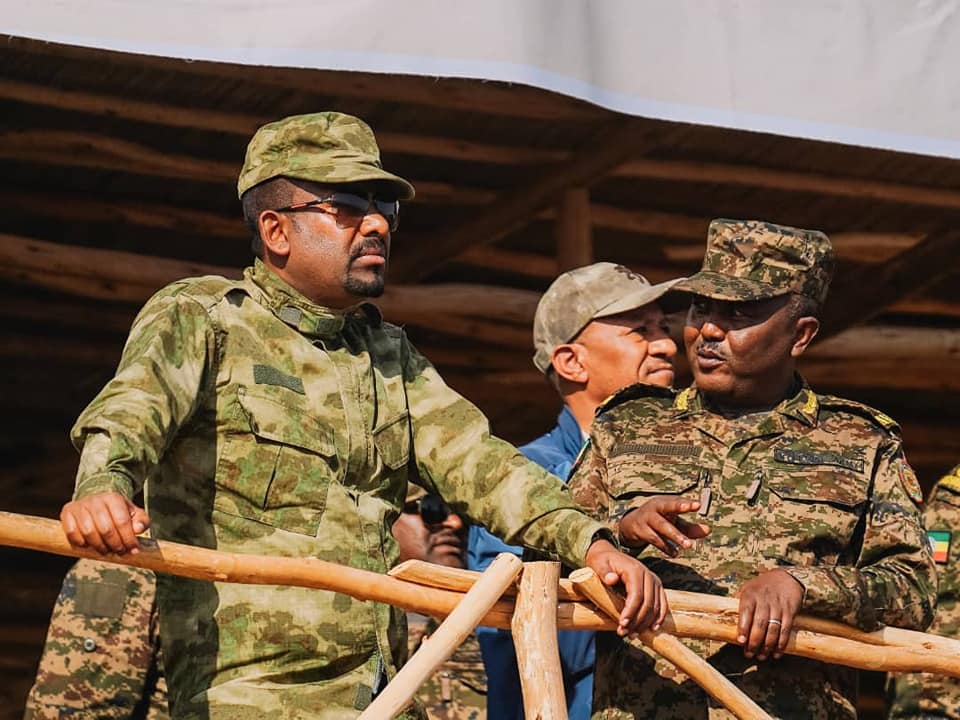

– Ethiopia, once a symbol of African resilience and reform, is now grappling with deepening political unrest and ethnic tensions that threaten to unravel the nation’s fragile stability. Over recent months, the Ethiopian government has intensified its crackdown on opposition movements, deploying security forces and military assets against dissenters in regions like Oromia and Amhara. These actions, coupled with reports of civilian casualties and violations of human rights, are drawing condemnation at home and abroad.
From targeted drone strikes in Amhara to the deportation of Eritrean refugees, the crisis reflects a nation at war with itself, as Prime Minister Abiy Ahmed’s government struggles to maintain control over a deeply fragmented political landscape. International observers warn that Ethiopia’s internal strife could have far-reaching implications for the Horn of Africa, a region already plagued by conflict and instability.
Drone Strikes and Civilian Casualties in Amhara
The Amhara region has become a flashpoint in Ethiopia’s political crisis, with reports of federal forces clashing with regional militias that oppose Prime Minister Abiy’s centralizing reforms. Onlookers were shocked by a recent drone strike near the historic town of Lalibela, a UNESCO World Heritage site, which left dozens of civilians dead. Witnesses described the aftermath as harrowing, with local residents mourning loved ones amid calls for accountability.
“This strike was indiscriminate and unjustified,” said a resident of Lalibela who lost family members in the attack. “We are caught between the government and the militias, and it is civilians who pay the price.”
Amhara militias, who once aligned with the federal government during the Tigray conflict, have grown increasingly critical of Abiy’s administration. They accuse the government of marginalizing their region and undermining its autonomy. The violence has displaced thousands, creating a humanitarian crisis as federal forces intensify their military operations.
Oromia: The Heart of Ethiopia’s Unrest
In Oromia, Ethiopia’s largest and most populous region, the conflict is equally dire. The federal government has been battling the Oromo Liberation Army (OLA), a separatist group it has designated as a terrorist organization. Rights groups have accused Ethiopian security forces of committing extrajudicial killings, arbitrary arrests, and forced disappearances in their campaign against the OLA.
“The situation in Oromia is alarming,” said a human rights advocate based in Addis Ababa. “There is no distinction between combatants and civilians. Entire communities are being displaced in the name of counterinsurgency.”
The unrest in Oromia reflects deeper grievances among Ethiopia’s Oromo population, who have long felt marginalized despite being the country’s largest ethnic group. Many view the crackdown as an attempt to silence legitimate political dissent.
Eritrean Refugees Face Growing Peril
Eritrean refugees, who have sought shelter in Ethiopia to escape one of the world’s most repressive regimes, now find themselves increasingly vulnerable. According to reports from human rights organizations, thousands of refugees have been detained or deported back to Eritrea, where they face imprisonment and torture.
One Eritrean refugee, who spoke on condition of anonymity, described the fear that now grips their community. “We came here seeking safety, but now we are hunted,” they said. “There is no one to protect us.”
International organizations have called on Ethiopia to uphold its commitments under international law, which prohibits the forcible return of asylum seekers to countries where they face harm. However, the Ethiopian government has largely remained silent on these accusations, focusing instead on its internal security challenges.
International Community Raises Concerns
The growing instability in Ethiopia has drawn the attention of the international community, with Western governments and multilateral organizations expressing concern over the escalating violence. The United Kingdom recently issued a travel advisory, warning its citizens against visiting Ethiopia due to the deteriorating security situation.
The United States and the European Union have also weighed in, urging Ethiopia to prioritize dialogue and respect for human rights. “Ethiopia’s stability is crucial for the Horn of Africa,” said a U.S. State Department spokesperson. “We call on all parties to cease hostilities and engage in constructive dialogue.”
Despite these calls, international action has been limited, reflecting Ethiopia’s strategic importance as a key player in regional counterterrorism efforts and a vital ally in the Horn of Africa. Analysts warn that the lack of decisive intervention could embolden the Ethiopian government to continue its heavy-handed approach.
Regional Repercussions
Ethiopia’s internal conflicts have far-reaching implications for its neighbors. Sudan, which shares a porous border with Ethiopia, is already dealing with its own civil war and could see further destabilization if violence spills across the border. The influx of refugees from Ethiopia has added pressure to Sudan’s strained humanitarian resources.
Eritrea’s involvement in Ethiopia’s conflicts has also been a point of contention. While Eritrean troops have reportedly withdrawn from the Tigray region, their initial participation in the conflict has left a legacy of distrust. Analysts fear that renewed instability in Ethiopia could lead to further entanglements with Eritrea, exacerbating tensions in the region.
A Nation at a Crossroads
Prime Minister Abiy Ahmed, once celebrated as a reformist leader, faces mounting criticism over his government’s handling of Ethiopia’s internal crises. Allegations of authoritarianism and human rights abuses now overshadow his Nobel Peace Prize-winning tenure.
Abiy’s supporters argue that his actions are necessary to preserve Ethiopia’s territorial integrity in the face of secessionist threats. However, critics contend that his reliance on military solutions deepens divisions and erodes public trust.
For many Ethiopians, the future feels uncertain. “We want peace, but we see no end to the violence,” said a resident of Addis Ababa. “Our country is being torn apart.”
Path to Stability
Experts agree that Ethiopia’s path to stability lies in dialogue and reconciliation. The federal government must engage with opposition groups, regional leaders, and civil society to address the root causes of the unrest. Greater efforts are also needed to protect civilians and uphold human rights, particularly for vulnerable groups like refugees.
The African Union, headquartered in Addis Ababa, is uniquely positioned to mediate in the crisis. However, concerns over sovereignty and non-interference limit its ability to influence the Ethiopian government.
As Ethiopia’s turmoil continues to unfold, the stakes could not be higher. The nation’s stability is critical not only for its 120 million citizens but also for the wider Horn of Africa and the global community. Whether Ethiopia can overcome its challenges and chart a course toward peace remains an open question—one that will require bold leadership and a commitment to unity above all else.


