
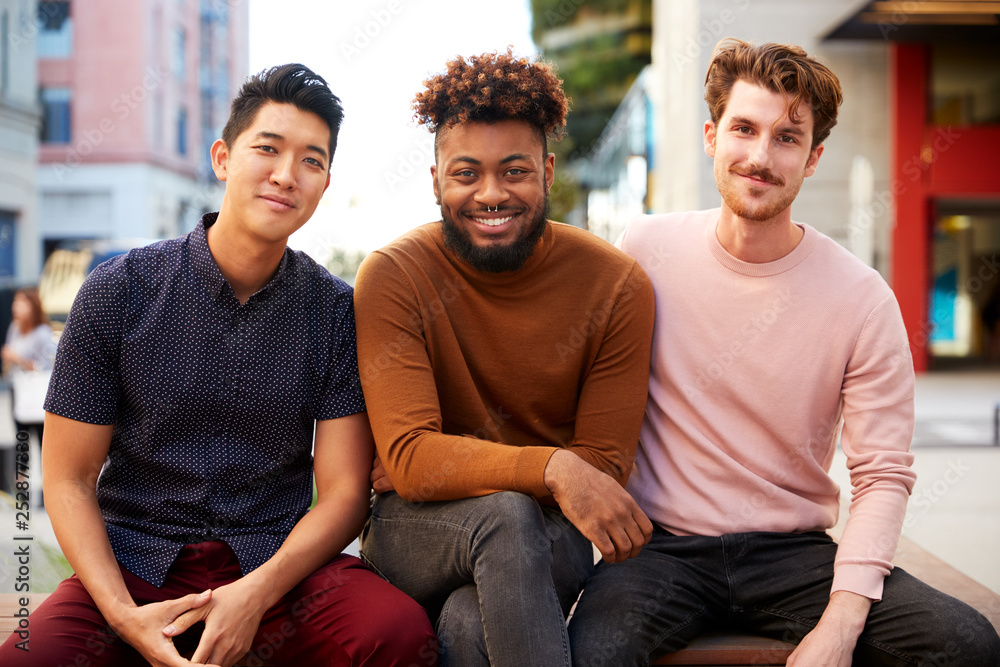

Conservative individuals increasingly express discomfort with the rise of metrosexuality in society, a form of unconventional masculinity. Their negative reactions range from recoiling at male hugs and disapproval of men who spend considerable time grooming, to outright vilification of those who wax, bleach, or enjoy manicures and pedicures.
This discomfort stems from a weariness with men embracing emotions and exhibiting traits often associated with femininity. Their criticisms often lament a perceived loss of traditional African masculinity, with accusations that modern influences—including Tyler Perry, Netflix, and Western modernity—have fostered a “society of sissies.”
The awkward nervousness exhibited by conservative individuals when encountering men engaging in public displays of unconventional metrosexuality is downright sickening. Driven by this frustration, I felt compelled to write this piece to challenge the regressive and misguided notion that our society is being overrun by metrosexuals — straight urban men willing, even eager, to embrace their feminine sides.
Does a guy who takes care of himself, shows his feelings and treats people with love and respect really deserve to be called a sissy? And where exactly do some people get the idea that a sensitive guy’s got to be gay?
They must be kidding right? Guys – straight or gay (and everything in between) – should have as much right to get in touch with themselves in any way they see fit. If this means that more guys are less likely to lift a hand to someone as they would a word, then how much better would we all be?
This assumption that a man needs to be the strong and silent type is for the birds. That’s like saying a woman’s place is in the kitchen. Call me silly, but I sincerely doubt that any empowered girl child would want to spend the whole Christmas day baking mahamris and chapatis while her male kin are cosyly bantering under the gazebo gulping down glasses of cold sodas and beers.
To me, picking on straight guys who are sensitive is like mocking gay guys for liking other guys. It’s also similar to when men call each other by female genitalia names as if to say they are somehow lacking in the tough department. I don’t know about you, but anyone who’s given birth – or seen someone who has (or even just that film strip about it in health class) – might argue that the lady parts in question are about as tough as it gets.
So much for stereotypes. Intimate friendships among men, sometimes called “bromances,” can be even more fulfilling than romantic relationships with women, perhaps because men feel more understood by other men and assume male friends will be more loyal and willing to help in times of need.
How can you make that kind of friendship happen? The key, say experts, is to find the right activity with other men—and then to be brave in opening up.
“[Men] start off talking about their cars first, and then the conversation goes into their relationships,” says Daniel Ellenberg, a relationship expert and leadership trainer. According to Ellenberg, finding common interests is a good jumping-off point for men.
In the 1990s, David Beckham, a rising star for Manchester United, changed the game – not just on the field, but off the pitch too. Beckham wasn’t your typical player. He cared about fashion, sporting stylish outfits (some might say a bit too flashy!), and wasn’t afraid to not only show off his perfectly groomed hair but also pull out fancy lotions, bronzer, and a whole bunch of hair products! Even cooler, he had a big fan base of gay supporters, which he totally embraced.
Beckham was like a secret agent of style. He seemed calm and collected, but there was a whole other side to him. Unlike the usual “beer-guzzling, tough-guy” footballer stereotype, Beckham wasn’t all about being loud and in-your-face.
This wasn’t just about him looking good,he was definitely “looking the part” of a confident and trendsetting athlete who was redefining how people saw masculinity. Back in the 90s, things were starting to shift. The idea of a “metrosexual man” – a guy who cares about his looks and style – was becoming more popular, and Beckham became a superstar of this movement.
Of course, not everyone loved the change. Critics thought Beckham was too flashy and didn’t fit the old-fashioned conventional image of a man. But no matter what they said, Beckham’s influence was massive. He showed young guys that it was okay to be different, to care about how you look, and to be yourself, no matter what others thought. And guess what? Beckham’s impact is still felt today. Lots of footballers, musicians, actors and media personalities now take pride in their appearance and don’t shy away from expressing themselves.
Beckham’s story is more than just football – it’s about how ideas of masculinity keep evolving, and how one dude with a killer sense of style helped rewrite the rules.
When Will Welch became editor-in-chief of GQ magazine, a global men’s fashion, style, and culture publication, he implemented new editorial policies. GQ started out as Apparel Arts, a men’s fashion magazine, in 1931, before switching its name to Gentlemen’s Quarterly and eventually GQ. Over the course of its history, GQ’s print pages have served as a bible for fashion-conscious men.
In his first editor’s letter, he noted that the “new iteration of GQ might not be for everyone.” But emphasized the magazine was not dictating a particular style to its readers. Taking the helm, he set about remaking the magazine. Accompanying the changes was a retool of GQ’s stance on what it means to be a man. Mr. Welch trumpeted the publication’s post-# #MeToo identity with a fall 2019 cover featuring the singer and producer Pharrell Williams in a quilted, gownlike Moncler coat, bracketed by the words “The New Masculinity Issue” in a froufrou font.
It was the first in a series of GQ cover images that caught fire online, a necessity at a time when newsstands have become almost irrelevant to a magazine’s success. Underscoring the issue’s importance, Mr. Welch wrote the cover story himself, noting a connection between Pharrell’s “evolving fashion sensibility and his evolving sense of self.”
Hollywood top actor, Brad Pitt, also underwent a new masculinity makeover of his own for GQ’s August 2022 cover. He was photographed on a bed of flowers in an electric blue Louis Vuitton shirt, looking like a cross between David Bowie circa Tin Machine and Joan Crawford in her later years. The internet went wild for days, with arguments for and against, bringing something exceedingly rare to a legacy magazine.
Not long after Mr. Welch ascended to his current job, GQ’s advertising revenue shot upward, according to Condé Nast, the parent company that owns the magazine together with its sister publications like Vogue, Vanity Fair and The New Yorker.
In an exclusive interview with The New York Times newspaper, he said he had no choice but to give GQ a makeover. “In my first days as editor, I just had this language — ‘the new masculinity’ — because the culture was demanding that men change, straight up,” Mr. Welch said. He reiterated that the magazine presents its readers with “different forms of self-expression, almost like a mood board.”
American rapper Future appeared on the magazine’s cover in May 2022. He later used portraits from the GQ photo shoot as the main images for his latest album, “I Never Liked You.” According to him, “It felt like art,” he said. “I had already shot my cover for the album, but when I saw that image, it looked like how the album sounded, and I knew then that was the album cover.” He suggested he has been going through changes that mirror the changes in the magazine’s identity.
Just like editor Will Welch and athlete David Beckham, I believe men should feel empowered to express themselves through various styles, like a personal mood board, allowing them to discover their unique identities. As culture demands that men evolve and take on new leadership roles, publications like GQ magazine and the likes of David Beckham are showing men what that evolution might look like. Beckham, with his embrace of fashion and openness to diverse fan bases, exemplifies this shift.
Known for his signature style of donning unique shorts, multiple face piercings, and showing up in colors typically associated with the female gender, Elijah Kitaka, a multi-talented Ugandan singer recently came out to debunk ongoing rumours that he is gay.
With his fashion taste and style often being misinterpreted, Kitaka maintains that it is simply a form of self-expression. By speaking out against the swirling rumors, he challenges societal norms, encouraging others to do the same. The singer says the world has evolved and that people should stop judging others based on what they see because it usually doesn’t depict who they are.
Elijah Kitaka’s story is a powerful reminder of how individuality can challenge societal norms and inspire change. His ability to stay authentic, even in the face of misjudgment, speaks volumes about courage and self-expression. It’s disheartening how often we reduce people to stereotypes based on appearance or style, ignoring the depth of their character, talent, and humanity. His stance highlights a crucial truth: identity isn’t defined by how someone dresses or looks—it’s about who they are at their core. After all, the beauty of the human experience lies in its variety. Kitaka’s journey is not just about his artistry; it’s a call to rethink how we view and accept others.
Back home, millennials and Gen Zs are leading a revolution in Kenya’s fashion scene, defying traditional gender norms and embracing a world of self-expression through clothing. This movement centers around genderless clothing, where the design takes precedence over societal expectations of what men and women “should” wear. Local fashion labels like Vivo and Bold Network Africa are responding to this demand for inclusivity and creativity, offering a wider range of styles for everyone.
In May 2024, celebrated Kenyan singer Bensoul broke the internet after a video emerged of him performing in a pink kilt. The ‘Extra Pressure’ hitmaker rocked a pink vintage trouser that matched a pleated skirt and a coat. He also wore a light pink shirt, matching the look with a red tie. The left side of his trousers also had buttons, and he paired the look with blocked black shoes.
The growing popularity reflects a broader societal shift towards self-expression. For many Kenyans, it’s about having the freedom to choose clothes that make them feel confident and comfortable, regardless of societal expectations.
For journalists like me, the conversation around masculinity is constantly evolving. As these ideas develop, our storytelling will evolve with it, ensuring we accurately reflect and celebrate the multifaceted ways men choose to express themselves.
Beyond the ‘Sissy’ label, society should embrace a more inclusive definition of manhood. Let us be.
.
Ooro George is a Kenyan journalist, blogger, editor-at-large, art critic, and cross-cultural curator. His work is a combination of journalistic beats that often deal with cultures, arts, travel, fashion, relationships, health, etcetera.
Twitter: @OoroGeorge | Facebook: @OoroG