
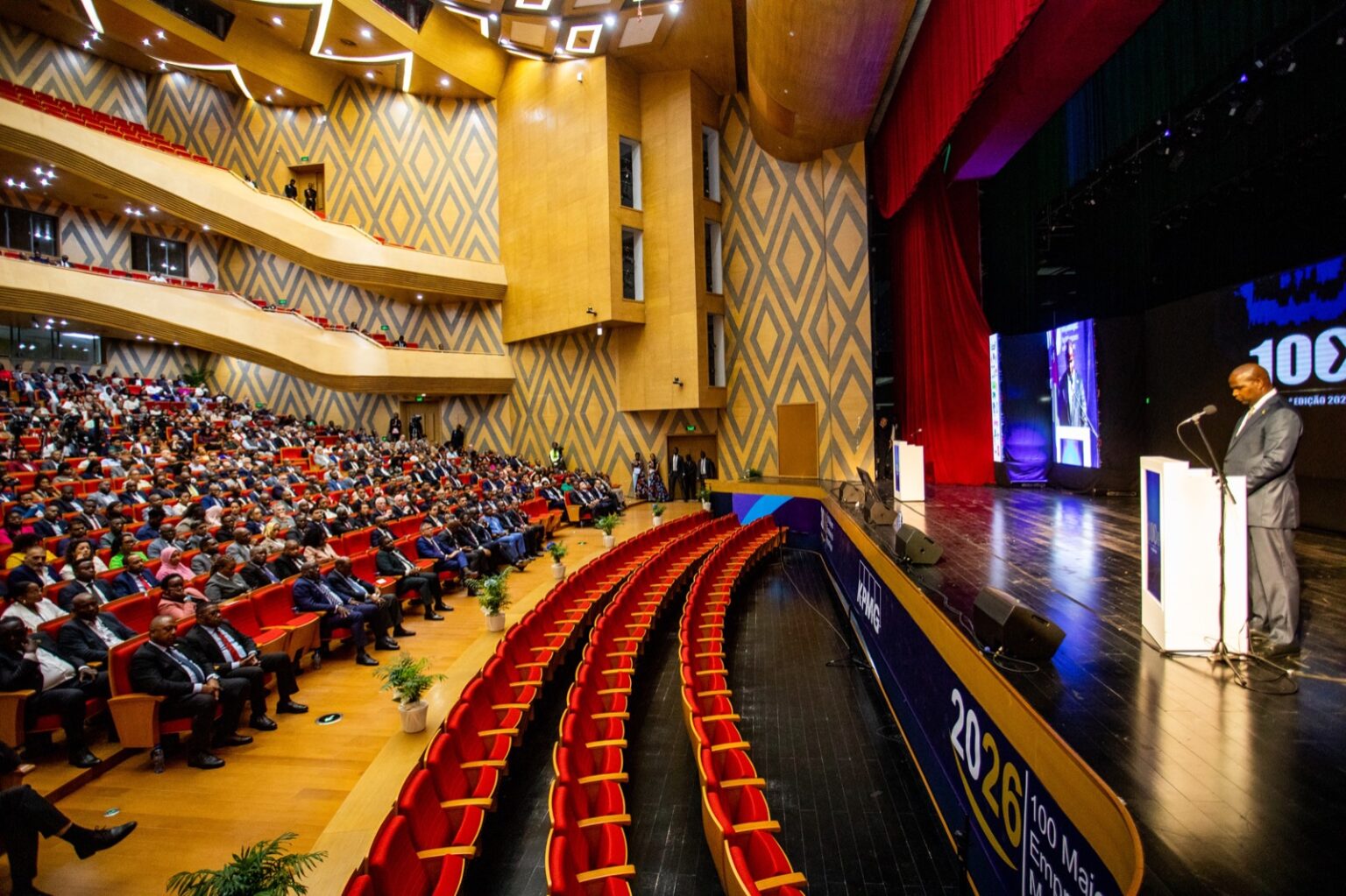

Sales at Mozambique’s top 100 companies fell 2.3% in 2025 and their payrolls shrank 1.6%, President Daniel Chapo said on Thursday, as he pressed big firms to turn their size into jobs and contracts for local suppliers.
The figures, from accounting firm KPMG’s annual ranking, show how post-election unrest, weather shocks and tight credit hit the country’s largest businesses last year, with manufacturing falling more than 8% while finance and transport grew.
What do the top 100 companies figures show?
The top 100 companies recorded turnover of about 615bn meticais (about $9.6bn at current exchange rates) in 2025 and directly employed more than 58,000 people, according to the results of the 28th edition of KPMG’s Top 100 Companies in Mozambique, presented in Maputo on 26 November, the Presidency said.
Chapo noted that turnover fell 2.3% and employment 1.6%. He blamed economic difficulties, climate events, the violent protests that followed the October 2024 elections and limited access to finance. Financial services and transport grew, while industry contracted by more than 8%, he said.
“Resisting is not enough. We have to innovate to grow. And growing is not enough. We have to turn growth into inclusive development,” Chapo said, according to the Presidency.
What did Chapo ask of the top 100 companies?
He called on the largest firms to bring more micro, small and medium-sized enterprises into their supply chains through accessible contracts, more predictable purchasing, transfers of skills and technology, and preference for Mozambican suppliers. “Local content is not a favour done to Mozambican companies. It is an instrument of economic and financial inclusion,” he said.
He said the government would step up the fight against red tape, corruption, kidnappings and other crimes that hurt business, simplify procedures and digitise public services, the government portal reported. Kidnappings of business owners and their relatives have been a recurring concern for Mozambique’s private sector, particularly in Maputo.
Chapo also said gas and mining revenues should help finance agriculture, tourism, manufacturing, logistics, digital services and the blue economy, and that the Maputo, Beira and Nacala corridors should become hubs for industry and agribusiness. Large gas, mining and infrastructure projects should create new Mozambican companies, he said.
How do the top 100 companies compare with other large firms?
The KPMG ranking covers a small group at the top. Mozambique’s National Statistics Institute (INE) counted 1,255 active large companies in 2025, up from 995 a year earlier, employing 247,789 people, 8.9% more than in 2024, according to its company statistics report cited by Lusa in September. More than half of them are in Maputo city.
The two sets of data measure different things: INE counts every large company, while KPMG ranks the 100 with the highest turnover, which include the megaprojects in aluminium, energy and mining whose results swing with commodity prices.
What does it mean for Mozambique’s economy?
A drop in sales at the top 100 companies matters because the largest firms provide a big share of tax revenue and formal jobs in an economy where most people work informally. The fall in manufacturing in particular cuts against the government’s goal of processing more raw materials at home.
Chapo’s remarks put gas revenue at the centre of the government’s plans for diversification. Earlier this week Mozambique announced plans to require strategic companies to list on the Maputo stock exchange, and the cabinet approved a Quelimane port concession.
FAQ
How much did Mozambique’s top 100 companies sell in 2025?
About 615bn meticais (about $9.6bn), according to the KPMG ranking cited by the Presidency, 2.3% less than a year earlier.
How many people work for the top 100 companies?
More than 58,000 directly, after employment fell 1.6% in 2025, the Presidency said.
Which sectors grew?
Financial services and transport grew, while industry fell by more than 8%, Chapo said.
Who compiles the ranking?
KPMG publishes the Top 100 Companies in Mozambique each year; 2026 was its 28th edition.


