
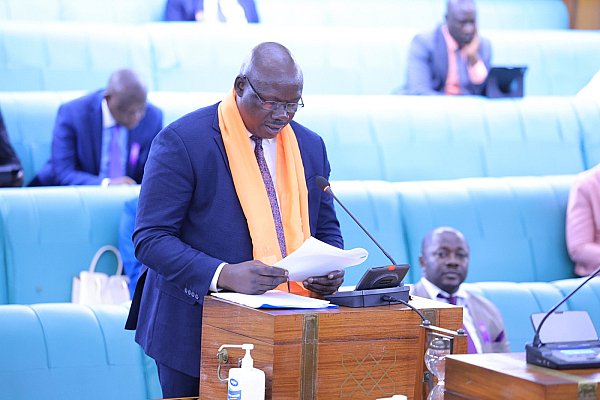

Uganda food reserves at national, district and household level would be set up by law under a private member’s bill that Parliament allowed Kilak North MP Anthony Akol to introduce on Thursday.
The proposed Food and Nutrition Bill, 2026 comes as an estimated 3.6 million people in assessed areas face crisis-level hunger or worse, and it would give Ugandans a legal right to food, which no current law provides.
What would the Uganda food reserves bill do?
The bill would create a national food reserve, district food reserves and household food reserves, and require the government to build a legal framework for accountability on food and nutrition security, according to a statement from the Parliament of Uganda. Parliament granted Mr Akol leave to introduce it, the first step before a bill is drafted, published and sent to a committee.
Mr Akol said the government’s own Food and Agriculture Regulatory Authority Bill, 2026, which would set up a single regulator to license and inspect food, feed, veterinary medicines and farm chemicals, makes no provision for the right to food, food security or nutrition security. Persistent hunger and malnutrition, and the lack of an effective framework for Uganda food reserves, required urgent action, he said.
How many Ugandans face hunger?
“Recent assessments demonstrate substantial food insecurity, with the 2026 Integrated Food Security Phase Classification analysis estimating that approximately 3.6 million people in the areas assessed were experiencing crisis-level or worse acute food insecurity,” Mr Akol told the House, according to the statement.
Pian County MP Remigio Achia put the number of food-insecure Ugandans at more than 3.6 million, citing national statistics, and blamed droughts in parts of the country. “In a country where we have food in many parts of the country and other parts do not have, this has happened because we do not have a law ensuring that government establishes storage and monitoring mechanisms,” he said.
The north-eastern region of Karamoja is the worst affected; MPs last week urged free school meals there. Across East and Southern Africa, acute hunger could reach 16.4 million people as El Nino brings drought, according to a regional report.
What does the government say about Uganda food reserves?
Desire Muhooza, the state minister for agriculture, said the government is preparing a Crop Bill that would cover most of the bill’s objectives. “We are going to invite him so that we harmonise with most of what we are working on, and very soon, we shall bring the Crop Bill to the floor of the House,” he said.
Seconding the motion, Adjumani District Woman MP Jesca Ababiku said food insecurity was hurting both health and economic growth, and that a law on Uganda food reserves would help farmers sell their produce. Western Youth MP Mwine Tumwebaze called for feeding programmes for students, including in higher education.
What happens next?
Under Uganda’s procedure, the MP must now present the bill with a certificate of financial implications before its first reading, after which a committee examines it. Private members’ bills often merge with or give way to government bills on the same subject, as the minister suggested. The leave granted on Thursday does not commit the government to fund Uganda food reserves.
FAQ
What are the proposed Uganda food reserves?
The Food and Nutrition Bill, 2026 would create food reserves at national, district and household level and give legal force to the right to food.
Who proposed the bill?
Anthony Akol, MP for Kilak North County, as a private member’s bill. Parliament granted him leave to introduce it on 26 November 2026.
Does the government support it?
The state minister for agriculture said a government Crop Bill would cover most of its aims and invited the MP to harmonise the two.


