
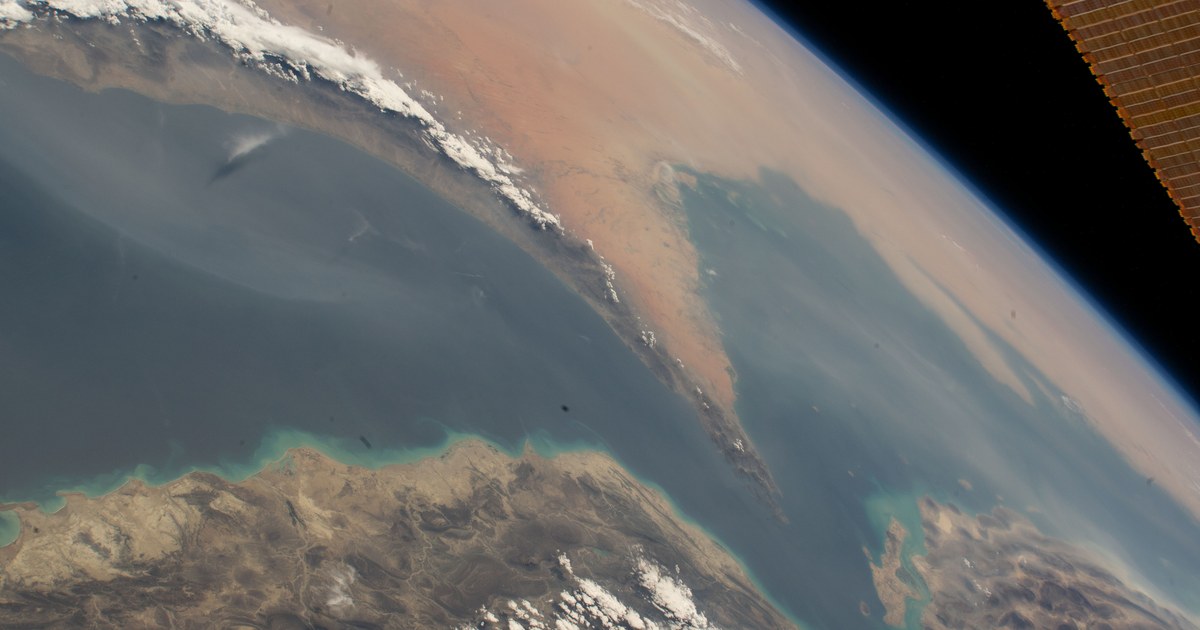

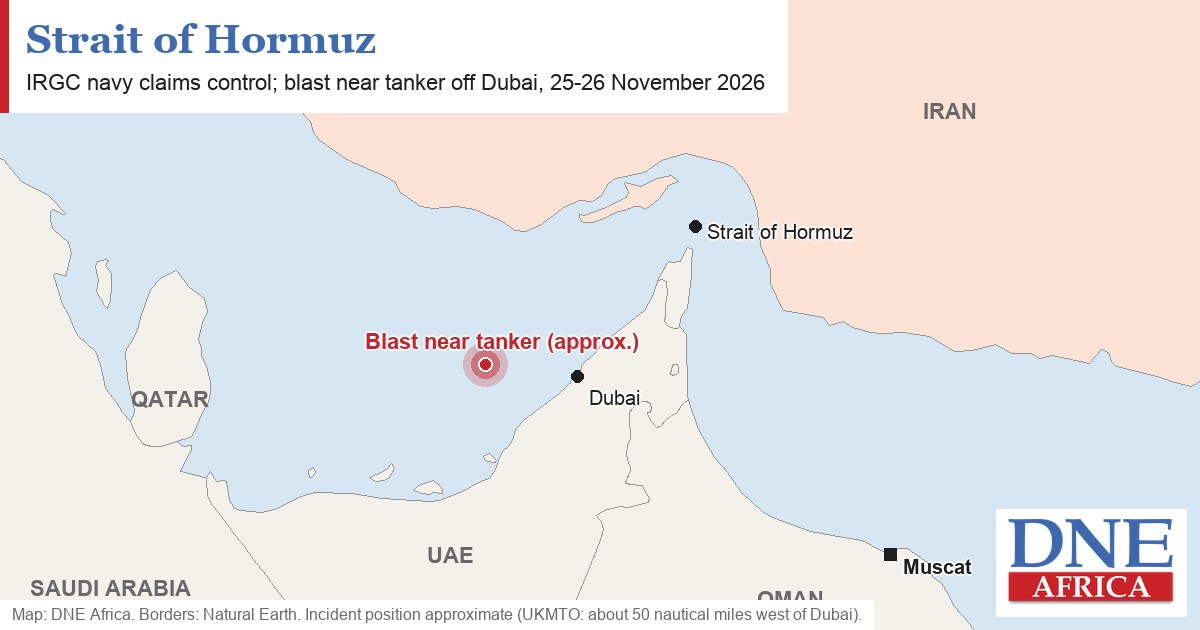
The commander of Iran’s Revolutionary Guards navy claimed on Thursday “complete” control of both sides of the Strait of Hormuz, hours after a projectile blast was reported near a tanker 50 nautical miles west of Dubai.
The remarks by Rear Admiral Ali Azmaei repeat Tehran’s claim to decide who may use the strait, through which much of the Gulf’s oil and gas reaches world markets, including fuel bought by African importers.
What did Iran say about the Strait of Hormuz?
“The east and west of the Strait of Hormuz are under the complete and unquestionable control of the Guards navy,” Admiral Azmaei said while visiting operational units on Iran’s islands in the Gulf, according to Iranian news agencies including Mehr (translated from Persian). The state broadcaster IRIB carried the remarks.
The security of passage through the Strait of Hormuz “depends only on respect for Iran’s legitimate sovereignty”, he said. Control of the waterway was “not merely a claim but a practical reality”, he added, and the Guards had the ability “to change the course of events in the heart of the strait” (translated from Persian). The remarks were also carried by the Houthi-run Al-Masirah channel in Arabic.
The Guards’ navy said on Wednesday that a liquefied natural gas carrier had struck a mine while using a route through the strait that Iran had not authorised, Russia’s TASS reported. That claim could not be independently verified, and the ship was not named. The US Central Command has previously disputed the Guards’ claims of control over the strait.
What happened near the tanker off Dubai?
The master of a tanker reported an explosion near his vessel about 50 nautical miles west of Dubai late on Wednesday and attributed it to an unidentified projectile, the UK Maritime Trade Operations centre (UKMTO) said, according to Anadolu Agency. All crew were safe and there was no damage or environmental impact, UKMTO said. It classed the incident as suspicious and told ships in the area to proceed with caution.
No one has claimed responsibility, and there is no independent evidence linking the incident to Iran.
What does tension in the Strait of Hormuz mean for Africa?
African oil importers feel any disruption in the Strait of Hormuz through fuel prices. Tunisia’s central bank said on Wednesday that energy and commodity prices had eased since early November as supply improved and geopolitical tensions calmed, but remained high, and that its energy deficit had reached 12bn dinars in the first ten months of the year, as DNE Africa reported.
The strait’s risks also affect shipping choices nearer Africa: Maersk told Egypt’s president this week it had resumed sailings through the Suez Canal and the Red Sea, as DNE Africa reported. Earlier in November DNE Africa examined how mine claims in Hormuz could hit African fuel importers.
Iran has set conditions for resuming talks with the United States, and any new incident in the strait is likely to move oil prices. UKMTO said its investigation into the Dubai incident was continuing.
FAQ
Who controls the Strait of Hormuz?
Iran’s Revolutionary Guards navy claims complete control of both sides of the Strait of Hormuz. The claim is disputed by the United States, and ships continue to transit the strait.
What happened off Dubai?
A tanker’s master reported an explosion from an unidentified projectile near his ship about 50 nautical miles west of Dubai, UKMTO said. No one was hurt and the ship was not damaged.
Why does the Strait of Hormuz matter to Africa?
Much of the Gulf’s oil and gas passes through it, so disruption raises fuel import costs for African countries.


