
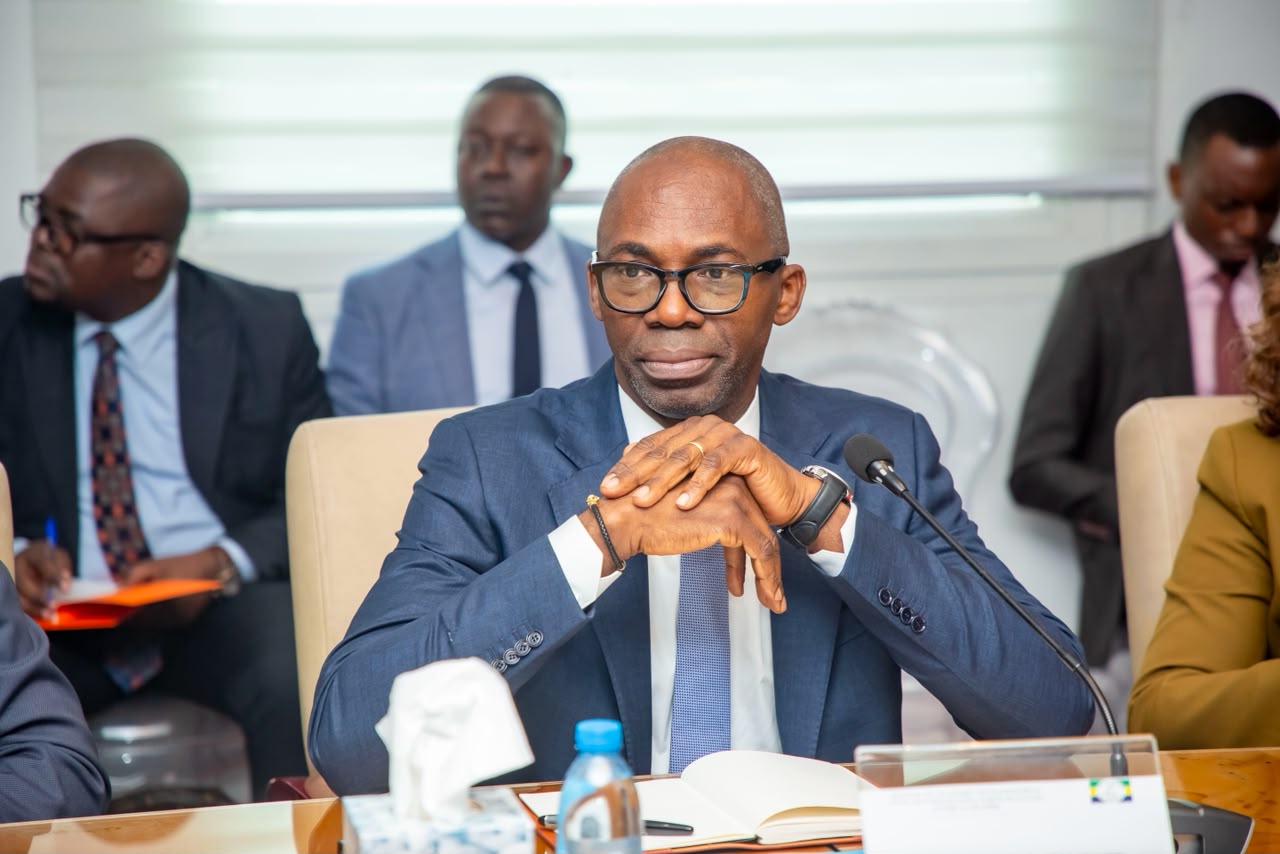

Gabon’s finance minister, Thierry Minko, has disputed the Gabon Fitch rating of CCC-, affirmed last week, saying it reflects “a problem of reading” of an economy and public finances that he says have clearly improved since December 2025.
The rebuttal matters because Gabon, a Central African oil and manganese producer, is borrowing at high cost while it seeks a programme with the International Monetary Fund (IMF). Fitch’s CCC- grade, deep below investment grade, signals a very high risk of default and weighs on what investors charge the government.
What did Thierry Minko say about the Gabon Fitch rating?
Speaking on Tuesday on the programme “26 minutes en plus” on the state broadcaster Gabon 24, Mr Minko, minister of the economy, finance, debt and holdings, said the grade came from “a problem of reading or of seeing things from different angles”, the state news agency AGP reported (quotes translated from French).
“Fitch considers that in October or November 2026 we are in the same situation as in December 2025. And everyone, all the analysts, all those who watch Gabon’s economic life know very well that this is false,” he said.
He cited the revised 2026 budget, which he said had “significantly reduced the level of spending” and improved the deficit, and the 2027 finance bill. The agency, he said, had finished its analysis before the National Assembly adopted that bill, and he expected the Gabon Fitch rating to improve once the Senate gives final approval.
On the IMF, Mr Minko said Gabon had aligned its budget figures with the fund’s team “in complete transparency”. “We have done our homework,” he said. He added that the repatriation of part of Gabon’s assets held abroad, including funds set aside for restoring oil sites, had strengthened foreign-exchange reserves after a summit of Central African heads of state in Brazzaville in January.
What did Fitch decide?
In the latest Gabon Fitch rating action, the agency affirmed the long-term foreign-currency issuer default rating at CCC- and its local-currency rating at CC on Friday 20 November. In its assessment, as reported by the Libreville news site Gabonmediatime, the agency acknowledged the government’s adjustment efforts but pointed to heavy reliance on oil revenue, expensive borrowing and large refinancing needs.
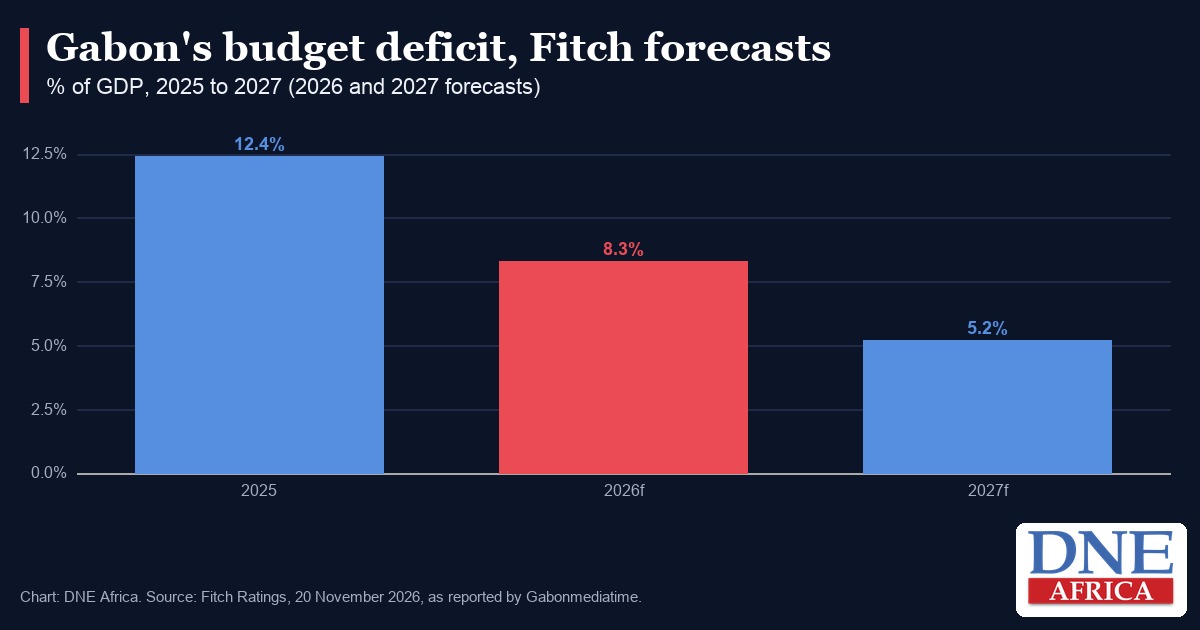
Fitch’s own forecasts show a narrowing deficit: from 12.4% of gross domestic product (GDP) in 2025 to 8.3% in 2026 and 5.2% in 2027. It judged the revised 2026 budget more credible than the first draft. But it expects debt repayments, including short-term securities, to rise from 14.5% of GDP in 2026 to 21% in 2027, and interest to take 30% of government revenue by 2028, against 25% in 2025.
The dispute over figures runs deeper than the Gabon Fitch rating itself. A government audit in September put public debt at 68.9% of GDP at the end of 2025, while Fitch calculated 80.5% and the IMF 84.2%, according to Gabonmediatime’s account of the report. Fitch does not include an IMF deal in its scenarios for 2027.
How has the Gabon Fitch rating changed?
Fitch cut Gabon from CCC to CCC- in December 2025, lowering the local-currency rating to CC, citing a widening fiscal deficit and limited access to regional debt markets. It affirmed both grades in May. President Brice Clotaire Oligui Nguema, who won the presidency in April 2025, named Mr Minko to head the enlarged finance ministry in January 2026.
Gabon has since returned to international markets. It priced $920mn of 9.375% amortising notes due 2033 on 30 July, according to its offering circular, a costly rate that reflects the low Gabon Fitch rating.
Where do talks with the IMF stand?
Gabon has formally asked for an IMF-supported programme. After a staff visit to Libreville from 14 to 25 September, mission chief Aliona Cebotari said technical discussions on fiscal and debt developments would “continue in the coming weeks, with a view to paving the way for program discussions”, the IMF said. The government hopes to conclude an agreement by the end of December, Gabonmediatime reported.
Other governments in the region face similar pressure: Madagascar’s IMF review ended without a deal this week, and Senegal enacted its revised budget by decree amid talks on a new IMF programme.
The next tests are the Senate’s vote on the 2027 budget and any agreement with IMF staff, which Mr Minko says should lift the Gabon Fitch rating.
FAQ
What is Gabon’s Fitch rating?
Fitch rates Gabon’s long-term foreign-currency debt CCC- and its local-currency debt CC. It affirmed both on 20 November 2026.
Why does Gabon dispute the Gabon Fitch rating?
Finance Minister Thierry Minko says Fitch ignored spending cuts in the revised 2026 budget and the 2027 finance bill, and completed its analysis before parliament adopted the bill.
What worries Fitch about Gabon?
Fitch points to reliance on oil revenue, costly borrowing, rising debt repayments and large refinancing needs, despite a narrowing deficit.
Does Gabon have an IMF programme?
Not yet. Gabon has requested one, and IMF staff said in September that technical talks would continue before programme discussions.


