
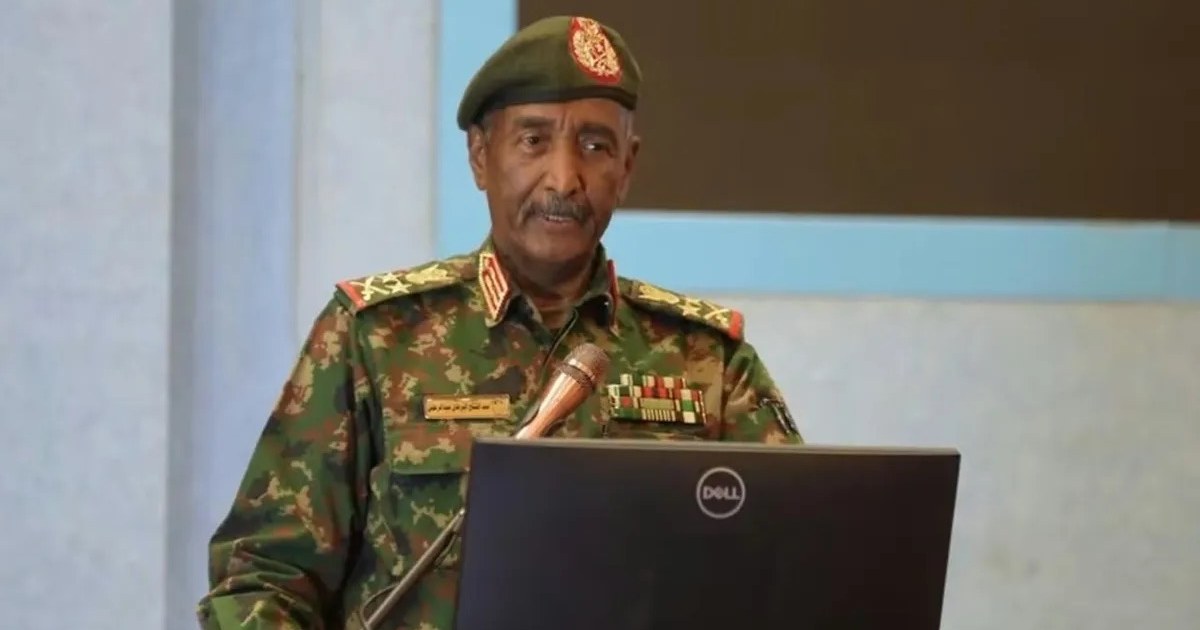

Sudan’s Burhan said on 24 November that the country was fighting “multi-faceted battles on many fronts” to protect its sovereignty and unity, in a speech closing a conference of the army’s military intelligence authority.
Gen Abdel Fattah al-Burhan, chairman of the Transitional Sovereignty Council and commander-in-chief of the armed forces, spoke as the war between Sudan’s army and the RSF militia enters its fourth year and as neighbouring states set out competing offers and positions on the conflict.
What did Sudan’s Burhan say?
Gen Burhan said Sudanese rallying behind the armed forces had brought “victories”, and praised the General Intelligence Service and the police for supporting the army during the war, according to accounts of the speech carried in Arabic by Sudanese and regional media. He said the security and intelligence services played a large part in both “the military and the psychological battle” (translated from Arabic).
He said the military intelligence authority had contributed significantly to keeping the armed forces cohesive and united, and supported the army with information, analysis and assessment that helped commanders take decisions in time. He also praised former army commanders who had headed the authority, saying they had built professional values inside the military.
Gen Burhan saluted those he called the “martyrs of the Battle of Dignity”, the army’s name for the war, and fighters on all fronts. He thanked “brotherly and friendly” countries that he said had stood by Sudan during the war, without naming them. The accounts of the speech did not include any reference to Ethiopia’s offer, made public the same day, to host a Sudanese dialogue.
Where does the war stand?
The war, fought since April 2023, has displaced about 8.59mn people inside Sudan, according to the International Organization for Migration. Fighting is now centred on Kordofan, Darfur and Blue Nile state, where the RSF militia has claimed new areas near Ed Damazin, and drones are used by both sides. Sudan’s army accuses Ethiopia of letting drones be launched from its territory, which Ethiopia denies.
On 18 November a court in Port Sudan sentenced the RSF militia’s commander, Mohamed Hamdan Dagalo, known as Hemedti, and 13 other RSF leaders to death in absentia, according to Sudanese media. The main international mediation group, the Quad of the US, Saudi Arabia, the UAE and Egypt, has proposed a humanitarian truce followed by a ceasefire; Gen Burhan rejected an earlier version, citing the UAE’s role. DNE Africa’s Sudan war explainer sets out the parties and the talks.
Which countries back Sudan’s army?
Sudan’s Burhan did not name the countries he thanked. On the same day, Egypt and Sudan issued a joint statement in Cairo after Sudan’s prime minister, Kamil Idris, delivered a letter from Gen Burhan to President Abdel Fattah al-Sisi. Egypt reaffirmed its support for Sudan’s unity and national institutions, rejected “parallel entities” and said it was ready to act under the two countries’ joint defence agreement.
Also on 24 November, Ethiopia’s Prime Minister Abiy Ahmed offered to host an inclusive Sudanese dialogue. A civilian coalition and the RSF-led Tasis alliance welcomed the invitation; Sudan’s government and army had not publicly responded by early on 25 November.
What happens next?
The army’s response to Ethiopia’s offer, and to the Quad’s truce plan, will show whether Gen Burhan’s government sees room for talks while it presses its military campaign.
FAQ
What did Sudan’s Burhan say on 24 November?
He said Sudan was fighting “multi-faceted battles on many fronts” to protect its sovereignty and unity, and credited popular support for the army’s “victories”.
Where did Burhan speak?
At the closing session of a conference organised by the Sudanese army’s military intelligence authority.
Which countries did Burhan thank?
He thanked “brotherly and friendly” countries that he said had supported Sudan during the war, without naming them.
Has Sudan’s Burhan responded to Ethiopia’s dialogue offer?
No response from Sudan’s government or army had been published by early on 25 November.


