
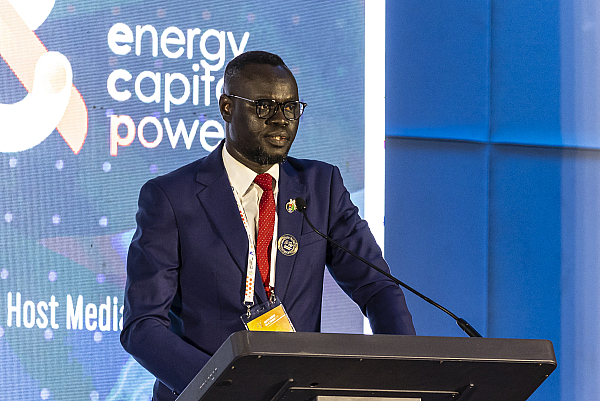

South Sudan oil production should rise from nearly 170,000 barrels per day to 200,000 bpd within three years and 400,000 bpd later, Petroleum Minister Awow Daniel Chuang said in Juba on 24 November.
Oil is almost the only source of export earnings and state revenue for South Sudan, so the targets for South Sudan oil production matter for a government that also announced a five-block licensing round and told investors at the South Sudan Oil & Power (SSOP) conference it wants to turn crude into electricity, jobs and public services.
How does South Sudan plan to raise oil production?
Mr Chuang, the caretaker petroleum minister, said the plan combines new exploration through the licensing round, enhanced recovery technology at mature fields, and domestic refining and road building, according to a statement from Energy Capital & Power, the conference organiser. He said high logistics costs cause $70mn in losses a year.
“We must use technology to improve our recovery factors and build our own refineries and roads so we can optimise costs and ensure energy security,” he said. No dates or blocks for the licensing round were given. Mr Chuang did not say how the higher output would be financed or which companies would take part.
Africano Mande Gedima, Minister of Presidential Affairs, told delegates in the opening keynote that oil “remains the backbone” of the economy and urged investors to partner with Nilepet, the national oil company, across exploration, pipelines and refining. “South Sudan is open for investment and it is ready and stable,” he said, adding that the country wanted partners who create jobs for young people.
How much oil does South Sudan produce now?
Figures for South Sudan oil production vary by source and scope. The petroleum ministry put national output at 174,000 bpd in June, Eye Radio reported, while other reporting has given lower estimates for fields outside the main GPOC consortium. Output exceeded 300,000 bpd shortly after independence in 2011 before conflict and ageing fields cut it sharply.
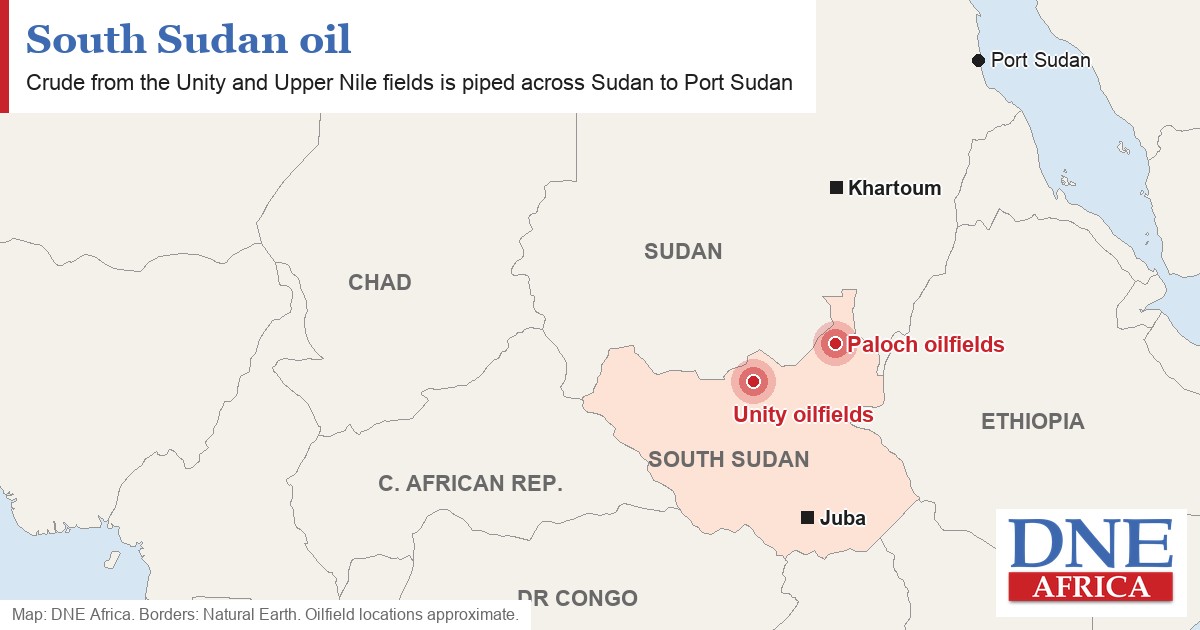
The country’s crude is exported through a pipeline across Sudan to Port Sudan, a route disrupted in 2024 during the war between Sudan’s army and the RSF militia. The ministers’ production targets could not be independently assessed.
Haitham Al Ghais, Secretary General of OPEC, said South Sudan was “well-positioned” to support market stability, citing OPEC’s forecast that global demand will rise to 120mn barrels per day by 2050. South Sudan is one of the non-OPEC producers in the wider OPEC+ grouping.
What does it mean for electricity?
Madhieu Achuil Mawien, Undersecretary of Energy and Dams, said fewer than 10% of South Sudanese have electricity and diesel generation pushes tariffs as high as 32 cents per kilowatt-hour. He linked South Sudan oil production to power supply, setting out a goal of 50% access by 2035 through solar, hydropower, gas-to-power and regional power trade.
NJ Ayuk, executive chairman of the African Energy Chamber, said the country’s estimated 3.5bn barrels of reserves were the “tip of the iceberg”. The chamber recently said the African energy outlook was improving for oil investors.
FAQ
What is South Sudan’s oil production target?
The petroleum minister said South Sudan oil production should reach 200,000 barrels per day within two to three years and 400,000 bpd in the longer term.
How much oil does South Sudan produce?
The minister said nearly 170,000 bpd; the ministry gave 174,000 bpd in June. Output topped 300,000 bpd after independence in 2011.
How is South Sudan oil production exported?
Through a pipeline across Sudan to Port Sudan on the Red Sea, a route disrupted during Sudan’s war in 2024.


