
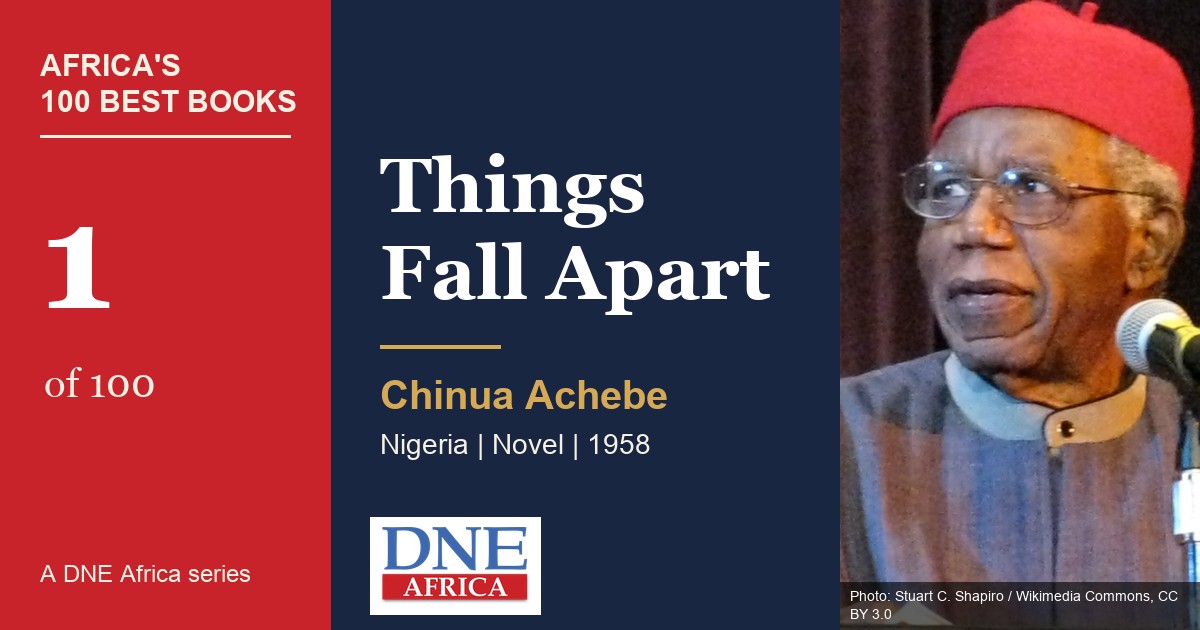

Things Fall Apart, the 1958 novel by Nigeria’s Chinua Achebe that opens Africa’s 100 Best Books, is read around the world, yet at home it is not a set text in Nigeria’s school exams and has no Igbo edition.
Africa’s 100 Best Books, No. 1 of 100. See the full list and every article in the series.
The standard account of the book is well known and true: Britannica credits it with helping to create the Nigerian literary renaissance of the 1960s, the judges of the 2007 Man Booker International Prize said Achebe’s fiction had inaugurated the modern African novel, according to the Booker Prizes, and NPR put sales at more than 12 million copies when he died in 2013. Its title comes from WB Yeats’s poem The Second Coming, and the jury that chose Africa’s 100 best books in 2002 placed it in its top 12, according to the African Studies Centre Leiden.
This series opens with Things Fall Apart for that reason, but this review looks instead at what a reading of the novel itself shows, at what Nigerian critics have said about it, and at where the book stands in Nigeria now. It is based on the Anchor Books edition: 25 chapters in three parts, with a glossary of Igbo words.
Table of Contents
In this article
What is Things Fall Apart about?
Things Fall Apart follows Okonkwo, a wrestler and warrior famous across the nine villages of Umuofia, a fictional Igbo clan in what is now south-eastern Nigeria, in the late 19th century, as British missionaries and colonial officials arrive. His fame began at 18, when he threw Amalinze the Cat, a wrestler unbeaten for seven years.
His drive has a root Achebe names early. Okonkwo’s father, Unoka, was a gentle flute player and a debtor whom the village laughed at, and in chapter two Achebe writes that Okonkwo’s “whole life was dominated by fear, the fear of failure and of weakness”. He builds a compound with his own hut, or obi, and a hut for each of his three wives, takes titles, grows yams and rules his household with a heavy hand.
Part One, chapters one to 13 and well over half the book, is a portrait of Umuofia before the Europeans come: the farming year, the Week of Peace, a wrestling match, the masked egwugwu sitting in judgment, the locusts, a wedding, a funeral. A boy from a neighbouring village, given to Umuofia to settle a quarrel, comes to live with Okonkwo, and his fate is the book’s first great shock.
Part Two follows Okonkwo into seven years of exile in his mother’s village, Mbanta; Part Three brings him home to a clan changed by a church, a court and a colonial government. In chapter 20 his friend Obierika says the white man “has put a knife on the things that held us together and we have fallen apart.” This review does not give away the ending.
What do Nigerian critics say about Things Fall Apart?
Nigerian criticism has long read Things Fall Apart less as a protest against colonialism than as a demonstration of craft drawn from Igbo oral tradition. In an essay in Okike, the journal Achebe founded, in its Chinua Achebe Memorial Edition, Ikechukwu Emmanuel Asika of Anambra State University argues that the proverbs, folk tales and humour are deliberate techniques, not decoration: the proverbs carry arguments and judge characters, the folk tales hold keys to the plot, and the humour, placed at intervals, lets readers bear the tragedy.
Asika builds on Nigerian scholars of oral literature. He cites Emmanuel Obiechina’s description of proverbs as “philosophical and moral expositions shrunk to a few words”, Donatus Nwoga’s definition of the proverb as a terse statement giving figurative expression to traditional wisdom, and the folklorist Rems Umeasiegbu’s point that a proverb is whatever a people recognise as the wisdom of their ancestors, which an outsider cannot decide for them. Read that way, the novel’s most quoted line, that among the Igbo “proverbs are the palm-oil with which words are eaten”, is a statement of method: Achebe is showing that the clan reasons, and he is doing it in its own terms.
Things Fall Apart bears this out. Arguments in Umuofia are won with proverbs, the elders’ meetings are debates rather than decrees, and the humour is real: when the first missionary preaches in Mbanta through an Igbo interpreter from another district, the crowd laughs at the interpreter’s dialect.
How is Things Fall Apart read in Nigeria today?
The book that the world treats as Nigeria’s best-known novel is not among the prose set texts for the country’s senior school-leaving literature exams. The texts recommended by the West African Examinations Council and Nigeria’s National Examinations Council for 2026 to 2030 list two African novels, Pede Hollist’s So the Path Does Not Die and Elma Shaw’s Redemption Road, according to the Nigerian study sites Literature PADI and Ulearngo. Set texts rotate, and Things Fall Apart is still widely read and taught, but for the next five years Nigerian candidates will not be examined on Things Fall Apart.
Nor does it yet exist as a book in the language of its characters. Brittle Paper, the Nigerian literary site, counted 61 translations in 2019, including a Yoruba version by Wale Ogunyemi, Ìgbésí Ayé Okonkwo, but found no Igbo translation in book form. A novel that brought Igbo speech into world literature has not been published in Igbo.
The standing of Things Fall Apart at home is otherwise secure. The 60th anniversary in 2018 was marked by a programme led by the Christie and Chinua Achebe Foundation with the Association of Nigerian Authors, according to Vanguard, with symposia, stage readings, a children’s carnival and a writing competition across Nigerian cities, the Guardian (Nigeria) reported. In 1987 the Nigerian Television Authority broadcast a 13-part adaptation with Pete Edochie as Okonkwo, his first professional acting role, Vanguard reported.
How does Achebe tell the story?
Read today, the strength of Things Fall Apart is its refusal to idealise. Umuofia can be wise and generous, as when Okonkwo’s uncle Uchendu, in chapter 14, asks why “Mother is Supreme” is one of the commonest names given to children. It can also be harsh: newborn twins are left to die in the bush, and the outcasts and the mothers who have lost twins are among the first to join the church. Okonkwo’s own rigidity drives his fall as much as the colonial order does.
The women have some of the book’s strongest scenes, among them Ekwefi following Chielo, the priestess of the Oracle of the Hills and the Caves, through the night after she carries off Ekwefi’s daughter Ezinma. Yet the story is told from inside a man’s world and its anxieties. The missionaries are drawn in two strokes, Mr Brown’s patient compromise and his successor the Reverend James Smith’s zeal, and the last part moves fast after the long, unhurried first: some readers find Part One slow, others the ending abrupt.
Who was Chinua Achebe?
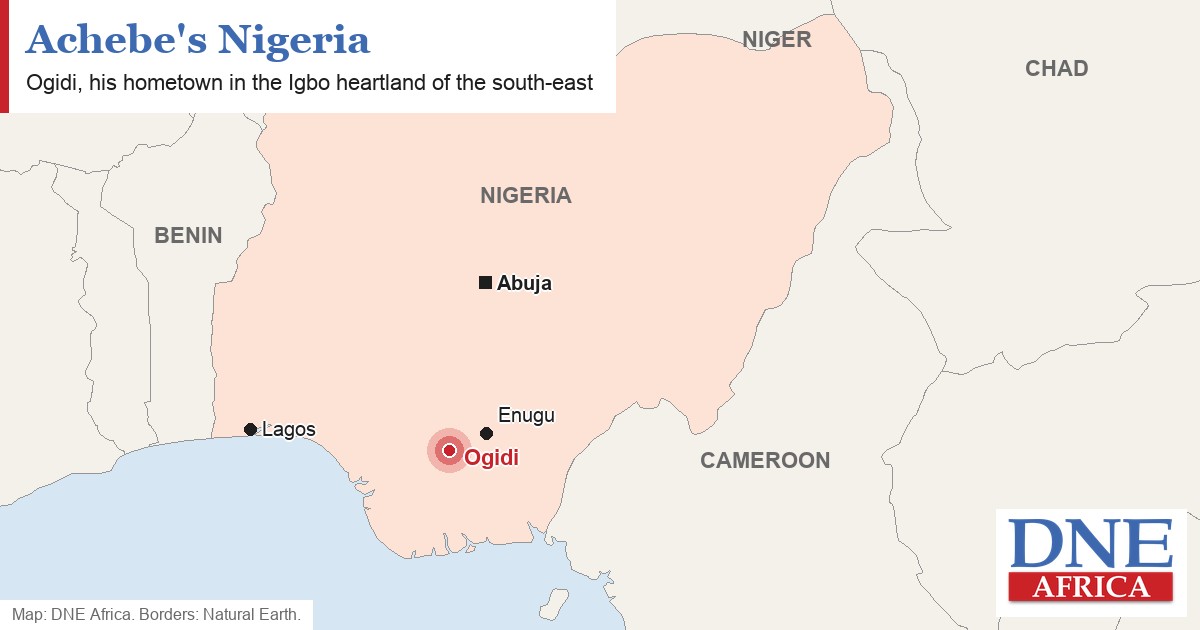
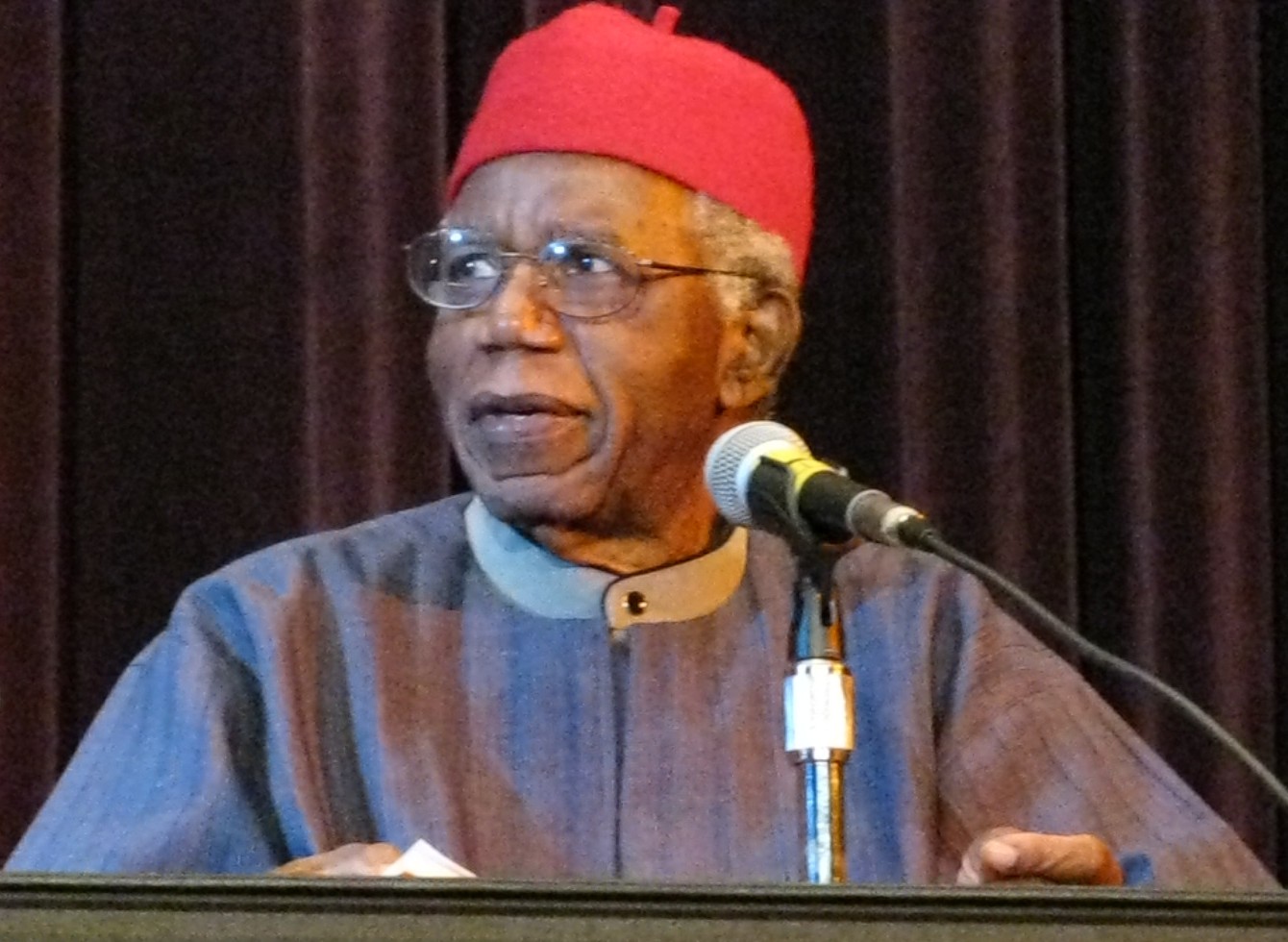
Achebe was born in Ogidi, an Igbo town in south-eastern Nigeria, on 16 November 1930, studied at University College, Ibadan, and worked for the Nigerian Broadcasting Corporation before his novels No Longer at Ease (1960), Arrow of God (1964), A Man of the People (1966) and Anthills of the Savannah (1987), according to Britannica. He supported Biafra during the civil war, co-founded a publishing company in Enugu with the poet Christopher Okigbo, who was killed in the war, and wrote about that period in There Was a Country (2012). After a car accident in 1990 he taught in the United States, at Bard College and Brown University. He died in Boston on 21 March 2013.
Questions for discussion
- Okonkwo’s fear of being thought weak shapes almost every choice he makes. Where does that fear come from, and how does Umuofia reward or punish it?
- Asika argues that the proverbs, folk tales and humour are deliberate techniques. Pick one proverb or tale and ask what work it does in its scene.
- Why do some villagers, including outcasts, the mothers of twins and Okonkwo’s son Nwoye, welcome the new church?
- Compare Mr Brown and the Reverend James Smith. What does Achebe suggest about how the church took root?
- Things Fall Apart has no Igbo edition in book form. What would change if Okonkwo’s story were read in Igbo?
- Should a novel like this be a set text in Nigerian schools, and what is gained or lost when it is not?
Read next in the series
- Arrow of God, No. 19: Achebe’s third novel, set in an Igbo village under British administration in the 1920s.
- A Grain of Wheat, No. 4: Ngugi wa Thiong’o’s novel of a Kenyan village on the eve of independence.
- Labyrinths, No. 72: the poetry of Christopher Okigbo, Achebe’s friend and publishing partner.
More from Africa’s 100 Best Books
- Next, No. 2: The Cairo Trilogy by Naguib Mahfouz (Egypt) (coming next in the series)
- All 100 books in the series
FAQ
What is Things Fall Apart about?
It follows Okonkwo, a proud warrior in the fictional Igbo clan of Umuofia in south-eastern Nigeria, as British missionaries and colonial officials arrive in the late 19th century, and traces how his life and his community come apart.
Is Things Fall Apart a WAEC set text?
Not for 2026 to 2030. The recommended African prose texts for the WAEC and NECO literature exams in that period are So the Path Does Not Die and Redemption Road, according to Nigerian study sites.
Has Things Fall Apart been translated into Igbo?
Brittle Paper counted 61 translations in 2019, including Yoruba, but found no Igbo translation published as a book.
Who was Chinua Achebe?
A Nigerian novelist, poet and critic, born in Ogidi in 1930. Things Fall Apart, published by Heinemann in 1958, was his first novel; he won the Man Booker International Prize in 2007 and died in 2013.


