
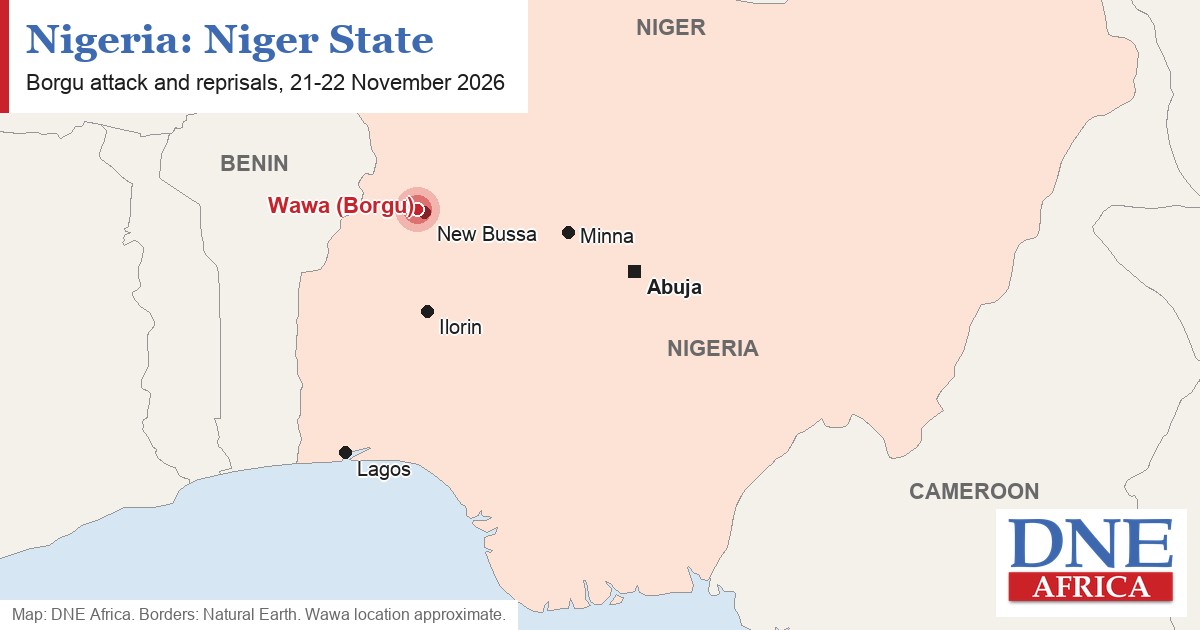

Niger State killings in north-central Nigeria have risen after reprisal attacks on Fulani settlements in Borgu killed at least 35 people, a security report seen by AFP said on Sunday.
The reprisals followed a raid on a Kambari village on Saturday that left its chief dead.
The violence shows how attacks by gunmen, known locally as bandits, are feeding a cycle of revenge between farming and herding communities in Nigeria’s largest state by area, where the authorities have struggled to keep order.
What happened in the Niger State killings?
Gunmen attacked Luman Ba’are, a Kambari village in Borgu local government area, at dawn on Saturday as residents gathered for morning prayers. A security source told AFP that 11 people were killed, including the village head and children under five, according to a report carried by Seneweb (in French). Daily Trust also reported 11 dead and said the village head’s palace was set on fire and some residents were kidnapped.
The Niger State government put the toll lower. Obed Nana, the state commissioner for information, said five people were killed, including the village head, Malam Bawa Muhammad, and five were injured, Premium Times reported. He called the attack “unfortunate and unacceptable”, said joint security teams had been deployed and urged residents not to take the law into their own hands.
How many were killed in the reprisals?
Local militias then attacked Fulani camps at Wawa and Gada Oli. A security report seen by AFP gave a provisional toll of 35 Fulani dead in Wawa, with burials continuing, and said the toll at Gada Oli was higher, without giving a figure. A community leader in Wawa told AFP that 38 people had been buried there.
Figures for the Niger State killings are disputed. Two eyewitnesses told Premium Times they counted about 20 bodies in Wawa, and the paper said the scale of the casualties remained unclear. It reported that the reprisals also hit Tunga Ibrahim and followed the withdrawal of mobile police from Wawa. Wasiu Abiodun, the Niger State police spokesman, told AFP he was not aware of reprisal attacks. The state government’s statement did not mention them.
Why are the Niger State killings growing?
Residents of Luman Ba’are told AFP the attackers were Fulani, which could not be independently confirmed. Borgu lies in western Niger State near the border with Benin, and the state government described the first attack as taking place amid lingering intercommunal tensions.
Gunmen have carried out a string of deadly raids in central and northern Nigeria this year, including an attack that killed at least 24 in August, and a clash in Zamfara this month killed more than 50, residents said. Nigeria’s security forces are stretched by jihadist insurgencies in the north-east, banditry in the north-west and communal violence in the centre. The killings come as campaigning for the 2027 elections gathers pace, with President Bola Tinubu urging leaders of his party to unite at a prayer session on Sunday, State House said.
What happens next?
No arrests have been announced over the Niger State killings. The final toll from the reprisals is expected to rise as bodies are recovered, according to the security report cited by AFP. Pressure is likely to grow on the state and federal governments to restore a police presence in Wawa.
FAQ
What triggered the Niger State killings?
A dawn attack by gunmen on the Kambari village of Luman Ba’are in Borgu on Saturday 21 November, which killed the village head and others.
How many people died in the Niger State killings?
Accounts differ. The state government said five died in the first attack; AFP and Daily Trust said 11. A security report put reprisal deaths in Wawa at 35; eyewitnesses told Premium Times about 20.
Who were the victims of the reprisals?
Fulani residents of camps at Wawa, Gada Oli and Tunga Ibrahim, according to AFP and Premium Times.
What have the authorities said?
The state government condemned the first attack and deployed security teams. The police said they were not aware of reprisals.


