

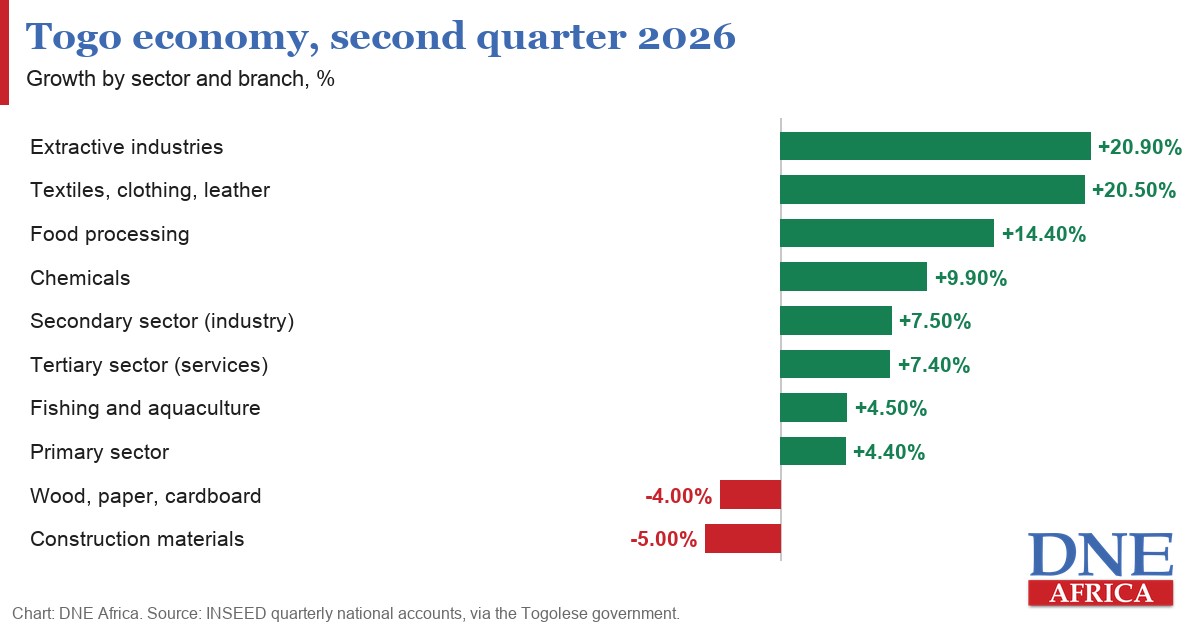
Togo’s extractive industries grew 20.9% in the second quarter of 2026, after shrinking 0.8% a year earlier, lifting the Togo economy’s industrial output by 7.5%, according to quarterly national accounts from the statistics institute INSEED.
The figures, published by the government on Wednesday, show the West African country’s growth increasingly driven by phosphate and cement raw materials and by new factories near Lome, while services, its largest sector, slowed.
What drove the Togo economy in the second quarter?
Mining and quarrying led the gains. The extractive sector rests mainly on phosphate, limestone and clinker, worked by the state-owned Société nouvelle des phosphates du Togo (SNPT) and the cement-materials company Scan Togo, the government said on its official portal, citing INSEED.
Manufacturing also picked up. Output of textiles, clothing, leather and footwear rose 20.5%, against 10.4% a year earlier. Food processing grew 14.4%, up from 1.7%, and chemicals 9.9%. The government credited much of this to the Adetikope Industrial Platform (PIA), an industrial park north of Lome.
Industry paid more tax as a result. The secondary sector contributed 20.8bn CFA francs (about $37mn) to state revenue in the quarter, up from 17.2bn CFA francs in the second quarter of 2025, INSEED said.
Which parts of the Togo economy slowed?
Two industrial branches shrank. Wood, paper and cardboard output fell 4%, after a 0.3% decline a year earlier, and construction materials fell 5%, having grown 6.5% in the same quarter of 2025.
Services, the biggest part of the Togo economy, grew 7.4%, slower than the 9% recorded a year earlier. Agriculture and the rest of the primary sector accelerated to 4.4% from 3%, which the government linked to public investment in farm mechanisation. Fishing and aquaculture grew 4.5%, against 2.2%.
The government did not publish an overall GDP growth rate for the quarter alongside the sector figures.
How does this compare with forecasts for the Togo economy?
Togo’s National Credit Council forecast growth of 6.5% in 2026, up from 6.2% in 2025, Togo First reported. The World Bank projected in September 2025 that growth would recover to 5.4% in 2026.
The IMF, which runs an Extended Credit Facility programme with Togo, has said growth reached about 6% in 2025 but warned that the 2026 outlook points to slower growth and higher inflation, partly because of tensions in the Middle East. The government is counting on more local processing of phosphate, its main export.
Power supply is part of the picture. A $160mn ECOWAS-backed scheme to connect about 1mn people in Togo and The Gambia became effective last month, DNE Africa reported.
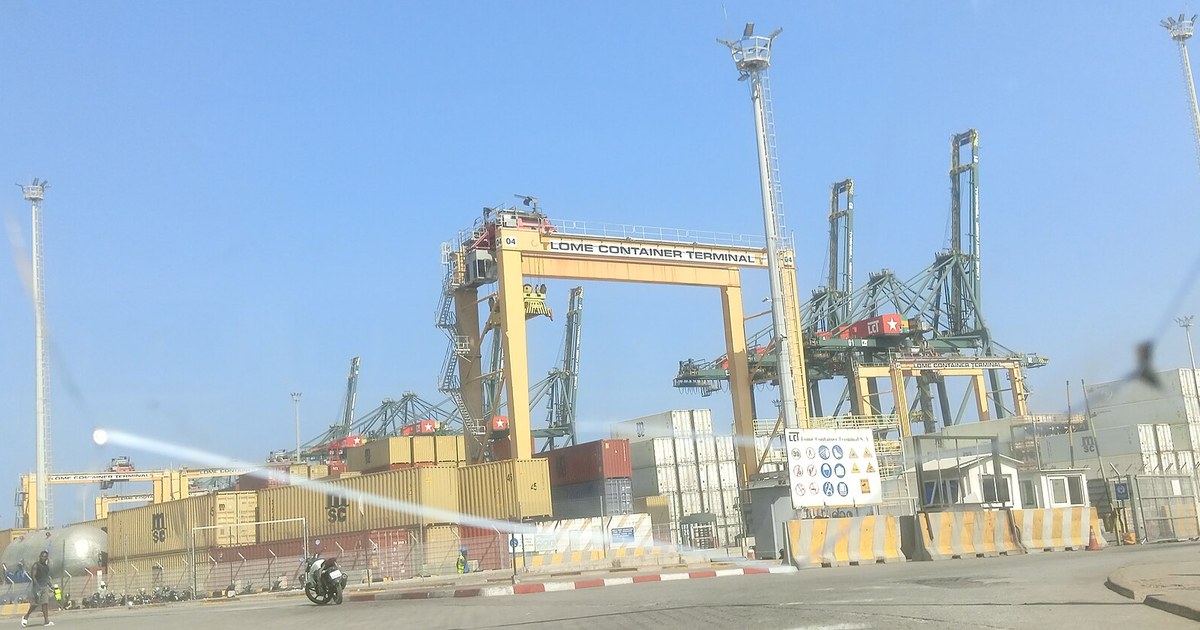
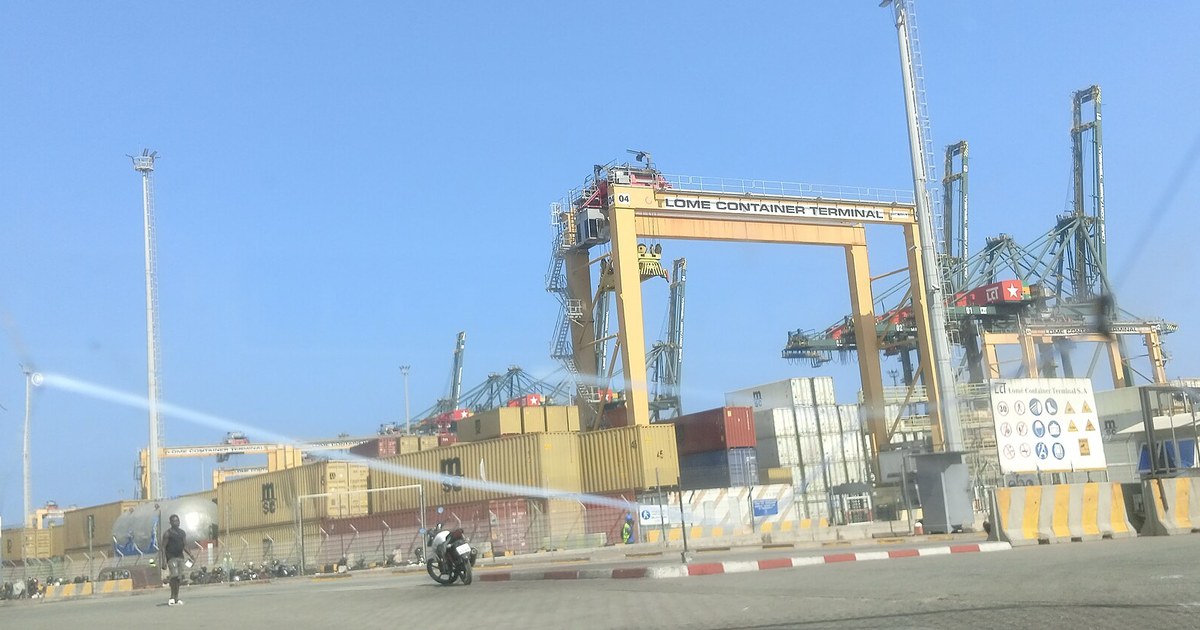
The Port of Lome, a deep-water port that also handles cargo for landlocked Sahel neighbours, underpins much of the services sector. A slower services figure therefore matters for jobs and public revenue even as industry gains ground in the Togo economy.
What happens next?
INSEED’s third-quarter accounts will show whether mining and manufacturing keep up their pace as services cool. The government has also opened a new administrative appeals commission for tax audits this week, which it says will let businesses contest assessments before going to court.
FAQ
How fast did Togo’s mining sector grow?
Extractive industries grew 20.9% in the second quarter of 2026, compared with a 0.8% contraction a year earlier, according to INSEED.
Which sectors are driving the Togo economy?
Mining, textiles and clothing, food processing and chemicals led growth in the second quarter. Services grew 7.4%, slower than a year earlier.
Which industries shrank?
Wood, paper and cardboard output fell 4% and construction materials fell 5% in the second quarter, INSEED said.
What is Togo’s growth forecast for 2026?
Togo’s National Credit Council forecast 6.5% growth for 2026. The World Bank projected 5.4% in September 2025, and the IMF has warned of slower growth.


