
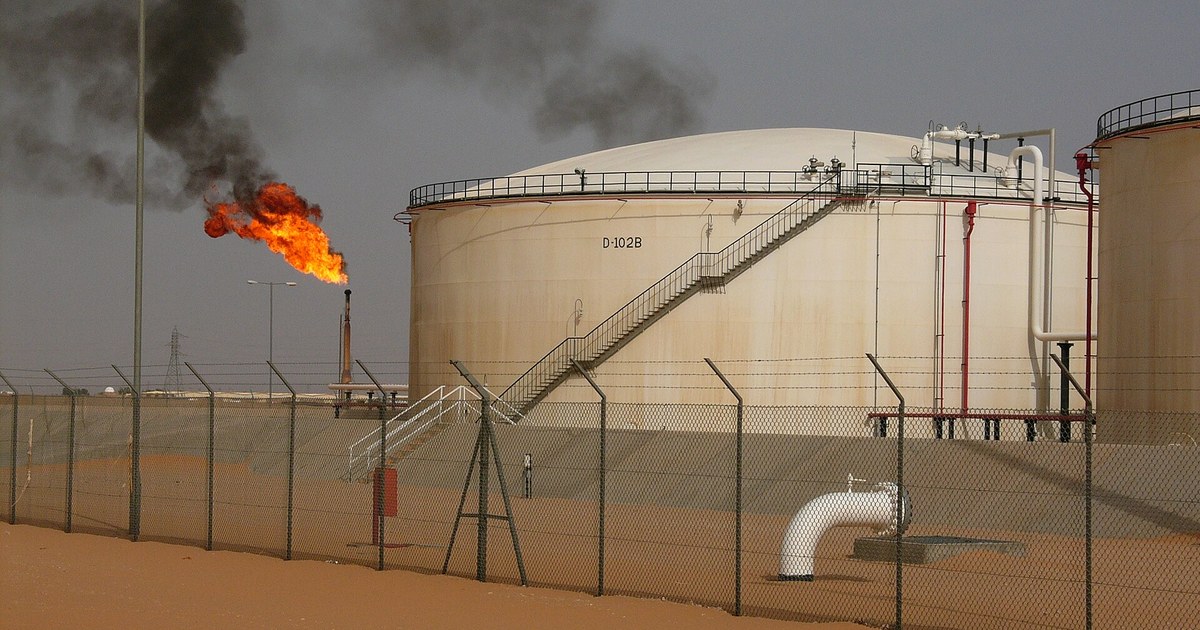

Nigeria oil output fell to 1.44mn barrels a day in October from 1.48mn b/d in September, below its OPEC+ target of 1.50mn b/d, the International Energy Agency said in its monthly Oil Market Report on 13 November.
The dip came as crude prices slid by about a third from their October peak, reducing the value of each barrel Nigeria and other African producers sell after a price spike caused by the war in the Middle East.
What did the IEA report say about Nigeria oil output?
The IEA’s Oil Market Report for November puts Nigeria’s sustainable crude capacity at 1.52mn b/d, leaving effective spare capacity of just 80,000 b/d. October production was 60,000 b/d short of the implied target set under the OPEC+ deal, the agency estimated.
Nigeria’s own regulator gives a higher figure. The Nigerian Upstream Petroleum Regulatory Commission put October crude output at 1.51mn b/d, or about 1.69mn b/d including condensate, Vanguard reported. The IEA publishes its own estimates, which often differ from national data.
Either measure of Nigeria oil output is well below the 1.84mn b/d that Nigeria’s 2026 budget assumes, and output over the first ten months of the year stayed below that benchmark, Leadership reported.
How did other African producers perform?
Libya, which is exempt from OPEC+ cuts, raised crude output to 1.28mn b/d in October from 1.26mn b/d, close to its capacity of 1.34mn b/d, according to the IEA. Libya’s largest field, Sharara, faced a force majeure risk after a pipeline shutdown in September.
Algeria held steady at 980,000 b/d, 30,000 b/d below its target. Gabon raised output to 220,000 b/d from 190,000 b/d, 40,000 b/d above its target, while the Republic of Congo slipped to 260,000 b/d from 290,000 b/d. Equatorial Guinea pumped 30,000 b/d, less than half its target.
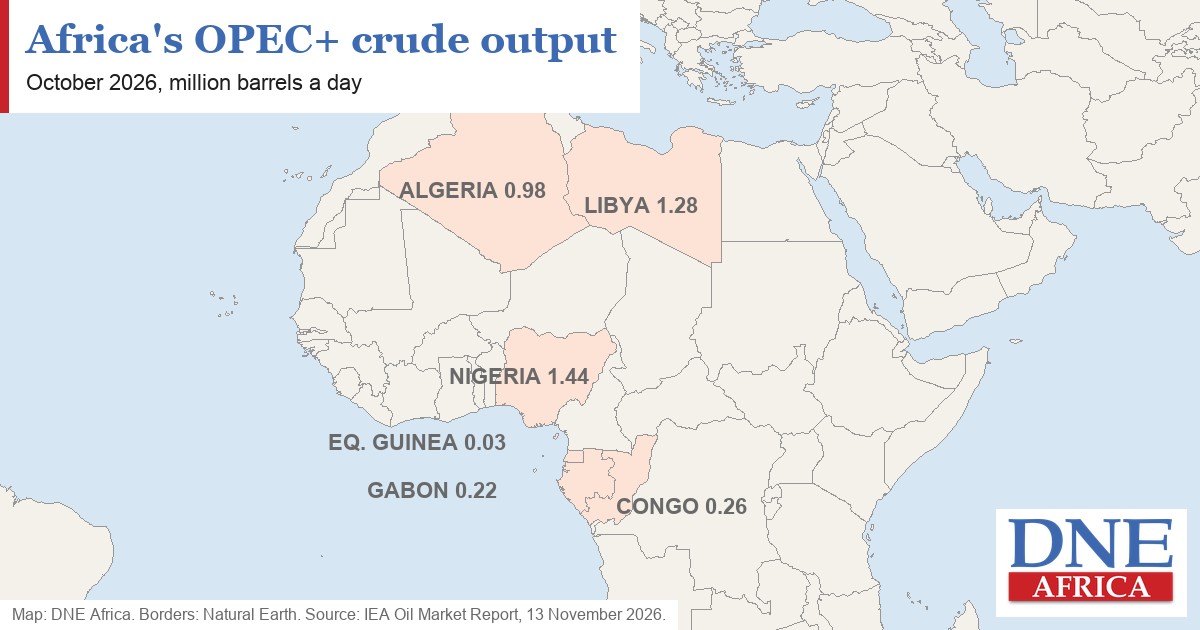
Taken together, the six African members of OPEC+ listed by the IEA produced about 4.21mn b/d in October, almost unchanged from 4.23mn b/d in September, according to DNE Africa calculations from the IEA table. Sudan and South Sudan are grouped with other small producers and not shown separately.
Why do falling prices matter for Nigeria oil output?
North Sea Dated crude, a global benchmark, fell from a high of $136 a barrel on 8 October to about $93 when the report was written, the IEA said, as Gulf exports recovered faster than demand. Prices were still $22 a barrel above pre-war levels.
Global supply rose by 2.3mn b/d to 105.4mn b/d in October, and the agency expects the market to return to surplus in the fourth quarter. With effective spare capacity of 80,000 b/d by the IEA’s estimate, there is little room to lift Nigeria oil output to offset lower prices.
Diesel remains a pressure point for importers. European diesel prices stood near $180 a barrel, 77% above pre-war levels, the IEA said. High fuel costs have kept inflation and growth risks in focus across the continent.
What happens next?
The IEA forecasts world oil demand will fall by 2.7mn b/d in 2026 to 102.3mn b/d before rising by 2mn b/d in 2027, while supply rebounds by 6.6mn b/d to 108.1mn b/d next year. It warned that attacks on shipping remain a risk to that recovery.
Africa’s newer producers are also adding barrels: Benin resumed oil exports this month for the first time in almost 30 years. The IEA’s next Oil Market Report, due in December, will update its estimate of Nigeria oil output, and its World Energy Outlook 2026 is set for release on 19 November.
FAQ
What was Nigeria oil output in October 2026?
The IEA estimated Nigerian crude production at 1.44mn b/d, down from 1.48mn b/d in September. Nigeria’s regulator, the NUPRC, reported 1.51mn b/d of crude excluding condensate.
Is Nigeria meeting its OPEC+ target?
By the IEA’s estimate, Nigeria oil output in October was 60,000 b/d below an implied target of 1.50mn b/d. NUPRC data show Nigeria slightly above the quota.
Which African producer grew fastest in October?
Gabon, whose output rose by 30,000 b/d to 220,000 b/d, above its target, according to the IEA.
Why did oil prices fall?
Gulf exports recovered faster than demand, the IEA said, pushing North Sea Dated crude from $136 a barrel to about $93.


