

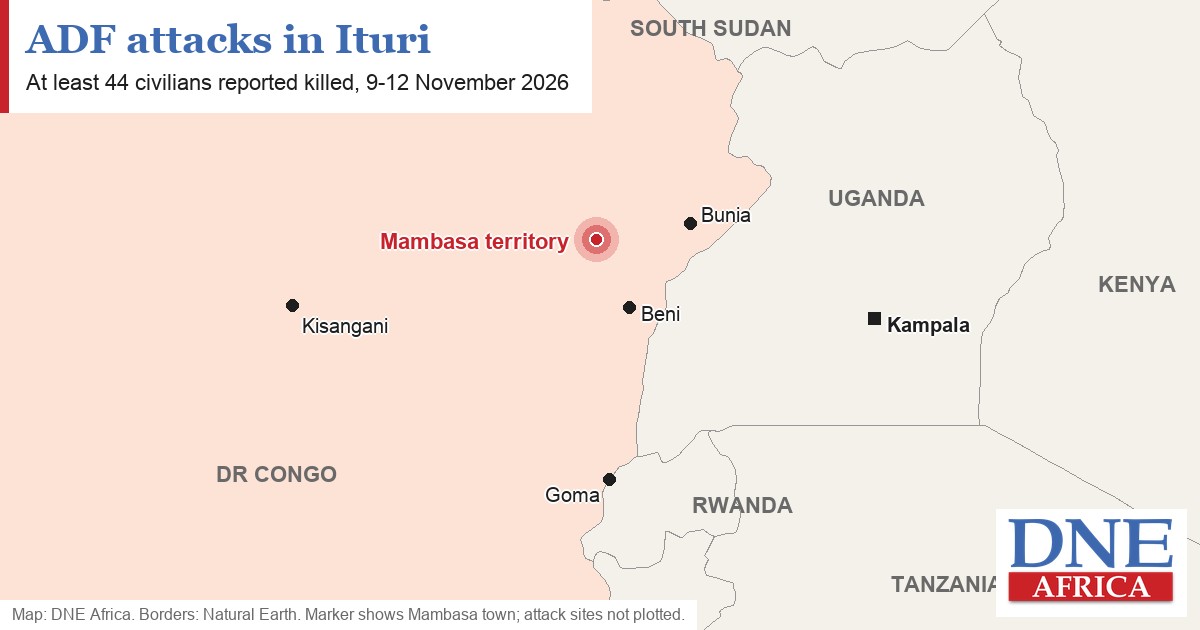
ADF attacks killed at least 44 civilians in Mambasa territory, in the Ituri province of the Democratic Republic of Congo, between Monday 9 and Thursday 12 November, according to civil society sources quoted by French and Belgian media.
The latest ADF attacks take the number of people reported killed by the Islamic State-linked group in a week to at least 110, in a part of north-eastern Congo that is also the centre of the country’s Ebola outbreak. The figures are provisional and have not been confirmed by the army or the government.
What is known about the latest ADF attacks?
At least six localities in the Bangole area were raided on Thursday 12 November, leaving 14 people dead, RFI reported in French on Friday, citing several civil society sources. Attacks on other villages in the Babila Babombi chiefdom killed about 30 more, the same sources said.
The Belgian news agency Belga, carried by La Libre, also put the toll at 44 civilians killed between Monday and Thursday. Earlier on Friday, reports had counted 35 dead and about 15 missing.
The totals may change. Several of the villages cannot yet be reached because attackers are still reported to be in the area, RFI said. The attacks have been attributed to the Allied Democratic Forces by local sources; no claim of responsibility has been reported.
How does this compare with earlier ADF attacks?
DNE Africa reported on Wednesday that at least 22 people had been killed in Mambasa. The count has since doubled as more villages were hit and more bodies found.
The violence follows an attack on the night of 5 to 6 November at Cantine, in Beni territory in neighbouring North Kivu province. Africa CDC, the African Union’s public health agency, condemned that attack, which took place in an area affected by Ebola. Taken together, the raids have killed at least 110 people in a week, according to RFI’s count.
Rights defenders had warned on 2 and 5 November that armed men were moving through Mambasa territory, which has many cocoa farms, RFI said. A civil society leader who asked not to be named told the broadcaster that cocoa did not explain everything, because there had also been incursions in Haut-Uele province, where the crop is not grown.
What are the army and the UN doing?
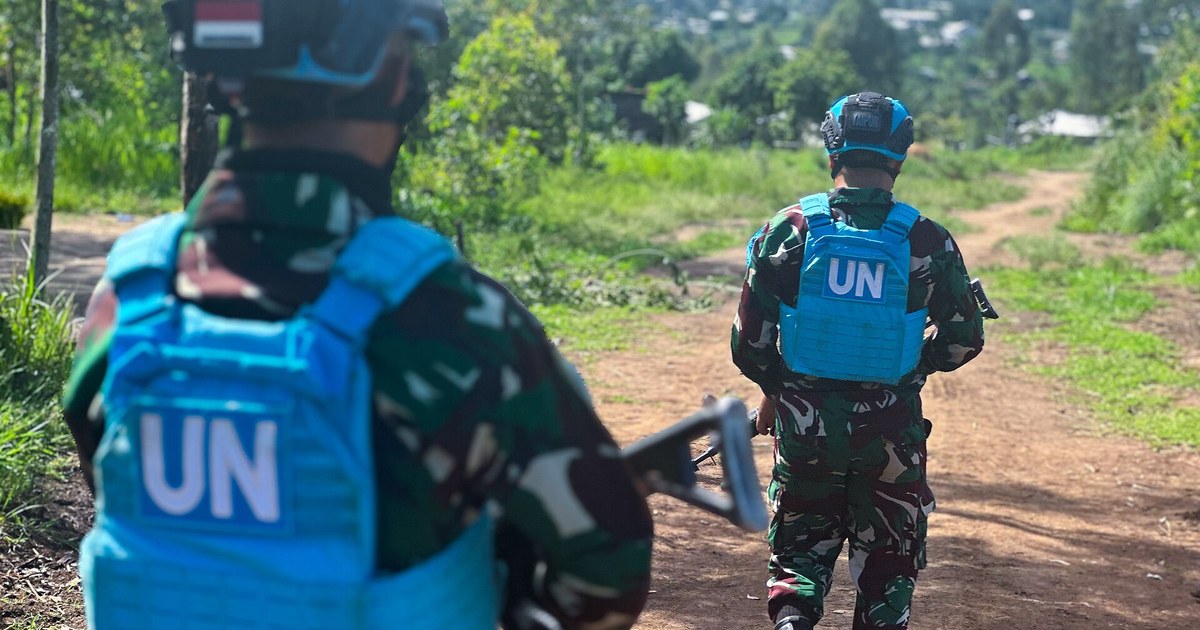
Military operations against the group continued on Friday in several parts of Mambasa, Maxime Tshishimbi, the territory’s assistant administrator, told Radio Okapi, the UN-backed Congolese station. He said the joint Congolese and Ugandan force was keeping up pressure with support from peacekeepers of the UN mission, MONUSCO, who have been deployed in the area for four months and have increased patrols.
Mr Tshishimbi described an “asymmetric war” against small, mobile groups, and said the south of the territory, around Biakato, was still seeing incursions. He said the group had killed hundreds of civilians and displaced thousands in the territory since the start of the year. No official toll for this week’s ADF attacks has been published.
Why do the ADF attacks matter for the Ebola response?
Ituri and North Kivu are at the centre of an epidemic that has passed 11,000 cases, and the World Health Organization has warned that armed attacks are disrupting the response, RFI reported.
The medical charity Médecins Sans Frontières said this week that many Ebola responders were going unpaid, adding to the strain on the health system.
The Allied Democratic Forces began as a Ugandan rebel movement in the 1990s and has operated in eastern Congo for decades. It pledged allegiance to Islamic State in 2019. Congolese and Ugandan troops have conducted joint operations against it since late 2021.
FAQ
How many people were killed in the ADF attacks?
At least 44 civilians were killed in Mambasa territory between 9 and 12 November, according to civil society sources. The toll is provisional.
Where did the ADF attacks take place?
In villages of Mambasa territory in Ituri province, north-eastern DR Congo, including the Bangole area and the Babila Babombi chiefdom.
Who are the ADF?
The Allied Democratic Forces is an armed group of Ugandan origin based in eastern Congo that has pledged allegiance to Islamic State.
Has the government confirmed the toll?
No. Neither the army nor the government has published a toll for this week’s attacks.


