


A global Microsoft outage that began on Thursday 12 November disrupted email and collaboration tools at South Africa’s tax agency, the City of Cape Town and businesses across the country for more than 15 hours.
The failure of Outlook, Teams and Copilot matters because much of Africa’s public sector and corporate communication runs on a single supplier’s cloud. Microsoft said it had seen no sign of a cyber attack and that services were recovering on Friday, but it had not confirmed full restoration by Friday afternoon.
How did the Microsoft outage affect South Africa?
The Microsoft outage started at 16:17 GMT on Thursday, or 6.17pm in South Africa, according to the company’s incident notice as reported by CIO. That spared most local organisations during working hours. Complaints rose sharply after 5am on Friday as people logged on for work, TechCentral reported.
Downdetector South Africa logged 874 reports about Microsoft 365 at 7.53am and 744 about Outlook at 7.38am, the publication said. The site counts user complaints, not affected accounts, so the figures indicate timing more than scale.
The City of Cape Town said users might be unable to access, send or receive email, that Teams connections were intermittent and that some staff could not reach files on OneDrive. “At this stage, there is no confirmed timeline for the full restoration of services,” the city said, according to TechCentral.
The South African Revenue Service told taxpayers the problem “may affect access to Outlook, Teams and other Microsoft 365 applications” and said its technical teams were “engaging directly with Microsoft”. It did not say whether its eFiling service was affected.
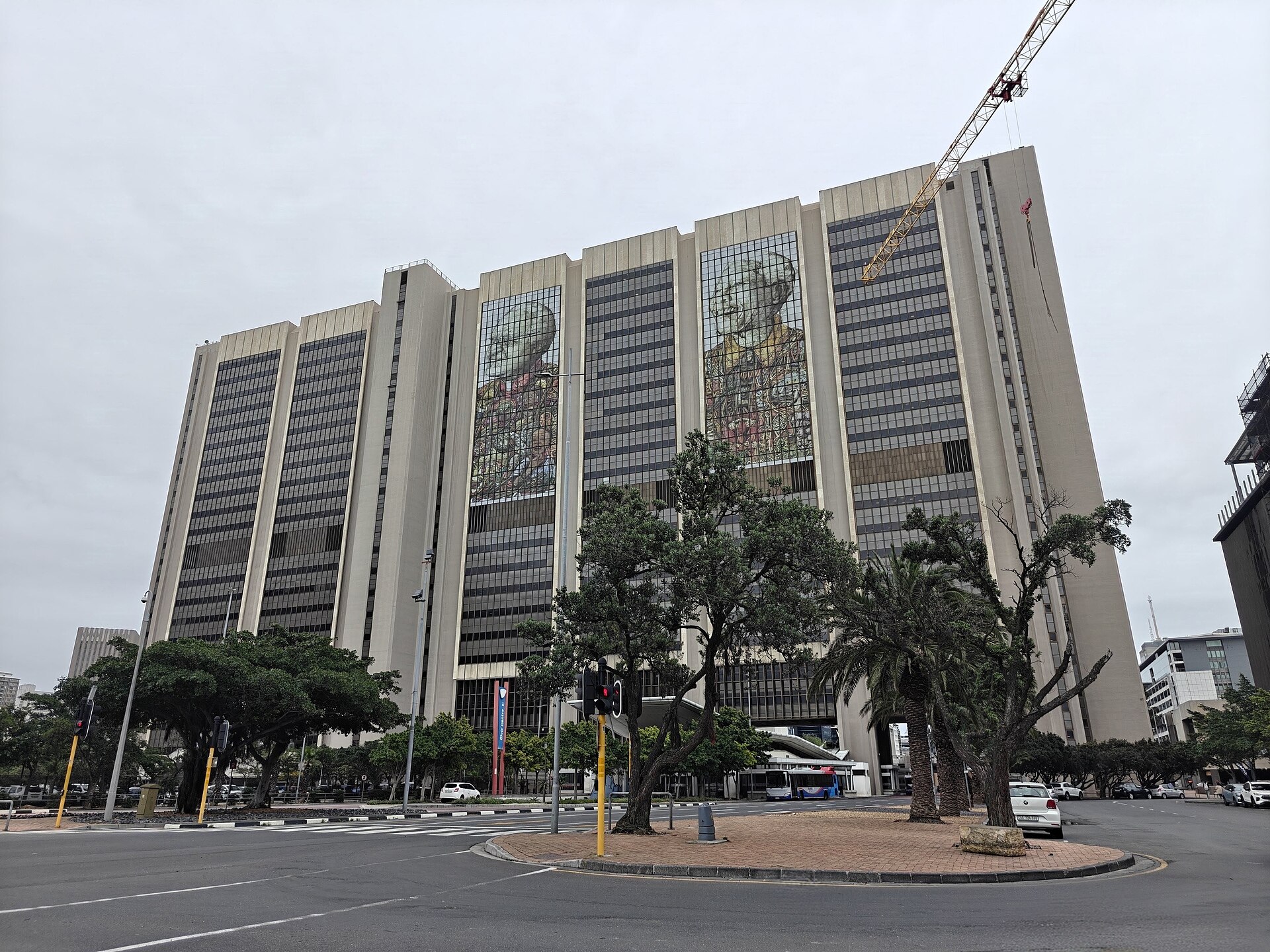
The University of Cape Town’s ICT services department confirmed that Microsoft had warned of difficulty connecting to several services since late on Thursday, the Mail & Guardian reported. Swiss luxury group Richemont, which has a secondary listing in Johannesburg, briefly delayed its interim results on Friday, according to TechCentral.
Evidence of the effect of the Microsoft outage elsewhere on the continent is thinner. Egypt’s Youm7 newspaper reported, in Arabic, that users in Egypt received warnings about the global disruption, and Morocco’s Hespress carried Microsoft’s statement ruling out an attack. Neither reported disruption to government services.
What caused the Microsoft outage?
Microsoft has not published a final explanation. Its account changed during the incident. It first cited high load on its infrastructure, then said the load came from “a number of servers being unexpectedly unavailable”, not from extra traffic, according to BleepingComputer.
The company later said a process that sets up secure connections on the affected servers was being overwhelmed, which stopped them handling requests. Early fixes did not hold: some servers failed again once traffic returned, and Microsoft reversed a recent network configuration change as part of its response, CIO reported.
The services hit by the Microsoft outage all depend on Exchange Online, Microsoft’s hosted email system. Outlook was worst affected. Teams chat and meetings largely worked, but calendars and scheduling did not, and Copilot, the company’s AI assistant, could not read users’ email and files.

What happens next?
At about 13:00 GMT on Friday, Microsoft said it was “seeing encouraging recovery progress” but that “some users may still experience intermittent issues”. It extended the period for which delayed emails are held to 48 hours, so queued messages should arrive late instead of being lost. Live updates appear on Microsoft’s service status page.
Microsoft has promised a post-incident report. Downdetector recorded about 130,000 problem reports worldwide at the peak, and government agencies in Australia, Japan and the US were affected.
The Microsoft outage is the second failure of the company’s 365 services this year, after one in January, TechCentral noted. For African institutions it adds to a debate about data sovereignty and reliance on foreign cloud providers, a theme in DNE Africa’s coverage of digital infrastructure and data sovereignty and of Africa’s digital divide.
FAQ
When did the Microsoft outage start?
Microsoft said the incident began at 16:17 GMT on Thursday 12 November 2026, which was 6.17pm in South Africa. Recovery was still under way on Friday afternoon.
Which South African organisations were affected by the Microsoft outage?
The City of Cape Town, the South African Revenue Service and the University of Cape Town all issued notices about disrupted email or Teams access. Businesses reported the same problems.
Was the Microsoft outage caused by a cyber attack?
Microsoft said it had no indication of malicious activity. It attributed the failure to servers becoming unavailable and has promised a fuller report.
Will emails sent during the disruption be lost?
Microsoft said it extended its email timeout window to 48 hours to preserve delayed messages while it clears the backlog.


