
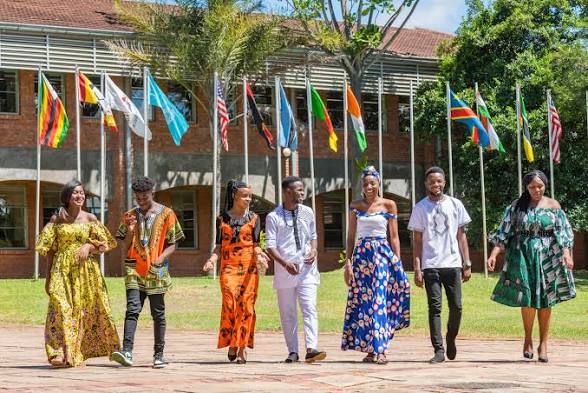

Association of African Universities Secretary-General Olusola Bandele Oyewole urges higher education institutions to embrace innovation, interdisciplinary research and lifelong learning to prepare young Africans for jobs and challenges that do not yet exist.
African universities must move beyond their traditional role as transmitters of information and become creators of knowledge, innovation and solutions capable of shaping the continent’s future, the head of the Association of African Universities (AAU) has said.
Professor Olusola Bandele Oyewole, AAU Secretary-General, made his remarks during his keynote address at Africa Universities Week 2026, held under the theme “The Future-Ready African University: Setting the Scene”.
He argued that higher education institutions must fundamentally reconsider their missions as artificial intelligence, climate change, technological disruption and demographic shifts transform economies and societies.
“The question before us is not simply whether African universities will survive the future. It is whether they will help Africa shape it,” Oyewole told delegates.
He said traditional university models were increasingly being challenged by rapid changes in how knowledge is produced, accessed and shared. With information widely available and learning extending beyond lecture halls, universities must equip students with the ability to critically assess information, distinguish facts from misinformation, solve complex problems and generate practical solutions.
“The future university must be more than a repository of knowledge,” he said.
Oyewole stressed that universities should prepare graduates not only for existing employment opportunities but also for careers and industries that have yet to emerge, enabling young Africans to create jobs and respond to changing economic demands.
Universities urged to address Africa’s development challenges
The AAU chief said Africa’s youthful population and persistent development challenges placed additional responsibilities on its higher education institutions.
He pointed to unemployment, limited industrialisation, food insecurity, climate vulnerability, weak research commercialisation and insufficient investment in innovation as issues requiring stronger engagement from universities.
“These are not merely economic and political problems. They are also knowledge problems,” he said, calling on universities to become strategic drivers of societal transformation.
He also urged institutions to move beyond traditional academic disciplines, arguing that challenges involving food security, healthcare, energy, urbanisation and climate change require interdisciplinary approaches.
Universities should bring together expertise in science, engineering, economics, governance and technology to develop solutions that respond directly to the continent’s needs, he said.
Lifelong learning and research-driven innovation
Oyewole also called for a shift away from the traditional education model in which students obtain a degree at the beginning of their careers and rely on it throughout their professional lives.
As artificial intelligence (AI) reshapes workplaces and occupations, continuous education and professional development will become increasingly important, he said.
He urged universities to expand micro-credentials, short courses, flexible learning pathways and other opportunities for lifelong learning to help graduates and professionals adapt to emerging technologies and changing labour market demands.
On research, Oyewole said African universities needed to focus not only on increasing academic output but also on ensuring that research produces tangible benefits for societies and economies.
He argued that institutional performance should be assessed by the ability of research to address real-world problems, influence public policy, generate technologies and support the creation of businesses.
“What problems does our research solve? What technologies does it generate? What enterprises does it create?” he asked.
He added that universities should place societal relevance and their contributions to communities and industries alongside international recognition and academic rankings.
Ethical leadership at the centre of future universities
Beyond research and technological advancement, Oyewole emphasised the responsibility of universities to develop ethical leaders and responsible citizens.
He said Africa needed graduates capable of creating employment, scientists focused on solving the continent’s challenges and leaders who understand the relationship between knowledge, ethics and development.
“Knowledge without character can become dangerous, innovation without responsibility can become destructive, and technological advancement without human development can deepen inequality,” he warned.
Concluding his address, Oyewole urged African universities to move beyond simply modernising their institutions and instead develop the capacity to lead change and shape global developments.
“A modernised university is important. A future-ready university is essential. But I believe that Africa must aspire to build future-creating universities,” he affirmed.
“The future of the African university is inseparable from the future of Africa.”


