
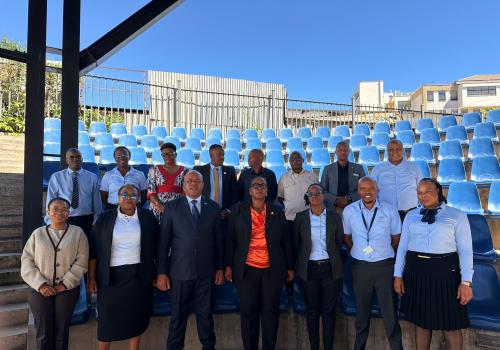

The Republic of South Africa and the Kingdom of Lesotho have demonstrated sufficient institutional capacity to implement the Southern African Development Community (SADC) Anti-Corruption Effort Index (SACEI), following national readiness assessments conducted by the SADC Secretariat.
The assessments were carried out in collaboration with South Africa’s Special Investigating Unit (SIU) on October 19-20, 2026, and Lesotho’s Directorate on Corruption and Economic Offences (DCEO) on October 22-23, according to the SADC Secretariat.
Both countries have developed national implementation road maps and are expected to complete the exercise by May 2027. They will then submit their National Assessment Reports to the SADC Anti-Corruption Committee meeting and the Ministerial Committee of the Organ on Politics, Defence and Security Cooperation in June and July 2027, respectively.
The SACEI is a regional, evidence-based tool designed to help SADC member states evaluate their anti-corruption efforts through a structured assessment framework. It aims to provide a clearer picture of national anti-corruption systems, identify areas requiring institutional strengthening and monitor progress towards regional commitments to combat corruption.
The readiness assessments represent a preparatory stage in implementing the index. They are intended to evaluate institutional preparedness, familiarise anti-corruption agencies with the SACEI methodology and identify the coordination mechanisms, technical capabilities and data requirements needed for effective national assessments.
The engagements in South Africa and Lesotho also provided an opportunity to discuss institutional cooperation, national ownership and the involvement of relevant stakeholders in strengthening anti-corruption measures.
The initiative supports the objectives of the SADC Protocol Against Corruption, adopted in 2001, and the SADC Strategic Anti-Corruption Action Plan for 2023-2027. It also aligns with SADC Vision 2050 and the Regional Indicative Strategic Development Plan for 2020-2030, which identify good governance, accountability and strong institutions as essential to sustainable development, regional integration, peace and security.
Corruption remains a major challenge to governance and socioeconomic development, undermining public confidence, diverting resources from essential services and weakening public administration.
Through the SACEI, SADC aims to strengthen the collection and use of evidence to inform national policy responses, institutional reforms and regional cooperation.
The latest readiness assessments build on earlier efforts to develop and pilot the index in Tanzania and Mauritius, followed by its rollout in Namibia, Botswana and Seychelles. The initiative reflects SADC’s broader efforts to equip member states with tools to measure institutional performance and strengthen anti-corruption systems.
The European Union supported the assessments through the Enhancing the Capability and Effectiveness of SADC’s Peace and Security Architecture (ECESPA) Programme, which seeks to strengthen the regional bloc’s institutional capacity and cooperation in addressing peace, security and governance challenges.


