
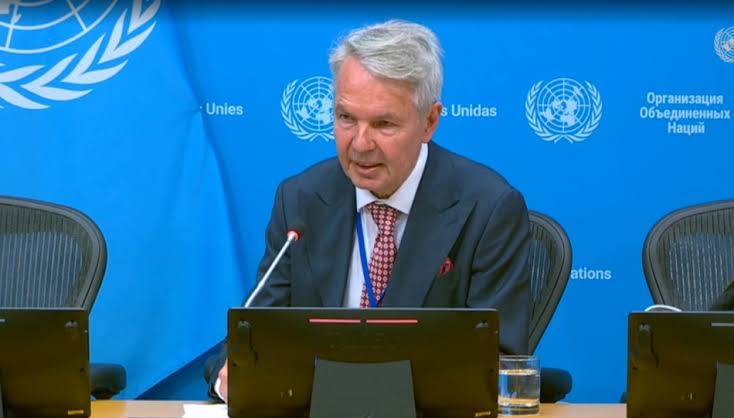

United Nations Secretary-General’s Personal Envoy for Sudan Pekka Haavisto has urged international partners to coordinate diplomatic efforts to end the war, work towards a comprehensive ceasefire and support an inclusive, Sudanese-led political transition.
In his remarks at the sixth Consultative Meeting on Enhancing Coordination of Peace Initiatives and Efforts for Sudan in Geneva on Oct. 21, Haavisto called for practical measures to de-escalate the conflict and strengthen cooperation among countries and multilateral organisations involved in peace efforts.
He also pledged to convene the consultations every three months to assess progress, address obstacles and maintain diplomatic momentum as the conflict continues.
“Their appeal is clear: this war must end,” Haavisto said, referring to the message he had heard from Sudanese people inside the country, across the region and abroad.
He said ending the war, alleviating civilian suffering and safeguarding the Sudanese people’s right to peace, security and dignity in a united Sudan must remain the central objectives of international engagement.
The meeting focused on identifying ways to align existing peace initiatives and ensure that diplomatic efforts reinforce one another. Haavisto said participants needed to translate their shared sense of urgency into concrete action.
Ceasefire and political transition
The consultations were structured around two key priorities: de-escalating the fighting and laying the groundwork for an inclusive political dialogue.
Haavisto said participants would explore practical steps to build confidence and create conditions conducive to a comprehensive ceasefire, drawing on their respective diplomatic channels.
He also called for efforts to support a credible political process led by Sudanese people, stressing that any transition must reflect the country’s diverse voices and experiences.
The envoy said the international community’s role was to help Sudanese people shape their country’s future rather than determine that future on their behalf.
Sudan has been embroiled in war since April 2023, when fighting erupted between the Sudanese Armed Forces and the paramilitary Rapid Support Forces (RSF), triggering widespread displacement and a deepening humanitarian crisis.
Regional spillover raises concerns
Haavisto warned that the conflict’s consequences extend beyond Sudan’s borders, making sustained engagement with neighbouring countries essential to efforts to restore stability.
He urged participants to take regional perspectives into account, prevent further escalation and limit the risk of the conflict spilling into neighbouring countries.
Coordinated regional engagement, he said, could contribute to stability in Sudan and the wider region.
The envoy affirmed that continued consultations would help participating governments and organisations review their approaches, identify gaps and respond to developments on the ground.
Quarterly meetings to sustain momentum
Haavisto committed to holding the consultative meetings every three months, providing a regular forum to evaluate progress and strengthen coordination among international partners.
Also, he urged participants to intensify their efforts ahead of April 2027, saying they should work to make the period a turning point towards peace rather than the beginning of another year of conflict and suffering.
The envoy thanked Switzerland for co-hosting the meeting, acknowledging the country’s longstanding role in peacemaking and dialogue. Swiss State Secretary and Ambassador Alexander Fasel represented the government at the gathering.
Haavisto called for frank and constructive discussions, emphasising that sustained cooperation and concrete action would be essential to securing a lasting peace in Sudan.


