
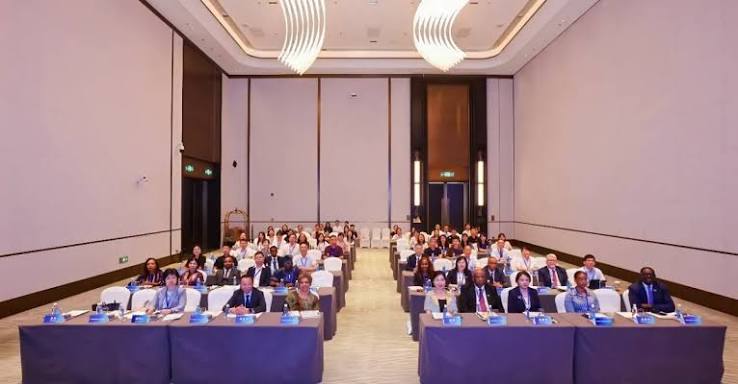

Education leaders, policymakers, technical and vocational education and training (TVET) institutions, development partners, private sector representatives, experts and African ambassadors have called for stronger cooperation to equip Africa’s growing youth population with skills for rapidly changing labour markets, according to UNESCO.
The discussions took place in Beijing during a China-Africa dialogue aimed at strengthening TVET systems and expanding access to quality skills development across the continent.
Participants explored practical opportunities to enhance vocational education, improve links between training institutions and industry, and prepare young people for emerging opportunities in the digital, green and innovation-driven economy.
“TVET has a critical role to play in Africa’s socio-economic transformation,” said Dr Rita Bissoonauth, Director of the UNESCO Liaison Office to the African Union, stressing the importance of investing in skills, technology, innovation and entrepreneurship to respond to Africa’s growing youth population.
In turn, Dr Chen Lu, Secretary General of the Sino-African Network for Education Innovation Alliance (SNAEIA), highlighted the potential of China-Africa cooperation to promote knowledge exchange, institutional partnerships, curriculum innovation, teacher and trainer development, apprenticeship programmes and stronger connections between education and industry.
The dialogue also highlighted the importance of quality assurance mechanisms, international standards and mutual learning in improving TVET outcomes across Africa.
China-Africa MOOC Platform
A major focus of the discussions was the China-Africa Massive Open Online Courses (MOOC) Platform, a joint initiative developed by UNESCO and SNAEIA to expand access to quality digital learning and support the modernization of TVET systems across the continent.
Built on the principles of co-creation, co-construction and resource sharing, the platform combines digital learning materials, online training programmes and artificial intelligence-enabled tools to support learners and educators.
The initiative is expected to benefit TVET students and instructors, as well as young people and adults seeking employment, entrepreneurship, upskilling and reskilling opportunities.
Organizers said the platform is designed to address long-standing challenges facing vocational education in Africa, including unequal access to training, gaps in digital infrastructure and skills, outdated curricula, language barriers and the need to prepare learners for the demands of the Fourth Industrial Revolution and the green economy.
The programme will provide comprehensive support to 11 African member states, focusing on strengthening governance frameworks, modernizing curricula, enhancing teacher training and building stronger partnerships between training institutions and industry.
The platform aims to reach at least 10,000 learners within its first two years while developing localized courses, digital credentials and industry-relevant learning opportunities.
Advancing Skills Development
Participants agreed on the need to translate dialogue into concrete action through stronger institutional partnerships, localized digital content, educator capacity-building initiatives, certification frameworks and closer collaboration between TVET institutions and employers.
The cooperation supports several global development priorities, including Sustainable Development Goal (SDG) 4 on quality education, SDG 8 on decent work and economic growth, SDG 9 on industry, innovation and infrastructure, and SDG 17 on partnerships for development. It also aligns with the African Union’s broader education and skills development agenda.
The dialogue concluded with a renewed commitment from UNESCO, SNAEIA and African partners to build inclusive, innovative and sustainable education partnerships that equip young people with the skills needed for the future of work and support Africa’s long-term socio-economic transformation.


