
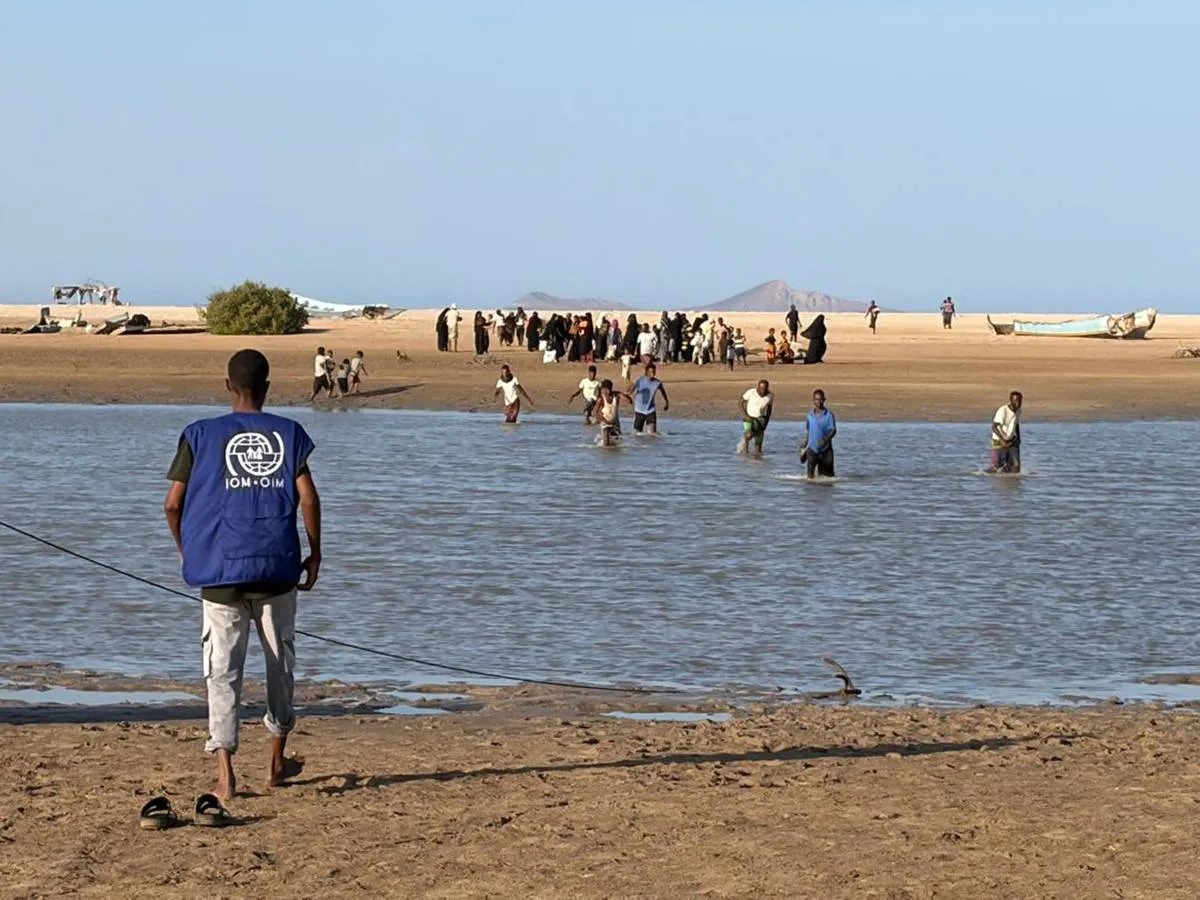

Displacement in Yemen has surged to more than 85,000 people as fighting intensifies along the country’s western coast, with thousands fleeing their homes in recent days and some crossing the Red Sea to Djibouti, the International Organization for Migration (IOM) revealed.
According to IOM’s Displacement Tracking Matrix (DTM), 85,818 people have been displaced in Yemen, including 82,164 since the beginning of September alone, as hostilities escalate along the West Coast.
More than 2,000 people fleeing the violence have reached Djibouti’s northern shores, landing at scattered locations along the coast near Obock, the agency reported.
Djiboutian authorities are coordinating the response with the navy, army, police and health services, supported by IOM and other UN agencies.
Many of the arrivals are women and children. They have been transported to the Markazi site in Obock, where they are receiving water, high-energy biscuits and hot meals, IOM noted.
“Behind every number is a family who’s lost everything,” IOM Director General Amy Pope said, warning that many people have been displaced multiple times and are now crossing the sea with little more than what they can carry.
“Yemen is a country torn by poverty and conflict, and it cannot carry this crisis alone,” Pope added, urging donors to increase support for people arriving in Djibouti and host communities in Obock.
The latest escalation has particularly affected the western and southern Taiz frontlines.
Taiz has recorded the largest displacement, with 9,280 households, representing nearly 56,000 people, forced from districts including Jabal Habashy, Al Ma’afer, Maqbanah, Mawza and Al Wazi’iyah.
Lahj has reported 3,225 displaced households, or more than 19,000 people, most of them from Al-Mudharibah district. Al Hodeidah has recorded 1,374 households, representing more than 8,000 displaced people, mainly from Hays.
Aden has also received displaced families, with 424 households, or more than 2,500 people, currently being hosted there.
Inside Yemen, many families have been forced to flee repeatedly during the 12-year conflict, with some now facing a second or third displacement and having few resources left.
Access to affected areas has become increasingly difficult as fighting disrupts roads and communications, complicating humanitarian operations and assessments of urgent needs.
IOM called for safe and unhindered humanitarian access and urged all parties to protect civilians, humanitarian workers and the supplies, vehicles and facilities required to deliver assistance.
The agency said the situation remained volatile and unpredictable and that it would continue monitoring developments and providing updates as more information becomes available.


