
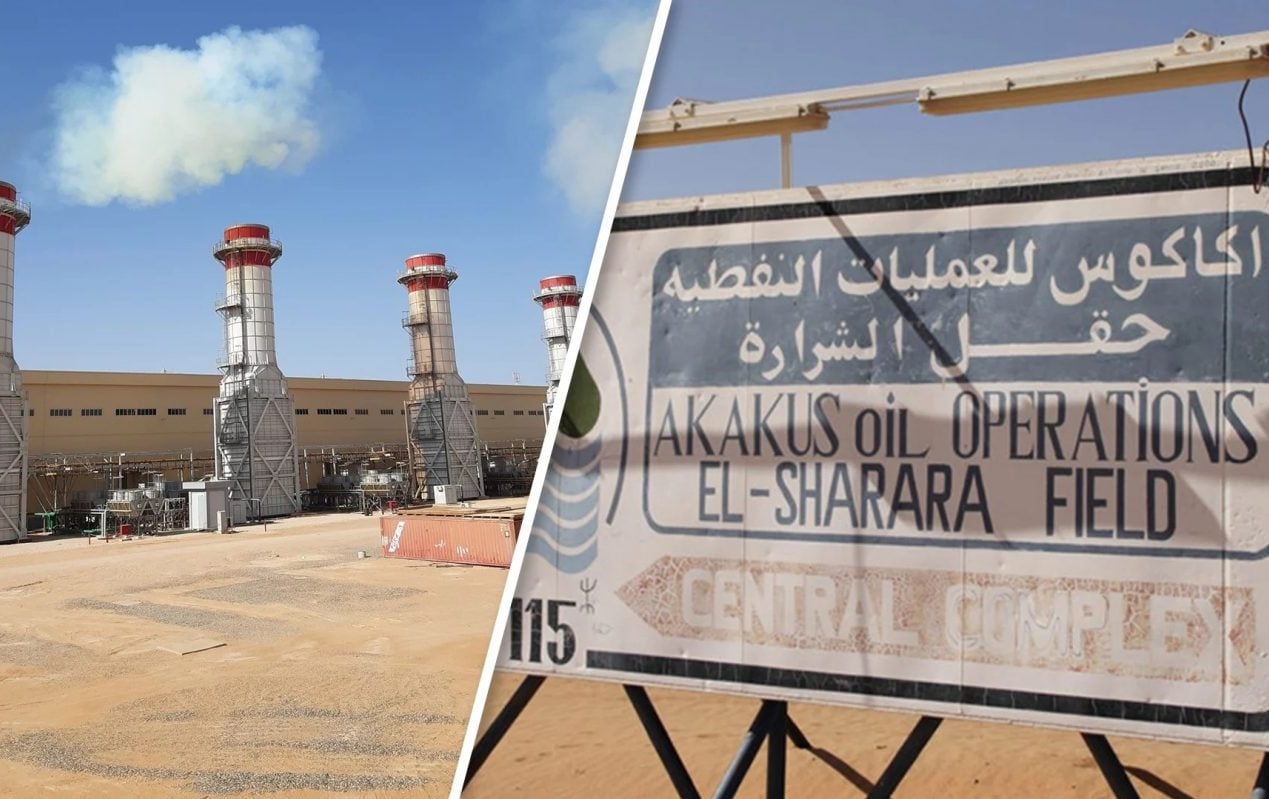

Libya’s Sharara oilfield is facing the risk of force majeure after an armed group shut a crude oil pipeline, cutting production by around 200,000 barrels per day, Libyan political researcher Ahmed Orabi told DNE Africa.
Orabi explained that Sharara’s output has fallen to between 100,000 and 105,000 bpd, compared with its production capacity of nearly 300,000 bpd.
Located in southwestern Libya, Sharara is one of the country’s largest oilfields. Its output has been repeatedly disrupted in recent years by protests, political disputes and technical problems.
The researcher raised the alarm that the latest pipeline shutdown could further threaten the continuity of production at the field and potentially lead to a force majeure declaration.
He noted that Libya’s oil sector has faced repeated production disruptions for political and technical reasons over the past 16 years, since the overthrow of former leader Muammar Gaddafi.
Production at several Libyan oilfields was disrupted last week after members of the Petroleum Facilities Guard closed a valve on a major crude oil pipeline.
Orabi pointed out that National Oil Corporation (NOC) Chairman Massoud Suleman had initially said Sharara was operating normally. Suleman later told Reuters on Monday that the field had experienced a partial reduction in production, without providing a specific explanation for the decline.
The NOC announced on Monday that an armed group had closed valve No. 7, halting the crude oil pipeline linking Sharara to the Zawiya terminal, according to Orabi.
He explained that the closure caused pressure to build up in the transportation pipeline, resulting in a significant reduction in the field’s overall production.
The pipeline transports crude produced at Sharara by Akakus Oil Operations, the NOC said.
Orabi revealed that technical teams had so far been unable to reach the areas around valves No. 6 and No. 7, leaving the pipeline shutdown unresolved.
The NOC also contacted the Petroleum Facilities Guard in southwestern Libya and called on it to assume its responsibilities, but efforts to restore the pipeline had yet to produce results, he added.
Economic pressure
Libya possesses some of Africa’s largest oil reserves, while crude oil revenues remain the country’s main source of national income.
Orabi said recurring disruptions to oil production are adding to Libya’s economic challenges, which include pressure on the Libyan dinar and a widening gap between official and parallel-market exchange rates.
The US dollar is trading at around 9.5 Libyan dinars on the parallel market, compared with an official rate of approximately 6.33 dinars, he noted.
The latest disruption underscores the continued exposure of Libya’s oil infrastructure to political and security tensions, with interruptions at major fields and pipelines posing a direct risk to the country’s production and primary source of revenue.


