
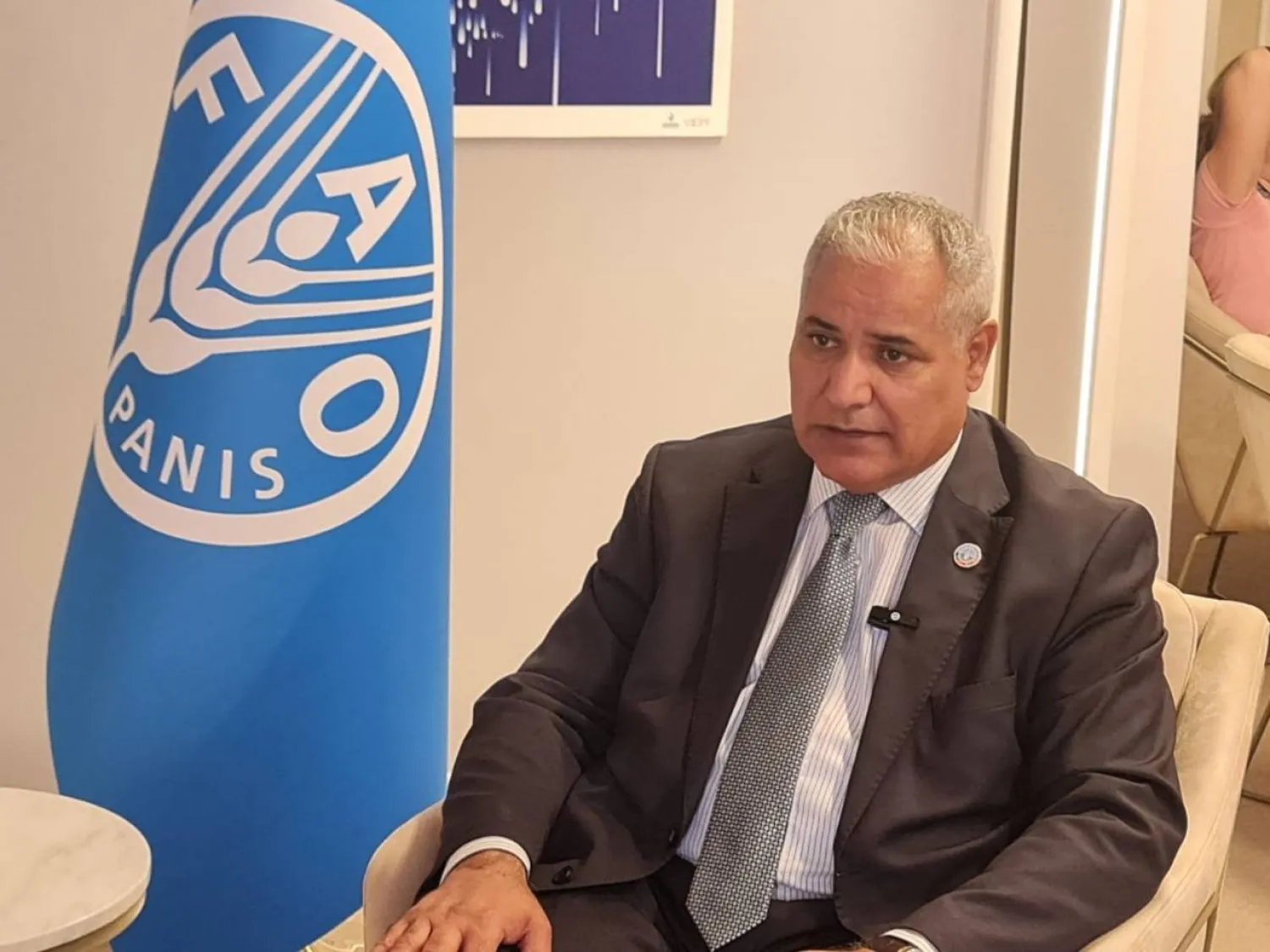

Libya’s grain production is facing mounting pressure from prolonged drought, declining groundwater resources and increasingly erratic rainfall, while political and economic instability is complicating efforts to build a more resilient food security system, AbdulHakim Elwaer, FAO Assistant Director-General and Regional Representative for the Near East and North Africa, told DNE Africa.
In an exclusive interview, Elwaer said Libya’s reliance on imported staple foods, limited strategic grain storage capacity and geopolitical disruptions affecting major trade routes were increasing the country’s exposure to food supply and price shocks.
Drought puts grain production under pressure
“Libya is among the driest countries in the Arab region and globally,” Elwaer said, noting that the country’s agriculture depends largely on rainfall and groundwater.
Declining groundwater resources and a significant reduction in rainfall in recent years, particularly during the past five years of drought, have affected domestic agricultural production, he said.
Libya, like many countries across the Arab region, remains heavily dependent on imports of essential commodities, particularly grains, dairy products and other basic food items.
The combination of weaker domestic production, external supply volatility and domestic economic pressures is creating additional risks for Libya’s food security, Elwaer said.
Political instability compounds food security risks
Libya’s political divisions and economic instability have made it more difficult to manage food security over the longer term.
“Political instability has played a major role in weakening the management of the food security system,” Elwaer said, pointing to significant volatility both inside and outside the country.
The country also lacks sufficient strategic storage capacity for grains and other essential commodities, limiting its ability to absorb shocks caused by international price increases, supply disruptions or declines in global production.
Libya needs greater grain storage capacity
Expanding grain silos and strategic storage facilities should be a priority, Elwaer said, arguing that stronger storage infrastructure would give Libya greater capacity to withstand disruptions in international markets.
The need has become more pressing amid geopolitical volatility affecting major food supply corridors, including the Gulf region, the Black Sea, the Gulf of Aden and the Red Sea.
“These are all very important corridors for food supplies and food security,” he said.
Private investment could support higher production
There is significant investment, particularly from the private sector and with support from state institutions, aimed at increasing agricultural production, according to Elwaer.
Water scarcity, however, remains one of the sector’s biggest constraints.
As rainfall becomes less predictable, greater pressure is expected to fall on Libya’s groundwater resources, raising concerns about the long-term sustainability of agricultural production.
FAO projects target sustainable water management
The Food and Agriculture Organization of the United Nations has implemented projects aimed at improving the sustainable management of Libya’s water resources.
One of the key initiatives is the MARWAT project, which supports the assessment and planning of groundwater resources and aquifers in Libya.
Elwaer said studies covering the Nubian Aquifer in southern Libya have been completed, while work has also focused on the groundwater basin of the Jefara Plain, which extends across Libya, Algeria and Tunisia.
The FAO is working to bring officials from the three countries together to discuss sustainable groundwater use and determine appropriate consumption levels for the Jefara basin.
Green Mountain hit by changing rainfall patterns
The Green Mountain is one of Libya’s key agricultural production areas, including for grains and livestock, but it has been increasingly affected by changing climate conditions and declining rainfall.
Rainfall in October and November is particularly important because it determines water availability at the beginning of the agricultural season.
Last year, however, October and November were marked by severe drought, with rainfall declining significantly and arriving much later, in March, Elwaer said.
“That rainfall does not contribute significantly to production because it comes too late,” he said.
The agricultural cycle depends heavily on water availability at the beginning of the planting season, while harvesting generally concludes around June and July.
The repeated deterioration in rainfall patterns over the past five years requires a comprehensive reassessment of Libya’s agricultural outlook, Elwaer said.
Healthy food basket costs exceed minimum income
Rising food costs are adding another layer of pressure on Libyan households.
An FAO study conducted in cooperation with Libya’s National Council for Economic and Social Development found that a family requires approximately LYD 1,500 to cover the cost of a healthy and safe food basket, Elwaer said.
That compares with income levels of around LYD 1,000 at the lower end of the wage and income scale.
With food accounting for approximately 40% of household income, the study indicates that a household would need an income of around LYD 2,000 to cover the minimum food basket while meeting other family obligations.
“This puts the authorities and the population before a major challenge in ensuring continuous, smooth and sustainable access to safe food,” Elwaer said.
Food prices could face further pressure
External geopolitical developments and domestic supply constraints could place additional pressure on food prices in Libya in the coming months.
Elwaer warned that the combination of these factors could translate into higher local food prices within three to six months, potentially making it harder for households to consistently afford essential food products.
FAO expands support for livestock and agriculture
The FAO is also working with Libya’s Ministry of Agriculture and Animal Resources on a broader agricultural support programme.
One initiative focuses on preserving and improving the genetic resources of Libya’s livestock, including sheep, goats, cattle and camels.
The FAO has also reached agreements with Libyan agricultural authorities to support efforts to combat the red palm weevil, a major threat to date palm production.
These initiatives complement ongoing work on sustainable groundwater management, including efforts focused on the Jefara basin, Elwaer said.
Agricultural extension services need strengthening
Existing programmes will not be sufficient without stronger agricultural extension services, Elwaer said.
The sector needs programmes that help farmers, particularly smallholders, use water resources more efficiently while increasing productivity without putting additional pressure on natural resources.
This will require stronger agricultural policies and greater capacity among extension workers across Libya, he said.
Agricultural policy needs stronger presence outside Tripoli
A key challenge is the geographic disconnect between where agricultural policies are formulated and where production takes place.
“A large part of the challenge is that decisions and policies are made in Tripoli, while Tripoli is not an agricultural production area,” Elwaer said.
Major production areas are located elsewhere, including the Western Mountain, southern regions such as Kufra and the southern oases, and the Jefara Plain in western Libya.
These areas need a stronger on-the-ground presence from agricultural extension officials who can work directly with farmers and help develop production practices that protect soil health and limit excessive groundwater extraction.
Libya needs a nationwide agricultural strategy
Libya’s agricultural challenge extends beyond increasing grain production.
The country needs a comprehensive strategy combining water management, climate adaptation, strategic food storage, agricultural extension services, sustainable production practices and stronger coordination between national authorities and farming communities.
Without such measures, prolonged drought and groundwater depletion could continue to constrain domestic production while leaving Libya increasingly exposed to disruptions in international food markets.
For Libya, Elwaer said, strengthening food security will require not only producing more food, but ensuring that the country has the water resources, storage capacity, infrastructure and policies needed to sustain that production over the long term.


