
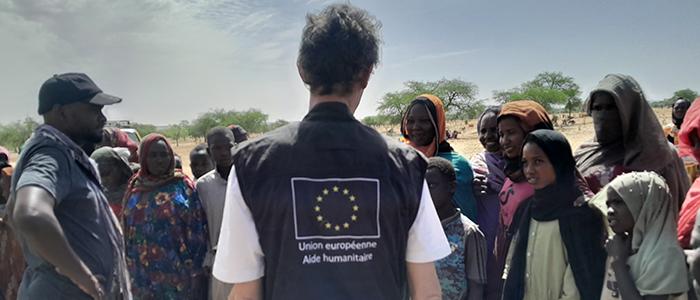

Sudan was one of the world’s deadliest conflict zones for humanitarian workers in 2025, as violence against aid personnel reached record levels globally, the United Nations said on World Humanitarian Day.
A total of 907 aid workers were killed, injured or kidnapped worldwide last year, according to the UN Office for the Coordination of Humanitarian Affairs (OCHA). The toll included 350 deaths, 322 injuries and 235 kidnappings, based on data from Humanitarian Outcomes’ Aid Worker Security Database.
Gaza recorded the highest number of aid worker deaths at 186, followed by Sudan with 71.
The threat has persisted in 2026, with 82 humanitarian workers killed, 97 injured and 39 kidnapped worldwide so far this year.
Sudan’s conflict has also highlighted a growing danger for civilians and aid workers: the rapid spread of armed drones. OCHA said drones were responsible for 80% of civilian deaths recorded in the country during the first four months of 2026, with markets and health facilities among those hit.
The increasing use of the technology is adding another layer of risk to humanitarian operations in a country where millions of people depend on assistance amid a prolonged war.
The Democratic Republic of Congo has also recorded deadly incidents involving drones. In March, an aid worker was killed when a drone struck a residential building, according to OCHA.
The UN has warned that the availability of relatively cheap and adaptable armed drones is expanding the ability of armed groups and other actors to carry out attacks in populated areas.
“More than 1,000 aid workers have been killed in just three years and that is utterly unacceptable,” said Tom Fletcher, the UN Under-Secretary-General for Humanitarian Affairs and Emergency Relief Coordinator.
Fletcher called on states to uphold international humanitarian law and ensure accountability for those who attack civilians and humanitarian personnel.
“And for those who break the rules, there must be real consequences,” he said.
The UN’s concerns come as humanitarian organisations continue to operate in some of Africa’s most complex conflict environments, where insecurity, displacement and restricted access can make the delivery of food, healthcare and other essential assistance increasingly difficult.
Fletcher said the growing use of armed drones should not change the obligations imposed by international law.
“Weaponized drones have become the new face of an old danger: the deliberate or reckless destruction of civilian life,” he said. “The technology may change, but the laws of war do not.”
“Attacks on humanitarian workers are illegal, and the consequences are devastating,” UN Chief António Guterres said, calling on governments and parties to conflict to respect international humanitarian law, ensure safe access to people in need, hold perpetrators accountable and provide adequate funding for humanitarian operations.
This year’s World Humanitarian Day campaign, Act for Humanity, is highlighting the stories of aid workers killed in the line of duty through interviews with their families.
The campaign seeks to move beyond statistics and show the human cost of attacks on humanitarian personnel, while renewing calls for the protection of aid workers and civilians caught up in conflict.


