
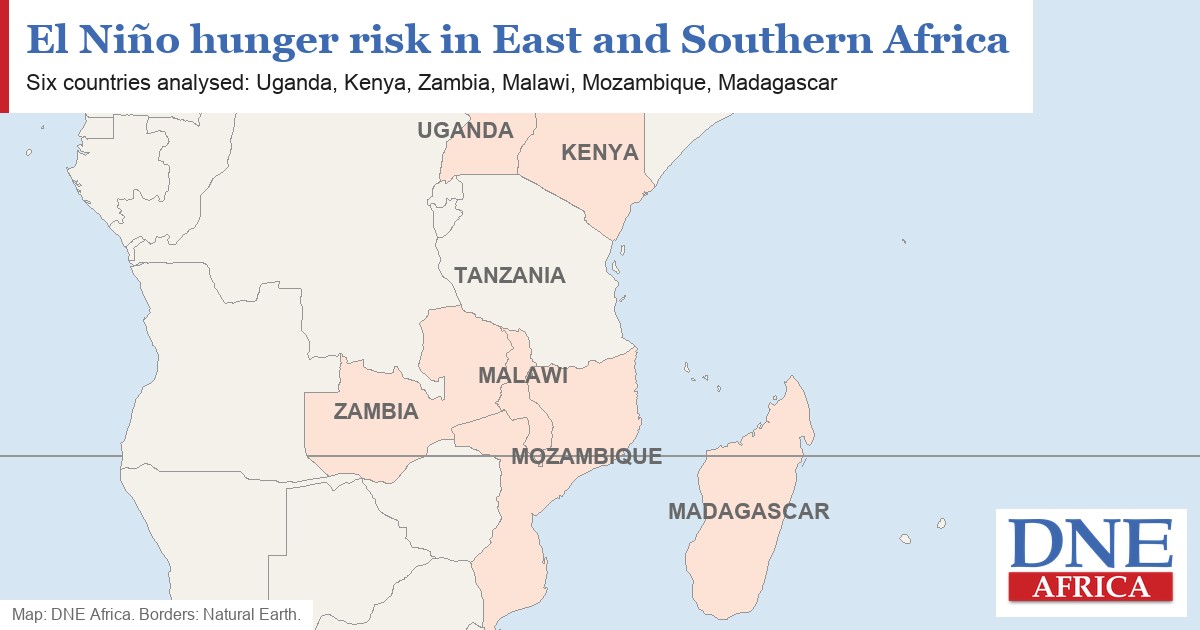

Acute hunger linked to El Niño could rise from 12.6mn to 16.4mn people in six East and Southern African countries by March 2027, a child-rights alliance said in a report published on 24 November.
The report, by the Joining Forces alliance for East and Southern Africa, argues that the forecast “super” El Niño could turn into a child-rights emergency unless governments and donors fund action before harvests fail and floods hit.
What does the report say about acute hunger?
The paper, “El Niño and Child Rights in Africa”, brings together forecasts from UN agencies, regional climate centres and aid groups. Its headline figures come from Save the Children’s projections of September, based on Integrated Food Security Phase Classification (IPC) analyses: in Madagascar, Malawi, Mozambique, Zambia, Uganda and Kenya, the population in IPC Phase 3 (“crisis”) or worse is forecast to rise from 12.6mn to 16.4mn by March 2027.
Across East and Southern Africa, the number of children facing acute hunger could rise from about 6mn to 8mn by early 2027, an increase of about 30%, the report says, citing Save the Children. It also cites a UNICEF estimate that more than 162mn children, over two-thirds of the region’s children, live in areas exposed to the 2026-27 El Niño.
The report was developed with members of the alliance’s technical working group, including staff of Terre des Hommes Germany’s Africa office. Joining Forces describes itself as an alliance of six international child-focused organisations.
Which countries face the biggest acute hunger risk?
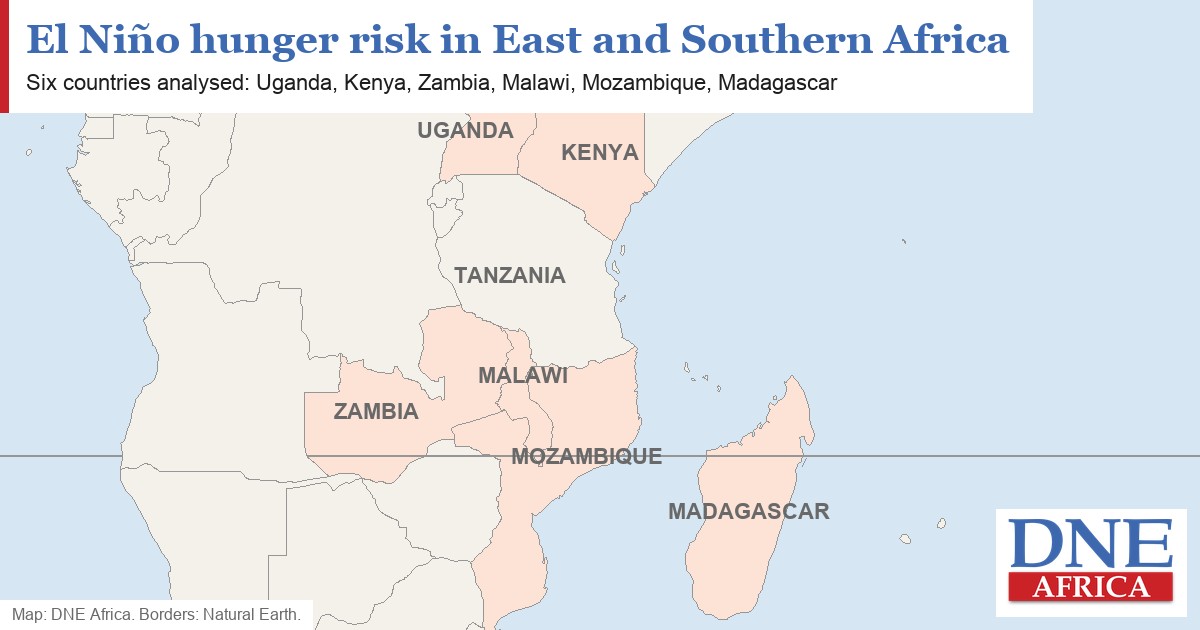
Uganda is projected to have the largest number of people affected: those in IPC Phase 3 or worse are expected to rise from 3.6mn in late 2026 to 4.4mn by early 2027, an increase of 22%, the report says, citing IPC data. In the Karamoja sub-region, more than 673,000 people, 42% of the population, are already in crisis or emergency, and more than 154,000 children under five will need treatment for acute malnutrition, it says.
Zambia faces the sharpest relative deterioration in acute hunger, with crisis-level hunger forecast to rise by 80% to more than 1.2mn people. Madagascar, Mozambique and Malawi are projected to see increases of 75%, 55% and 35% respectively. In Madagascar alone, about 502,000 children under five are expected to suffer acute malnutrition between May 2026 and April 2027, including about 78,000 severe cases.
Outside the six countries, the report cites an IPC analysis projecting that 5.4mn people in Somalia will face crisis or worse levels of hunger between October and December 2026, and that 1.92mn Somali children under five will need treatment for acute malnutrition by June 2027.
Why does El Niño affect the two regions differently?
El Niño usually brings drought to Southern Africa and heavy rain to parts of East Africa. Below-average rainfall is expected across Southern Africa from October 2026 to March 2027, threatening maize harvests, livestock and water supplies, the report says, citing the GEOGLAM Crop Monitor. In the Greater Horn of Africa, the IGAD Climate Prediction and Applications Centre (ICPAC) expects above-normal October-December rains, particularly in southern Ethiopia, central and southern Somalia and north-eastern Kenya, raising the risk of floods and of cholera and malaria outbreaks.
South Africa has already tightened water restrictions in Gauteng and Cape Town as authorities prepare for drought. The last strong El Niño, in 2023-24, led Zambia, Zimbabwe and Malawi to declare drought disasters, the report notes.
What does the report recommend?
To limit acute hunger, it calls on governments to activate national El Niño plans and release contingency funds before the peak of the crisis, to scale up cash transfers and social protection for households with pregnant women and young children, and to link nutrition monitoring to IPC data so that treatment expands automatically as food security worsens. Donors should fund early action rather than wait for emergency appeals, it says.
The report’s projections are forecasts and depend on how the rains develop. New IPC analyses for the region are expected in the coming months.
FAQ
How many people could face acute hunger in East and Southern Africa?
In six analysed countries, people in IPC Phase 3 or worse could rise from 12.6mn to 16.4mn by March 2027, according to projections cited in the report.
Which countries are most affected by acute hunger?
Uganda has the largest projected caseload, at 4.4mn people; Zambia the sharpest rise, at 80%. Madagascar, Mozambique and Malawi follow.
How many children could face acute hunger?
About 8mn children in East and Southern Africa by early 2027, up from about 6mn, according to Save the Children estimates cited in the report.
Who published the report?
The Joining Forces alliance for East and Southern Africa, an alliance of child-focused organisations, in November 2026.


