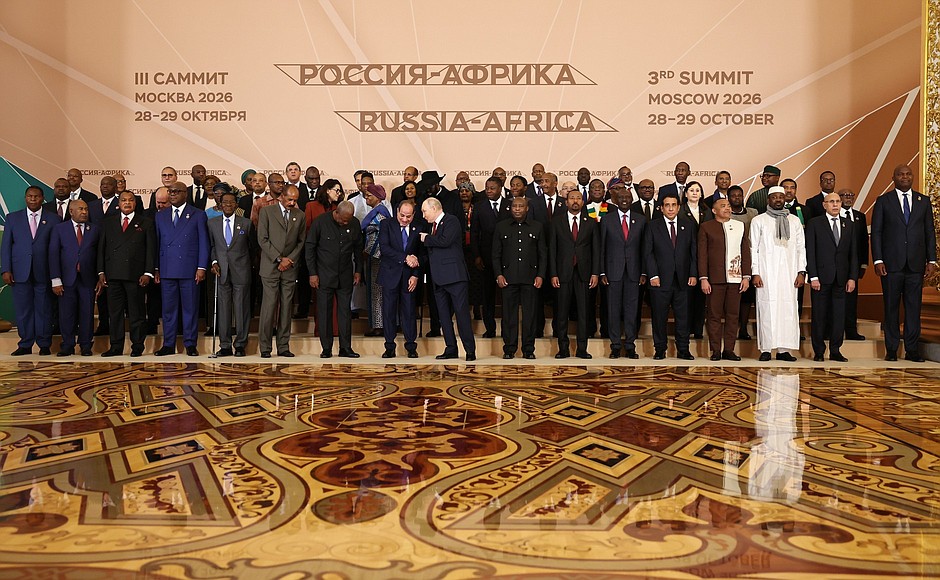
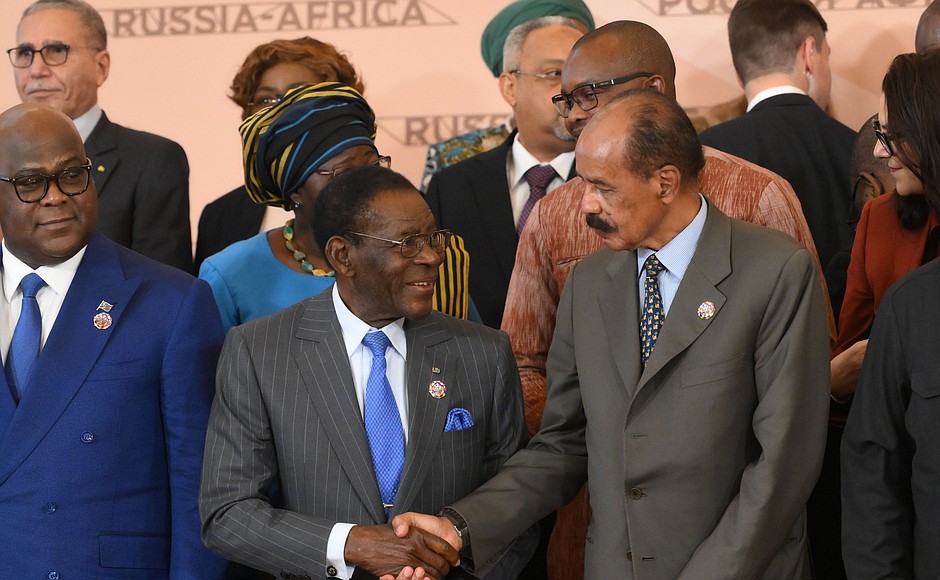
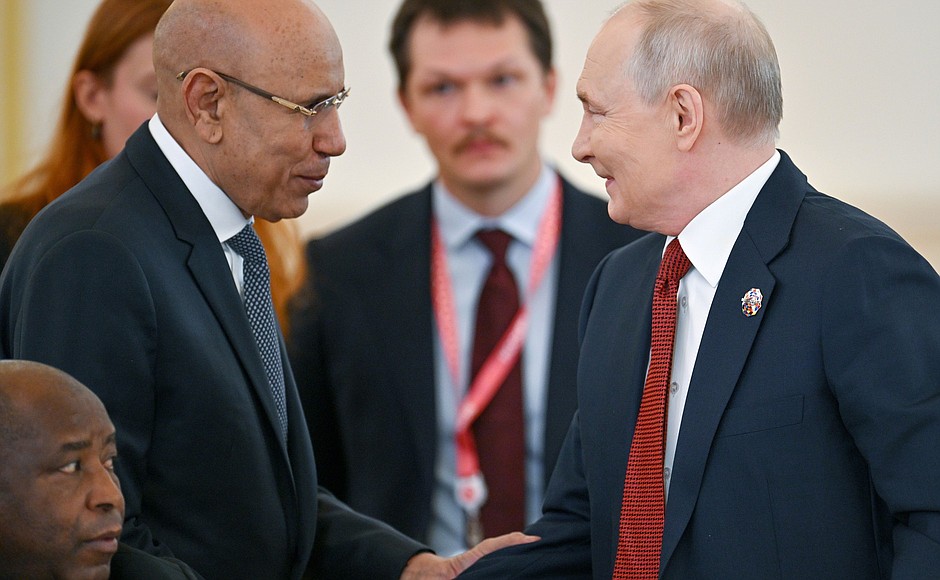
Moscow summit brings together delegations from 48 African countries as Putin calls for an end to Western dominance and African leaders demand greater value from their natural resources.
Russian President Vladimir Putin has urged African countries to deepen their partnership with Moscow and called for an end to Western dominance in global affairs, as Russia seeks to expand its political, economic and military influence across the continent.
In his address on Wednesday at a two-day Russia-Africa summit in Moscow, Putin presented Russia as a partner for African development and argued that the global balance of power was shifting away from a system dominated by a small group of Western countries.
“The era when the destinies of entire continents were determined by a narrow bloc of states is coming to an irreversible end,” Putin told delegates. “It is being replaced by a more just world, in which the voices of all nations participating in international affairs must be heard.”
Putin accused Western countries of continuing to exploit Africa’s natural resources and using debt to hold back the continent’s development. He also called for stronger African representation in decision-making at the International Monetary Fund (IMF) and the World Bank Group.
“The time has come to reform these organisations and refocus them on the specific needs and requirements of developing economies,” he said.
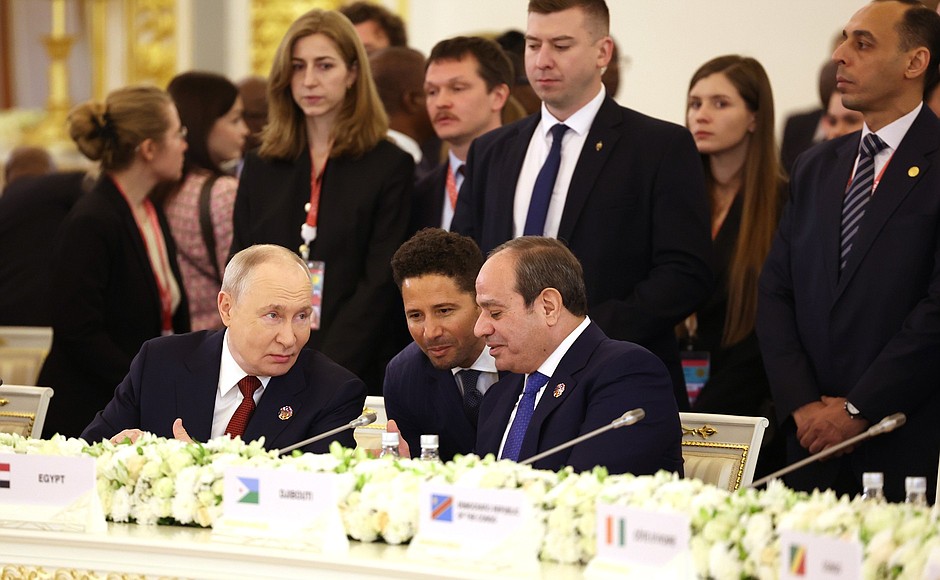
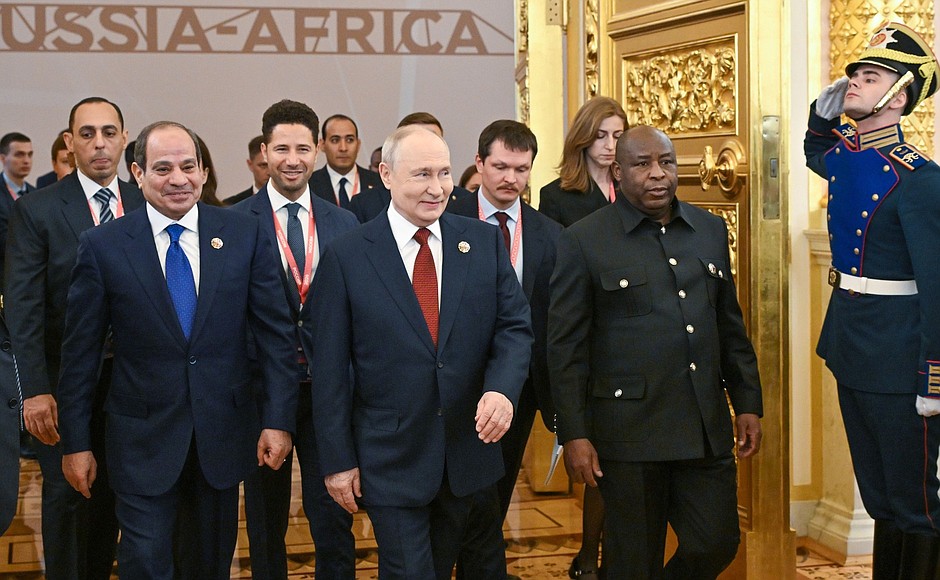
Delegations from 48 African countries are attending the summit, including 22 African leaders. The gathering, the third of its kind, is co-chaired by Burundian President Évariste Ndayishimiye, the current chair of the African Union (AU).
Africa seeks greater value from its resources
While Moscow is seeking to strengthen its strategic position in Africa, African leaders have emphasised the need for partnerships that support industrialisation, local production and greater control over the value generated by the continent’s resources.
Ndayishimiye said African countries wanted partners that could help them build productive capacity rather than maintain an economic model centred on exporting raw materials and importing finished goods.
“Africa is seeking partners to strengthen its capacity to generate its own wealth,” he said.
“We do not want to be consigned to exporting our raw materials only to then import the finished products—at a high cost.”
The Burundian president said African countries wanted to participate across the entire value chain, from production to marketing, so that the wealth created would benefit their populations more effectively.
Ndayishimiye ‘s remarks underscore a central challenge for African economies: translating their natural-resource wealth into domestic manufacturing, jobs and higher-value exports. For partnerships with Russia and other international powers, the extent to which investment supports these objectives will be an important measure of their economic value.
Moscow seeks a broader African footprint
The summit comes as Russia seeks to expand its diplomatic, commercial and security relationships across Africa, where Russian-linked military personnel, including Africa Corps fighters, remain active.
Moscow has sought to position itself as an alternative partner to Western governments, drawing on shared calls for a more multipolar international order while pursuing closer cooperation in strategic sectors.
Putin said Africa was increasingly asserting itself as one of the key players in the global economy and international politics. His call for reforms at the IMF and World Bank placed African representation and the priorities of developing economies at the centre of Russia’s message to the summit.
However, the gathering also highlights the broader competition among international partners for influence, resources and commercial opportunities across Africa.
Trade, technology and investment on the agenda
More than 40 sessions are expected to take place over the two days, covering trade, investment, technology transfer, food and energy security, healthcare, education and youth exchanges.
Representatives from nearly 50 African countries, including heads of state and government and leaders of continental integration organisations, are participating in the summit.
The meeting is expected to adopt a final declaration, the Russia-Africa Partnership Forum Action Plan for 2027–2029, and a declaration on cooperation in the civilian application of artificial intelligence (AI) technologies.
A substantial package of intergovernmental and interdepartmental agreements covering cooperation across a range of sectors is also expected to be signed.
The outcome will offer an indication of how far Russia and African governments can translate political commitments into practical cooperation, particularly in investment, technology transfer and industrial development.