
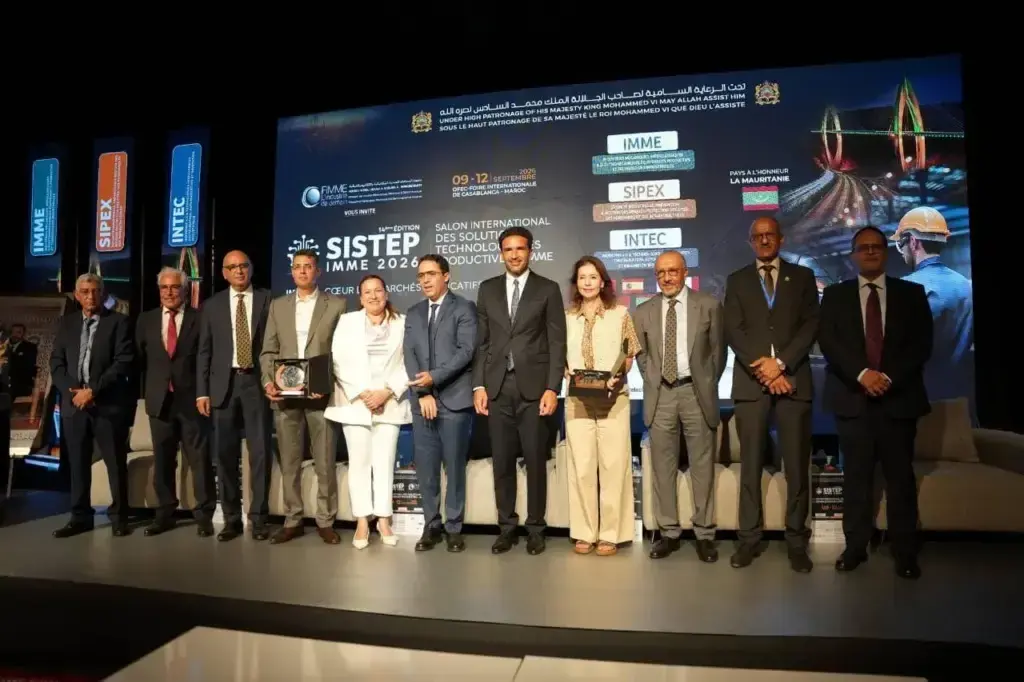

Morocco and Mauritania are working to establish a joint industrial zone spanning 800 hectares, a project expected to strengthen industrial integration between the two countries and deepen economic links between North Africa, the Sahel and wider African markets.
The project was announced during the 14th edition of the International Exhibition of Production Technologies and Mechanical, Metallurgical and Electromechanical Industries (SISTEP IMME 2026), held in Casablanca.
Sheikh Sidi Mohamed Ould Ahmedou, director general of industry at Mauritania’s Ministry of Mines and Industry, said work was underway to establish the joint industrial zone.
Moroccan companies will be given priority to establish projects in the zone and will enjoy the same rights as Mauritanian companies, with their investments not being classified as foreign investments, he said.
The planned zone is expected to provide companies with direct access to European markets through Morocco, while creating a platform for expansion into African markets, particularly in the Sahel and West Africa.
Abdelhamid Souiri, president of the Moroccan Federation of Mechanical, Metallurgical and Electromechanical Industries, said discussions with the Mauritanian side had also covered the establishment of joint ventures and the development of the industrial zone to help companies access African markets.
Broader African integration
Morocco’s journalist Mohamed Taoufik Ameziane told DNE Africa that the planned 800-hectare zone goes beyond the bilateral industrial relationship and fits into Morocco’s broader drive to strengthen economic integration with Sahel countries.
He linked the project to Morocco’s royal initiative to facilitate landlocked Sahel countries’ access to the Atlantic Ocean, arguing that the industrial zone could help translate that broader vision into tangible economic projects.
The project was announced amid the participation of major Moroccan and international companies specializing in advanced technologies, safety systems and Industry 4.0, areas that could play an important role in the development of the planned industrial platform.
Ameziane noted that Morocco’s strategy seeks to develop its Atlantic coastline as a space for trade, investment and African economic integration. From that perspective, he said, the planned industrial zone could form part of a broader effort to build joint value chains and connect production centers with regional and international markets.
The initiative comes as Morocco and Mauritania seek to deepen industrial and economic cooperation and develop joint projects across sectors including industry, mining and energy.
Mauritania was the guest of honor at this year’s SISTEP IMME, which brought together more than 6,500 professional visitors, companies and international delegations, including representatives from Mauritania, China and Italy.
The two countries have yet to announce a timeline for establishing the industrial zone or disclose the expected investment value of the project.


