

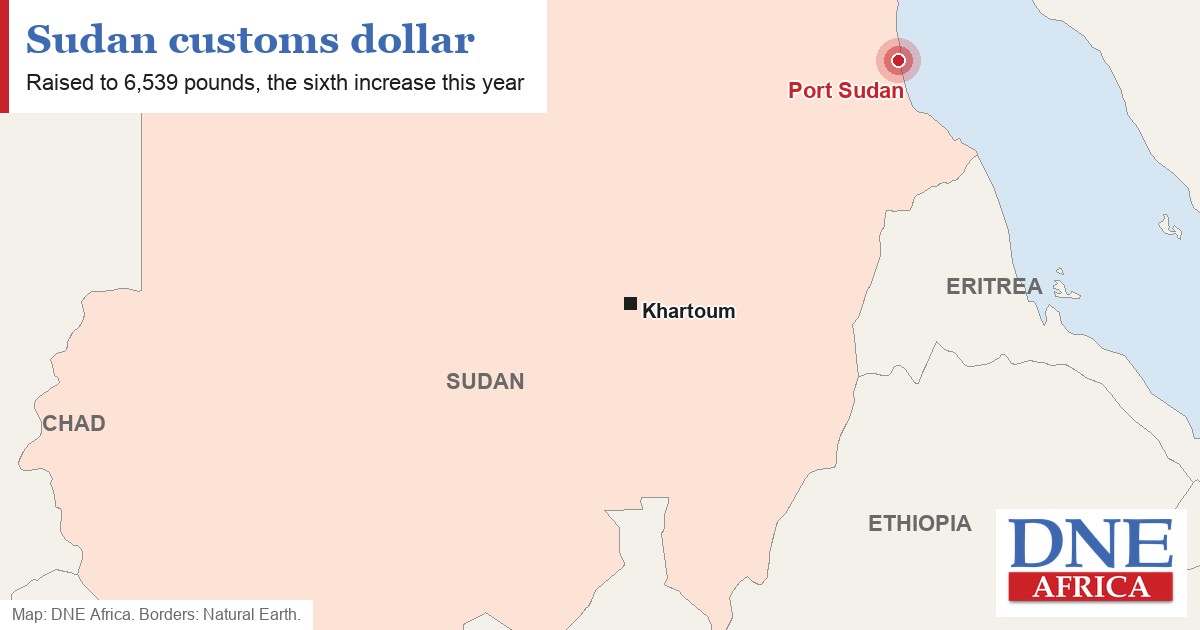
The Sudan customs dollar rose by 16 per cent to 6,539 pounds from 5,631 on Monday, the sixth increase this year, as the Sudanese pound neared 11,000 to the dollar on the parallel market.
The rate sets the value in pounds on which import duties are charged, so each rise in the Sudan customs dollar feeds through to the cost of imported food, fuel and inputs. Traders warned that prices, already rising sharply during the war, would climb further.
What is the Sudan customs dollar and how much has it risen?
The Sudan customs dollar is an administrative exchange rate set by the authorities, through the finance ministry, the Central Bank of Sudan and the customs authority, to convert the dollar value of imports into pounds for calculating duties. Duties are then paid in pounds.
The new rate of 6,539 pounds took effect on Monday, an increase of 908 pounds or about 16.14 per cent, Sudan Tribune reported in Arabic, citing a circular it had seen. Tag Press said it was the second increase in less than a month.
The rate stood at 2,486 pounds at the end of 2025. It was raised to about 2,827 pounds around the turn of the year, to about 3,223 in April and to 3,960 in August, according to earlier reports by Sudan Tribune and other outlets. Monday’s level is more than double its level at the start of the year.
Why is the pound falling?
Dealers in the currency market told Sudan Tribune on Sunday that the dollar traded at between 10,800 and 11,000 pounds in some deals on the parallel market. In August the pound had just broken through 6,000 to the dollar, so it has lost close to half its value in about three months.
Dealers attributed the slide to strong demand for foreign currency to pay for imports and to traders and households holding savings in dollars and other currencies to protect them from further falls.
The war between the army and the Rapid Support Forces, now in its fourth year, has cut output and exports, including gold, and the government relies heavily on customs revenue, analysts quoted by Sudanese outlets said. Annual inflation was 51.28 per cent in June, according to official figures reported by Tag Press.
What will the Sudan customs dollar rise mean for prices?
Even before the latest Sudan customs dollar increase, a 50kg sack of sugar cost more than 430,000 pounds and a 25kg sack of wheat flour more than 200,000 pounds, Sudan Tribune said. Traders expect further rises as the new customs rate is applied.
Importers complained of repeated increases, which raise the cost of every shipment that must clear customs and are usually passed on to consumers, Tag Press reported. At the same time the authorities stopped exempting the furniture of Sudanese returning from abroad from duties, Sudan Tribune reported separately.
The pressure on prices comes as aid falls short. The World Food Programme has said hundreds of thousands of people lost food assistance because of funding gaps, and the World Health Organization warned this month that malnutrition treatment was running out in dozens of centres.
What happens next?
The authorities have adjusted the Sudan customs dollar roughly every two months this year, usually after the parallel-market rate moves. With the gap between the two still wide, further increases are likely unless the pound stabilises. The government has also announced measures against gold smuggling, a major source of lost foreign currency.
FAQ
What is the new Sudan customs dollar rate?
6,539 pounds, up from 5,631, an increase of about 16.14 per cent applied from Monday 16 November, according to Sudan Tribune and Tag Press.
How many times has the Sudan customs dollar been raised this year?
Six times since the start of 2026, according to Sudan Tribune.
What is the parallel-market exchange rate?
About 10,800 to 11,000 pounds per dollar on Sunday, according to currency dealers quoted by Sudan Tribune.
Why does the customs rate matter?
Import duties are calculated on it, so a higher rate raises the cost of imported goods, which traders usually pass on to consumers.


