
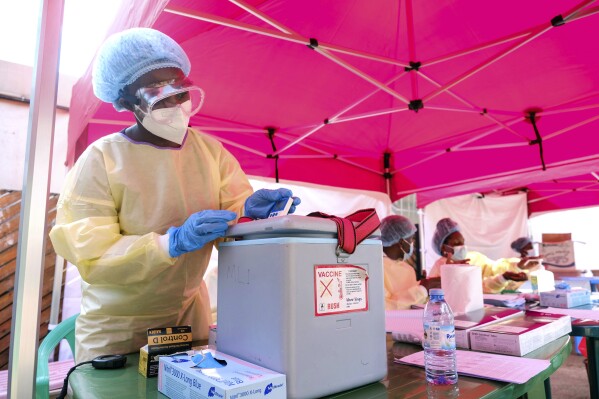

Health authorities say the tests returned negative twice, leaving one confirmed Ebola infection in the country amid a wider regional outbreak
Nigeria’s health authorities have ruled out two suspected Ebola cases in the country’s northeastern Adamawa State after laboratory tests returned negative results twice, easing concerns over a possible further spread of the disease within the country.
The Nigeria Centre for Disease Control and Prevention (NCDC) said on Sunday that samples collected from the two individuals tested negative for Ebola following two rounds of laboratory testing.
The individuals had been isolated while health officials conducted investigations, identified potential contacts and carried out laboratory tests, the agency said.
NCDC Director-General Jide Idris said the centre was working closely with the Adamawa State Government to investigate the suspected infections and strengthen public health response measures.
He confirmed that Adamawa had no laboratory-confirmed Ebola cases, adding that the previously identified infection in the Federal Capital Territory (FCT) remained Nigeria’s only confirmed case.
The development follows Nigeria’s confirmation of its first Ebola case in more than a decade last week, involving a Swiss woman who had travelled from Uganda to Abuja.
The woman and her husband were subsequently evacuated to Switzerland on Monday for medical care.
The two suspected cases in Adamawa had raised concerns about a possible further spread of the virus beyond the initial confirmed infection. However, the latest test results have ruled out Ebola in both individuals.
Nigeria’s response comes amid a wider Ebola outbreak centred in the Democratic Republic of the Congo (DRC), where more than 5,000 people have died since the outbreak was declared in May 2026. Kenya and Uganda have also reported cases.
The outbreak involves the Bundibugyo strain of Ebola, a relatively rare variant for which there are currently no approved vaccines or specific treatments.
Despite the negative results in Adamawa, Nigerian health authorities have urged the public to remain vigilant and avoid spreading unverified information about suspected infections.
Idris advised people experiencing symptoms such as fever, severe weakness, headaches, muscle pain, vomiting, diarrhoea or unexplained bleeding, particularly following possible exposure, to seek immediate medical attention.
He also urged individuals to inform healthcare workers about relevant travel or contact histories and avoid self-medication.
The NCDC said it would continue coordinating with state authorities and other relevant stakeholders to strengthen disease surveillance, early detection and infection prevention measures.