
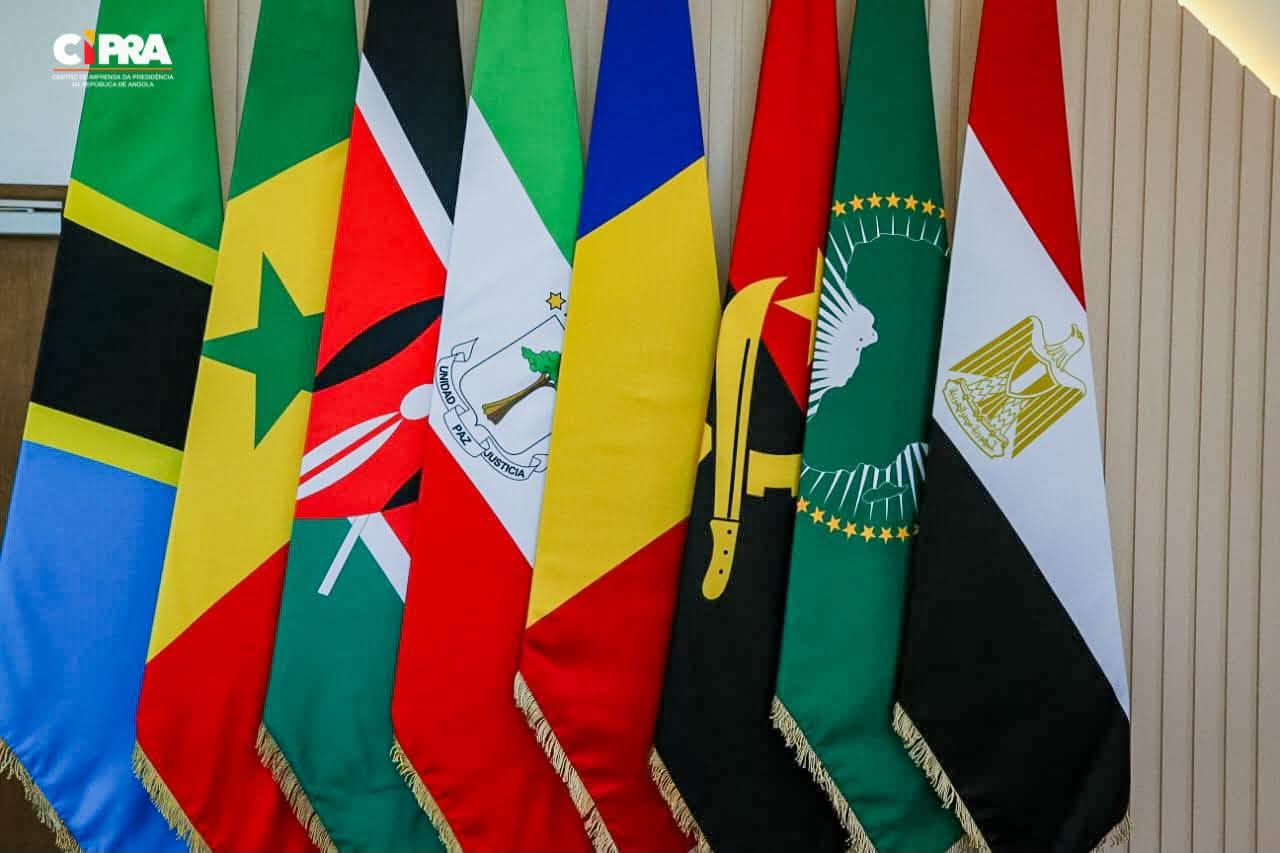

African leaders convened on Saturday to mark the 25th anniversary of the African Union Development Agency (AUDA-NEPAD), issuing a unified call for continental self-reliance, robust private sector integration, and dedicated African financing mechanisms to achieve the ambitious goals of Agenda 2063.
The summit of AUDA-NEPAD’s five founding nations—South Africa, Egypt, Algeria, Senegal, and Nigeria—was co-chaired by Angolan President João Lourenço, the current chair of the agency’s steering committee, and Egyptian President Abdel Fattah El-Sisi. The gathering also included Burundian President and AU Chairperson Évariste Ndayishimiye, AU Commission Chairperson Mahmoud Ali Youssouf, and AUDA-NEPAD CEO Nardos Bekele-Thomas.
President Lourenço emphasized that the core principle that birthed NEPAD in 2001—that Africa must take ownership of its own development—remains as vital today as ever. He argued that this ownership must now extend directly to how the continent funds its institutions.
“Predictable African financing is an essential condition for AUDA-NEPAD to plan effectively, respond to member states’ priorities, and drive programs from preparation to implementation at the scale required by Agenda 2063,” Lourenço stated. He urged all member states to provide voluntary financial contributions to the agency, highlighting that Angola had led by example with a voluntary contribution the previous year.
Lourenço underscored the need for seamless coordination between the AU Commission, regional economic communities, and member states. He pointed to the recent Luanda Summit on infrastructure and the development of the Lobito Corridor as evidence of what coordinated African leadership can achieve, and announced that AUDA-NEPAD would establish a local presence in Angola to bridge the gap between continental decisions and national implementation.
President El-Sisi strongly reinforced this Pan-African vision, declaring that true development cannot come from the outside. “The time has come for Africa to rely more on its own resources and to build and adopt African financing mechanisms,” El-Sisi told the summit, emphasizing the transition toward knowledge-based economies and youth empowerment.
Reflecting on Egypt’s recent tenure chairing the NEPAD steering committee, El-Sisi noted that bridging the continent’s severe funding gaps had been a top priority. He highlighted the push to create a “Team Africa” development fund and the launch of the biennial Alamein Africa Business Forum as key steps toward mobilizing cross-border capital. Both leaders agreed that the African private sector must serve as the primary engine for this growth, requiring governments to cultivate stable, well-regulated investment environments.
The summit culminated in the adoption of the “Alamein Declaration.” The landmark document reaffirmed AUDA-NEPAD’s mandate as the continent’s flagship development agency, placed the African private sector at the center of the second ten-year implementation plan of Agenda 2063, and codified the Alamein Africa Business Forum as a permanent platform for continental economic integration.
The first Alamein Africa Forum opened Friday in the northern Egyptian coastal city of El Alamein, bringing together around 1,500 African business leaders to discuss investment, trade and economic cooperation. Running from Oct. 2 to 4, the forum aims to promote greater economic integration and business cooperation across the continent. It is co-organized by the Egyptian government, the African Export-Import Bank, and the African Union Development Agency.


